

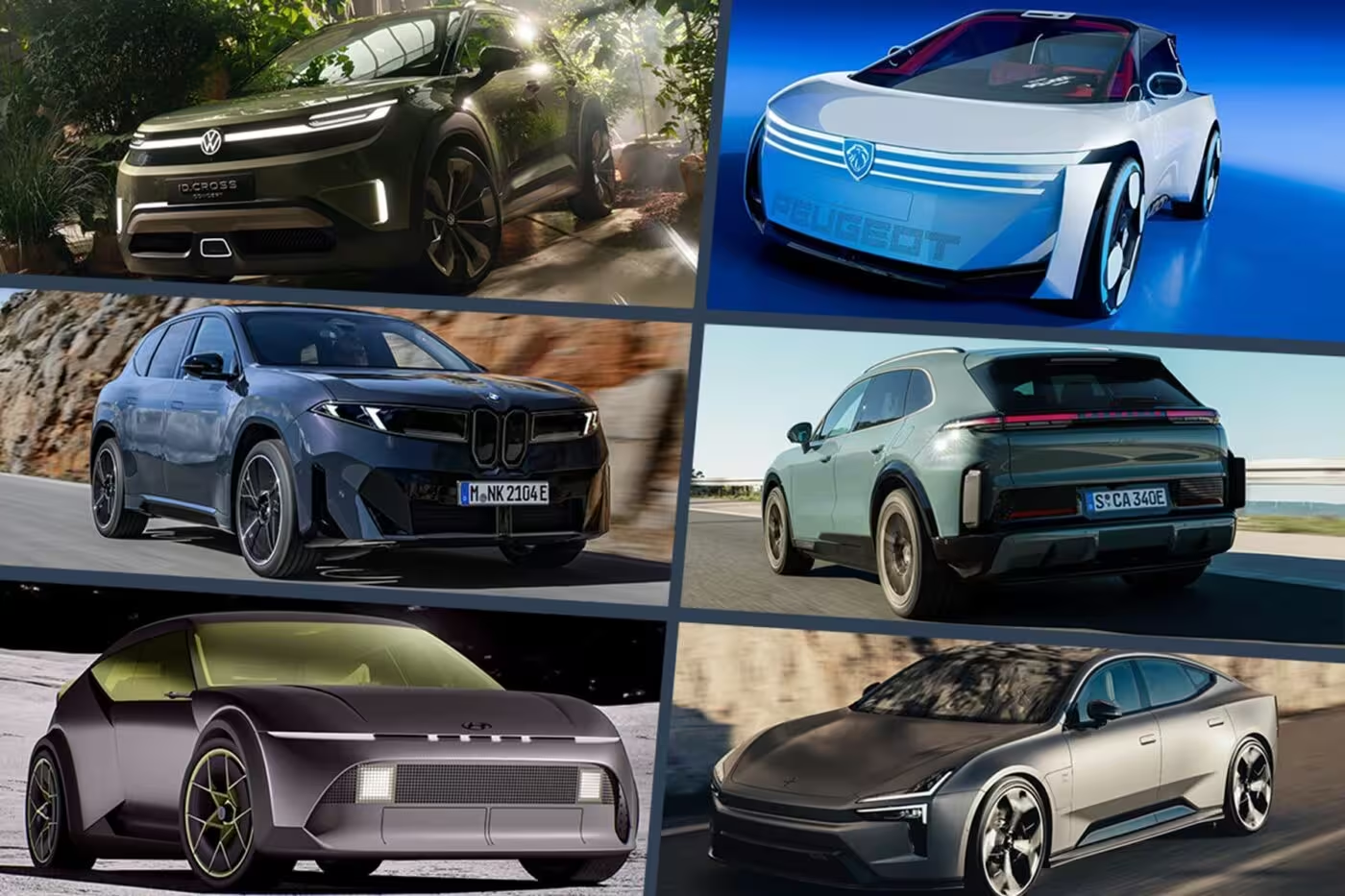
Best Electric Cars 2026 USA
Quick Verdict: The Best EVs in the USA Right Now
| Pick | Starting Price (May 2026) | Best EPA Range | Who It’s For |
|---|---|---|---|
| Hyundai Ioniq 5 | $35,000 | 318 mi (SE RWD) | Best all-around compact EV |
| Chevrolet Equinox EV | $34,995 | 319 mi (LT FWD) | Best value for family buyers |
| Nissan Leaf (gen 3) | $29,990 | 303 mi | Cheapest capable EV in America |
| Tesla Model Y | $41,630 | 357 mi (Premium RWD) | Best range in class, best charging network |
| Lucid Air Pure | $70,900 | 420 mi (19″ wheels) | Best luxury EV, longest range of any sedan |
| Rivian R1T Dual Standard | $72,990 | ~270 mi (est.) | Best electric pickup truck |
| Hyundai Ioniq 9 | ~$60,000 (est.) | 300+ mi | Best three-row electric SUV |
The $7,500 federal EV tax credit died on September 30, 2025, and the buying landscape shifted faster than most comparison sites have acknowledged. What replaced it: deeper manufacturer discounts, a narrower field of incentives, and — for buyers who shop smart — some of the lowest effective prices on new EVs this decade.
This guide covers the seven best electric vehicles available in the US right now, across every segment from under-$30K hatchbacks to 500-mile luxury sedans. Every pick has been evaluated against current May 2026 pricing. Where the credit gap matters, we’ve done the math so you don’t have to.
Table of Contents
The Incentive Reality in 2026 — What Most Guides Won’t Tell You
Before any of the picks make sense, you need to understand what changed and what it actually costs you.
The credit is gone — but the math isn’t as bad as it looks
Congress eliminated the Section 30D clean vehicle credit through the One Big Beautiful Bill Act, signed July 4, 2025. The credit expired for vehicles purchased after September 30, 2025. No exceptions for new buyers in 2026. The IRS’s official OBBBA guidance makes this unambiguous.
What most buyers missed: several manufacturers didn’t just absorb the difference. They cut list prices by more than the credit was worth.
| Vehicle | 2025 List | – Tax Credit | Net 2025 Cost | 2026 List | Savings vs. 2025 Net |
|---|---|---|---|---|---|
| Ioniq 5 SE (84 kWh, RWD) | $46,450 | –$7,500 | $38,950 | $37,500 | –$1,450 |
| Ioniq 5 SEL | $49,150 | –$7,500 | $41,650 | $39,350 | –$2,300 |
| Equinox EV LT1 | $33,600 | –$7,500 | $26,100 | $34,995 | +$8,895 |
The Equinox EV is the painful story here: Chevrolet raised its price slightly while the credit disappeared, making the effective 2026 cost nearly $9,000 higher than a qualifying 2025 buyer paid. The Ioniq 5 is the reverse: Hyundai cut prices by $7,600–$9,800 across the lineup, so 2026 buyers are paying less at the dealer than 2025 buyers paid after the credit.
This comparison doesn’t appear in any other buying guide we found for this query. It should.
What replaced the credit: the OBBBA loan interest deduction
The replacement isn’t nothing, but it works differently. Under the One Big Beautiful Bill Act, buyers who finance a new, US-assembled EV can deduct up to $10,000 per year in loan interest from their taxable income through 2028.
That’s a deduction, not a credit. The practical difference: a $10,000 deduction at a 22% marginal tax rate saves you $2,200 per year — roughly $6,600 over a standard 3-year loan. Spread across the loan term, it’s comparable to the old credit’s value, but it arrives as a tax filing benefit rather than a point-of-sale discount.
The phase-out matters: the deduction disappears entirely for single filers earning above $150,000 or married filers above $250,000. And the vehicle must be final-assembled in the United States — check the Monroney sticker’s “Final Assembly Point” line before you sign. Imported models don’t qualify.
The DOE Alternative Fuels Data Center tracks state incentives by zip code and is the most reliable starting point for finding what’s available where you live.
State credits that still matter in 2026
Colorado is the most generous state still offering purchase credits, with up to $5,000 for income-qualified buyers through the Vehicle Exchange Colorado program. New York offers up to $2,000 through the Drive Clean Rebate. Massachusetts, New Jersey, Illinois, and Oregon all have active programs, though funding levels shift mid-year. Maryland’s program ran out of FY26 funding and is currently paused.
Your utility company is a separate line of savings most people never check. Many utilities offer $200–$2,500 for EV purchases or home charger installation. Call them before signing anything.
The 7 Best Electric Vehicles in the USA for 2026
1. Hyundai Ioniq 5 — Best All-Around Compact EV
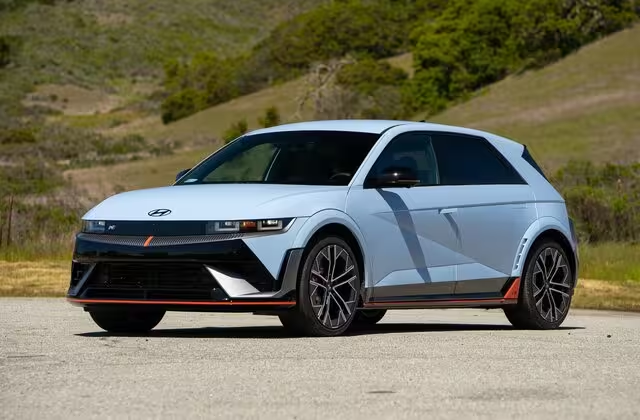
Starting price: $35,000 (SE Standard Range) | Best range: 318 miles (SE RWD, 84 kWh battery) | Charging: 10–80% in ~20 minutes on DC fast charge
The Ioniq 5 is the rare car that gets better in exactly the year it needs to. Hyundai responded to the credit expiration not by holding the line but by slashing prices by an average of $9,147 across the 2026 lineup. The SE trim, the one most buyers should target, now starts at $37,500 with 318 miles of range — that’s $1,450 less than a 2025 SE with the credit applied.
It runs on an 800-volt architecture, which matters at charging stops. From 10% to 80% takes roughly 20 minutes on a high-voltage DC fast charger, and the 2026 model ships with a native NACS port, so there’s no adapter needed at Tesla Superchargers. Every car in the lineup now includes a NACS-to-CCS adapter in the box for CCS-only stations.
The interior is genuinely distinctive: a flat floor (no transmission tunnel), a sliding center console, and a 12.3-inch display with wireless Apple CarPlay and Android Auto standard. Hyundai bundles 10-year/100,000-mile battery warranty coverage and three years of complimentary scheduled maintenance, which meaningfully changes the 5-year cost-to-own math.
Who should not buy this: Anyone who needs to tow more than 3,500 pounds (the max tow rating). The Ioniq 5 N performance variant, which starts at $67,800, is genuinely entertaining to drive but sacrifices range to 221 miles — a significant trade.
2. Chevrolet Equinox EV — Best Value for Family Buyers
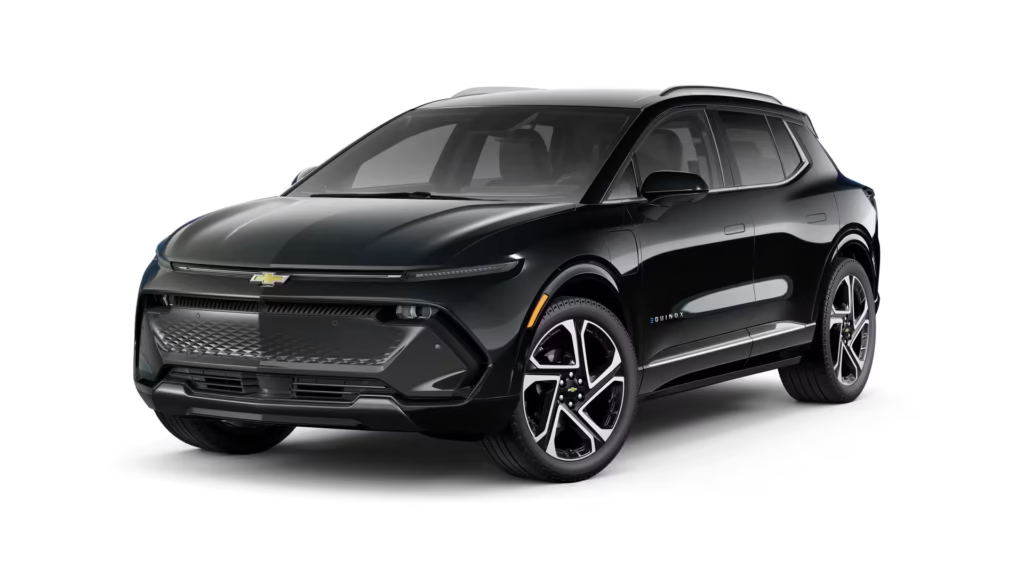
Starting price: $34,995 (LT1 FWD) | Best range: 319 miles (FWD) | Note: No Apple CarPlay or Android Auto
The Equinox EV became the best-selling non-Tesla electric vehicle in the US in late 2025, and it’s not hard to see why. Three hundred nineteen miles of EPA range from a front-wheel-drive setup, a 17.7-inch infotainment screen, and a starting price that’s legitimately competitive with comparably-sized gas SUVs.
Chevy has been running aggressive dealer incentives through spring 2026: up to $10,000 cash discount on the RS trim and $6,500–$8,000 on LT trims as of April 2026. With those incentives applied, the LT1 falls to around $28,500 — which is within shouting distance of the new Nissan Leaf. The standard 0% APR offer on Equinox EV purchases is also meaningful if you plan to finance: at the right loan amount, it’s worth more than the OBBBA deduction.
Edmunds’ real-world range test clocked the FWD Equinox EV at 356 miles — well past the EPA rating — which is one of the largest positive variances of any EV on sale.
The limitation to flag: no Apple CarPlay or Android Auto. Chevy built around Google’s native infotainment system instead, which handles navigation and voice commands well. If you’re iPhone-dependent and rely on CarPlay for everything, it’s a genuine friction point.
Who should not buy this: Buyers who prioritize driving dynamics. The Equinox EV takes 7.8 seconds to reach 60 mph in FWD — adequate, not quick. The Ioniq 5 and Model Y are both noticeably more engaging to drive. Also: the battery warranty is eight years/100,000 miles, but that’s only three years on the general vehicle warranty — shorter than what Hyundai offers.
3. Nissan Leaf (Third Generation) — Cheapest Capable EV in America
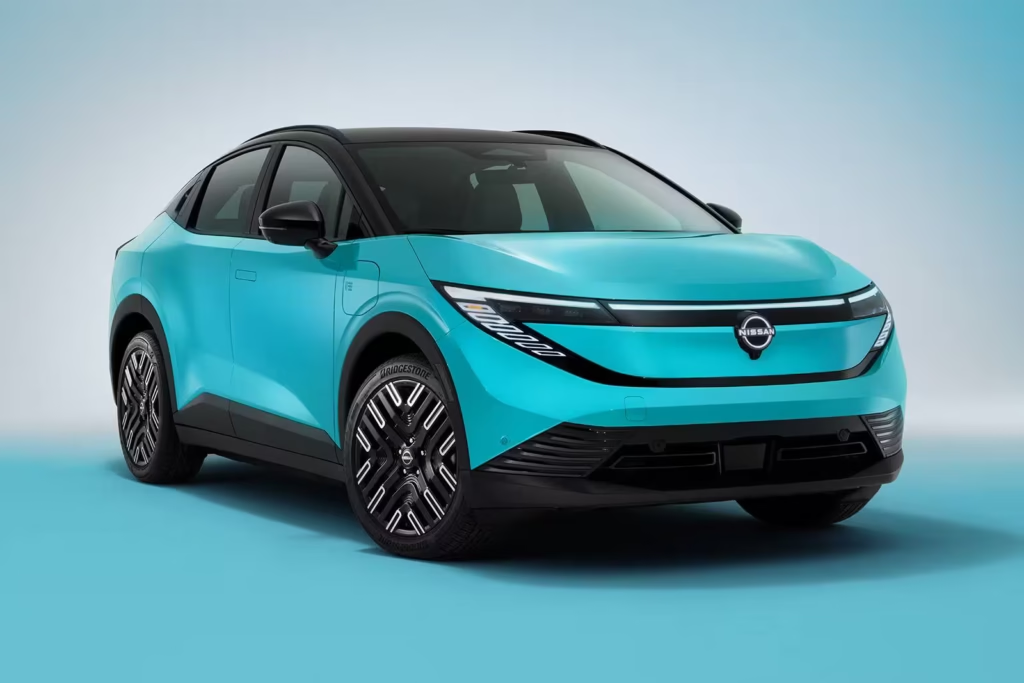
Starting price: $29,990 | Best range: 303 miles (top trims, Nissan-estimated) | Note: Front-wheel drive only; no AWD option
The 2026 Nissan Leaf is a complete rethink of a model that had been falling behind. The original Leaf carried the brand for over a decade on modest range, a dated design, and a CCS port that limited it to slower charging. The third-generation car addresses all three.
Starting at $29,990, it is the least expensive new EV in the US. The design is now a compact crossover rather than a hatchback. Range reaches 303 miles on the top trims. Most importantly, the 2026 Leaf uses a native NACS port — meaning direct Supercharger access without an adapter — a feature its predecessor never had.
It does not offer AWD. That’s a real constraint for buyers in snow-heavy states who don’t want winter tires as their only mitigation. It also can’t tow. And the 0-60 time on base trims is leisurely by EV standards.
But for the buyer who needs a daily driver under $30,000 and covers mostly urban or suburban routes, nothing else in the market offers this combination of price, range, and modern feature set. U.S. News named the Leaf its Best Subcompact Electric SUV for 2026.
Who should not buy this: Anyone who needs four-wheel drive, towing capability, or performance acceleration. Also consider that front-wheel-drive only limits ground clearance utility in serious snow without dedicated winter rubber.
4. Tesla Model Y — Best Range in Class, Best Charging Network
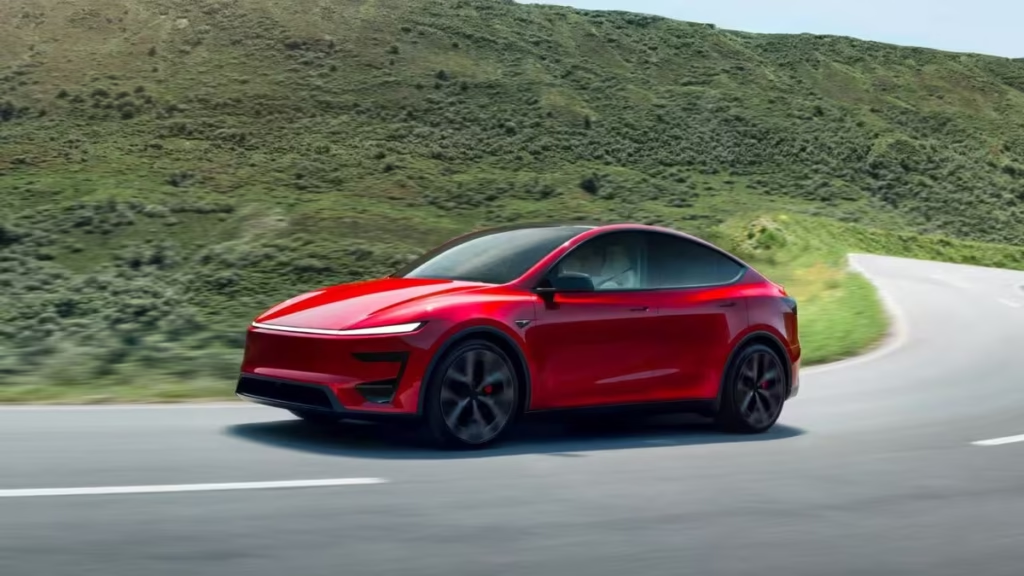
Starting price: $41,630 (base RWD, includes destination) | Best range: 357 miles (Premium RWD) | Charging: 200+ miles in 15 minutes at V3/V4 Supercharger
The Model Y’s competitive advantage in 2026 has clarified: it’s not the design, and it’s not the infotainment (no CarPlay or Android Auto on any trim). The advantage is the Supercharger network and the best range numbers in the compact SUV class.
Tesla restructured the Model Y lineup in early 2026, introducing entry-level RWD and AWD trim levels below the Premium tiers. The base RWD at $39,990 MSRP (before fees) now claims 321 miles of EPA range — a figure that would have been mid-tier territory two years ago. The Premium RWD at $44,990 stretches that to 357 miles.
For buyers who take regular road trips, the Supercharger network argument is still compelling. There are more than 50,000 Supercharger stalls in the US as of Q1 2026, most with near-zero wait times. Non-Tesla EVs with NACS ports (Ioniq 5, Equinox EV, Leaf, Rivian) can access them now, but Tesla owners pay roughly 40% less per kWh than non-Tesla users without a Supercharging membership.
The 5-year cost-to-own figure from KBB ($59,496) includes $30,131 in depreciation — notably steeper than the Ioniq 5’s $24,454 over the same window. If you hold cars longer than five years, that gap matters.
Who should not buy this: Buyers who want Apple CarPlay, Android Auto, or physical controls for climate and volume. Tesla’s all-touchscreen approach has improved but still frustrates many users coming from conventional cars. Also note that the base RWD does not include heated rear seats or ventilated front seats — features that come standard or optionally on Ioniq 5 and Equinox EV trims in the same price range.
5. Lucid Air Pure — Best Luxury EV, Longest-Range Sedan Available
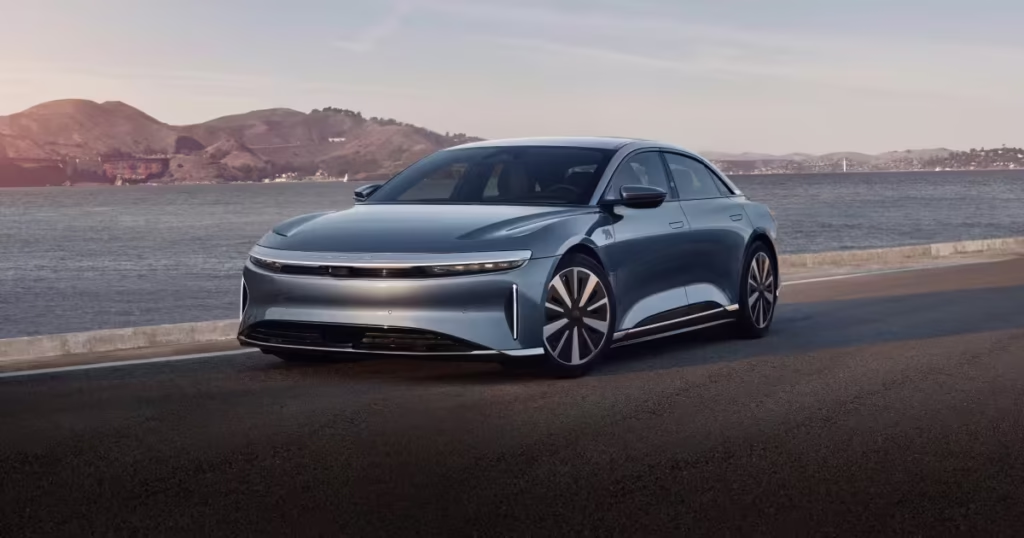
Starting price: $70,900 | EPA range: 420 miles (19-inch wheels) | Charging: 16 minutes for 200 miles at a 350 kW DC fast charger
The Lucid Air Pure is the entry point to the Air lineup, and it’s a category outlier in one specific way: 420 EPA miles from a single rear-wheel-drive motor is the longest range of any RWD EV sedan sold in America. Nothing else is close.
At $70,900, it now overlaps with Tesla Model 3 Performance territory in price while offering a significantly larger cabin, a 34-inch Glass Cockpit display, wireless Apple CarPlay and Android Auto (delivered via OTA in 2026), and Lucid’s 900V-class charging architecture. Two hundred miles of range added in 16 minutes at a 350 kW charger is a figure independent testers have confirmed through instrumented testing.
The Lucid brand carries risk that the German alternatives don’t. Seventeen recall campaigns across 2022–2026 builds, a service network that is still growing, and a Consumer Reports 2025 owner-satisfaction score below segment average. These aren’t deal-breakers, but they’re real considerations a buyer at this price point should sit with.
For the buyer who drives 350+ miles in a day occasionally and doesn’t want to stop, the Air Pure is the only car under $80,000 that makes that realistic without careful planning.
Who should not buy this: Buyers who want a proven dealer service network, strong resale value history, or who aren’t comfortable with an OTA-dependent ownership experience. The BMW i5 eDrive40 at $68,295 offers a shorter range (305 miles) but a far more established support ecosystem. If long-term reliability confidence matters more than range, the BMW is the call.
6. Rivian R1T Dual Standard — Best Electric Pickup Truck
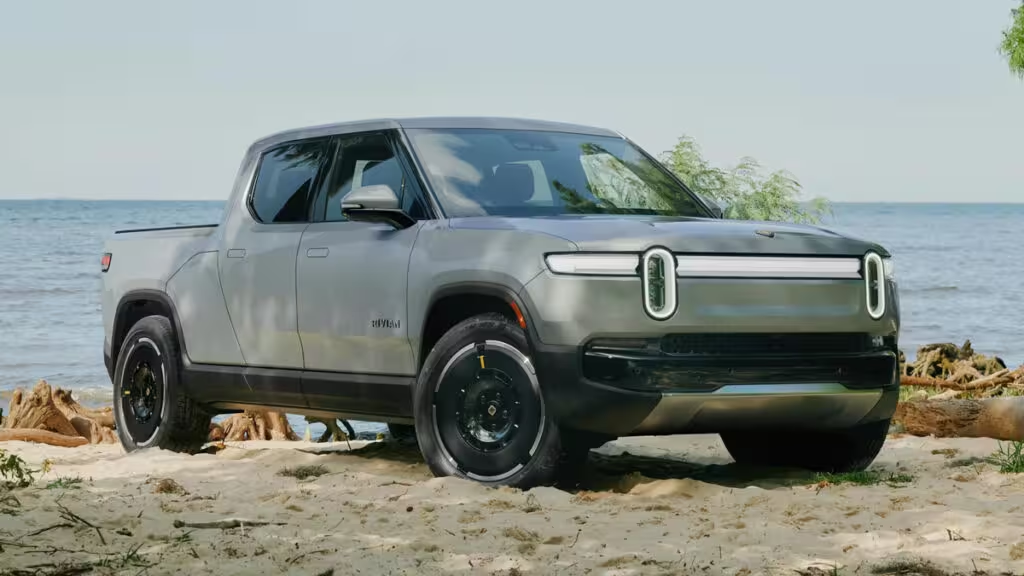
Starting price: $72,990 (Dual Standard) | Estimated range: 270 miles (Dual Standard) | Tow rating: 7,700 lbs (Dual Standard/Large), 11,000 lbs (Max battery only)
The R1T is two years into its Gen-2 refresh, and in 2026 it ships with native NACS charging as standard across the entire lineup — a year late, but now complete. Every R1T includes a CCS adapter in the box.
The Dual Standard at $72,990 is the entry point and the most sensible buy for buyers who don’t need extreme range or towing. The Dual Max at $84,990 extends range and towing substantially. The Quad Motor variant gained an enormous power upgrade for 2026 — 1,025 horsepower with Rivian’s new oil-cooled drive units — and now performs a production-version Tank Turn (called Kick Turn) at up to 12 mph.
Nothing else in the electric truck segment combines the R1T’s off-road capability, build quality, and interior refinement. The Ford F-150 Lightning starts lower but doesn’t match the Rivian on rough terrain. The GMC Sierra EV is roomier but less focused as a trail-capable truck. The Tesla Cybertruck has the range numbers and the Supercharger access, but its controversial proportions and polarized buyer reactions limit its audience.
A key detail competitors miss: the 11,000-pound tow rating is only available on Max battery pack configurations. Dual Standard and Dual Large are capped at 7,700 pounds. If you’re buying an R1T specifically to tow a trailer at full capacity, spec accordingly.
Who should not buy this: Buyers who need a work truck that can be serviced anywhere. Rivian’s service footprint, while growing, still lags traditional automakers. A buyer who needs a truck they can get fixed at a dealer 300 miles from home in a pinch should consider the F-150 Lightning instead. Also: the Dual Standard’s ~270-mile estimated range is below average for the segment at this price.
7. Hyundai Ioniq 9 — Best Three-Row Electric SUV
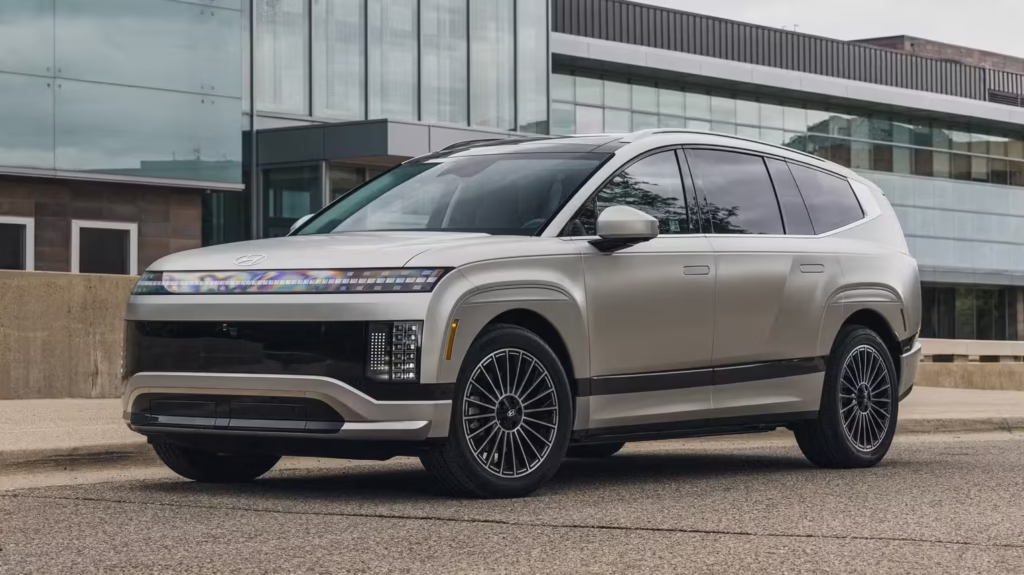
Starting price: ~$60,000 (estimated at time of publication) | EPA range: 300+ miles | Seating: 7 or 8 passengers
The Ioniq 9 is the newest model in this guide, having reached US dealers in late Q1 2026. It is Hyundai’s answer to the question that no American automaker has answered well: a three-row, fully electric family SUV with real range.
It shares the Ioniq 5’s 800-volt charging architecture, which means the same 10–80% in roughly 20 minutes applies to a vehicle that seats seven or eight. U.S. News gave it top honors in the midsize electric SUV category for 2026. It runs quietly, rides comfortably, and doesn’t require the family to compromise on space the way a Ioniq 5 does when four people and a weekend’s worth of luggage are involved.
Exact trim-level EPA ratings and final pricing hadn’t been published to all trims at time of writing. Confirm current figures at Hyundai’s US site before ordering.
Who should not buy this: Buyers who don’t need three rows. The Ioniq 5 delivers most of the same technology and charging speed for $20,000–$25,000 less. Also: as a newly arrived model, long-term reliability data doesn’t exist yet. Buyers who prioritize that should consider waiting for a first ownership cycle to clear before committing.
Who Should NOT Buy an EV in 2026
Not every driver’s situation calls for an electric car right now. Be honest with yourself about these constraints:
No home charging. Apartment and condo dwellers without a dedicated parking spot face a real friction problem. Public charging covers road trips reasonably well, but daily “topping up” at a Level 2 station adds time and planning overhead that most buyers underestimate. If you can’t install a Level 2 charger at home, run the daily charging logistics before you commit.
High annual mileage, remote location. If you drive 30,000+ miles per year and regularly pass through areas with thin charging infrastructure — rural Texas, central Montana, parts of the Southwest — the range and charging stop math works differently than it does in urban corridors.
Two-year ownership plans. EV depreciation in the first two years is steeper than comparable ICE vehicles. The KBB 5-year depreciation figures for the Model Y ($30,131) are notably higher than for a Toyota RAV4 Hybrid in the same period. Shorter holds amplify that hit.
How We Picked These EVs
No manufacturer provided loans, cars, or compensation for inclusion in this guide. Picks are based on:
- Published EPA range ratings and real-world test data from Edmunds, U.S. News, and KBB’s independent testing programs
- Current MSRP and dealer transaction data as of May 2026, verified against manufacturer sites
- Safety ratings from IIHS and NHTSA where published for 2026 model years
- Ownership cost projections from KBB’s 5-Year Cost to Own methodology
- Charging network data from the DOE Alternative Fuels Data Center
Prices verified as of May 5, 2026. EV pricing and incentive programs change frequently. Verify against manufacturer and state energy office sources before purchase.
Frequently Asked Questions
Is there still a federal tax credit for electric cars in 2026?
No. The $7,500 federal clean vehicle credit (Section 30D) expired for vehicles purchased after September 30, 2025, under the One Big Beautiful Bill Act signed July 4, 2025. A new vehicle loan interest deduction replaced it: buyers who finance a US-assembled EV can deduct up to $10,000 per year in loan interest from their taxable income through 2028. That’s a deduction, not a credit — for someone in the 22% tax bracket, it saves roughly $2,200 per year, or about $6,600 over a typical 3-year loan. State incentives in Colorado, New York, Massachusetts, and several other states are still active and stack on top of the federal deduction.
What’s the cheapest new electric car you can buy in the US in 2026?
The 2026 Nissan Leaf starts at $29,990 — the first time a new, fully capable EV has started under $30,000 without a tax credit in effect. The 2027 Chevrolet Bolt, which entered production late in 2026, starts at $28,595 but is a newer model with less ownership history. Both include NACS ports for Supercharger access.
How long does it take to charge an electric car at home?
On a standard 120V outlet (Level 1), most EVs add 3–5 miles of range per hour — usable for very short daily commutes. On a 240V Level 2 home charger (typically a $500–$1,500 installation), most EVs charge from near-empty to full in 7–10 hours overnight. The Ioniq 5’s 800V architecture charges from 10% to 80% in about 24–30 minutes at a public DC fast charger, and under 20 minutes at a high-voltage station. Tesla Supercharger V4 stalls can add 200+ miles in 15 minutes on compatible vehicles.
Which 2026 EV has the best real-world range?
The Lucid Air Grand Touring leads the market at 512 EPA miles. Among vehicles under $50,000, the Tesla Model Y Premium RWD at 357 EPA miles is the range leader. Edmunds’ real-world range test clocked the Equinox EV FWD at 356 miles against its 319-mile EPA rating — one of the strongest positive variances of any EV in the class.
Are EV repair costs higher than gas cars?
The powertrain components in EVs have fewer moving parts than combustion engines and typically cost less to maintain — no oil changes, no spark plugs, no exhaust system. The data from KBB’s 5-Year Cost to Own consistently shows EVs spending less on scheduled maintenance than comparable gas vehicles. The higher risk item is battery replacement outside of warranty. Most manufacturers now offer 8-year/100,000-mile battery warranties, but check the fine print: Hyundai’s warranty covers capacity degradation below 70%, which is meaningful; not all manufacturers define degradation the same way.
Do electric cars work well in cold weather?
All EVs lose range in cold temperatures — the chemistry of lithium-ion batteries slows below 40°F, reducing available capacity. The effect is typically 15–30% range reduction in sustained below-freezing temperatures. Heat pump-equipped models (Ioniq 5, Model Y) recover some efficiency by using less energy for cabin heating than resistive heaters. If you live in a cold climate, factor in a 20–25% winter range buffer when evaluating whether a given model’s EPA range covers your needs.
Should I buy a new EV or a used one in 2026?
The used EV market in 2026 is unusually favorable for buyers. A wave of lease returns from 2023–2025 has pushed supply up and prices down. Used EV sales rose 12% in Q1 2026, and pricing continues to soften. A 2023–2024 Ioniq 5 or Model Y with under 30,000 miles is available in the $28,000–$38,000 range at many dealers — often with significant remaining battery warranty. The federal used EV credit (Section 25E) is also gone for post-September-30, 2025 purchases, but the lower purchase price compensates in most cases.