

iPhone Fold
Apple has not officially announced the iPhone Fold. Everything in this article comes from supply chain sources, analyst research notes, and reporting by Mark Gurman (Bloomberg), Ming-Chi Kuo, and Nikkei Asia. Labeling in this tracker: ✅ = confirmed by multiple credible sources / ⚠️ = reported by one or two credible sources, treat with caution / ❓ = single-source speculation. This page updates when new credible information surfaces.
Last status update: April 16, 2026 — Foxconn has begun trial production. Mass production pushed from June to August. Gurman says fall 2026 launch is still on track. Nikkei says delays could push to 2027. DigiTimes reconciles both. Full timeline analysis below.
Table of Contents
Quick status table — April 16, 2026
| What | Status | Source | Date |
|---|---|---|---|
| Device exists and is in development | ✅ Confirmed | Bloomberg, Nikkei, supply chain | Ongoing |
| Trial production at Foxconn (Zhengzhou) | ✅ Confirmed | Instant Digital (Weibo), 9to5Mac | April 6, 2026 |
| Mass production pushed to August (from June) | ✅ Confirmed | DigiTimes, MacRumors | April 13, 2026 |
| Fall 2026 launch “on track” | ✅ Gurman confirmed | Bloomberg Power On newsletter | April 2026 |
| Delay to 2027 possible | ⚠️ Nikkei report | Nikkei Asia | April 2026 |
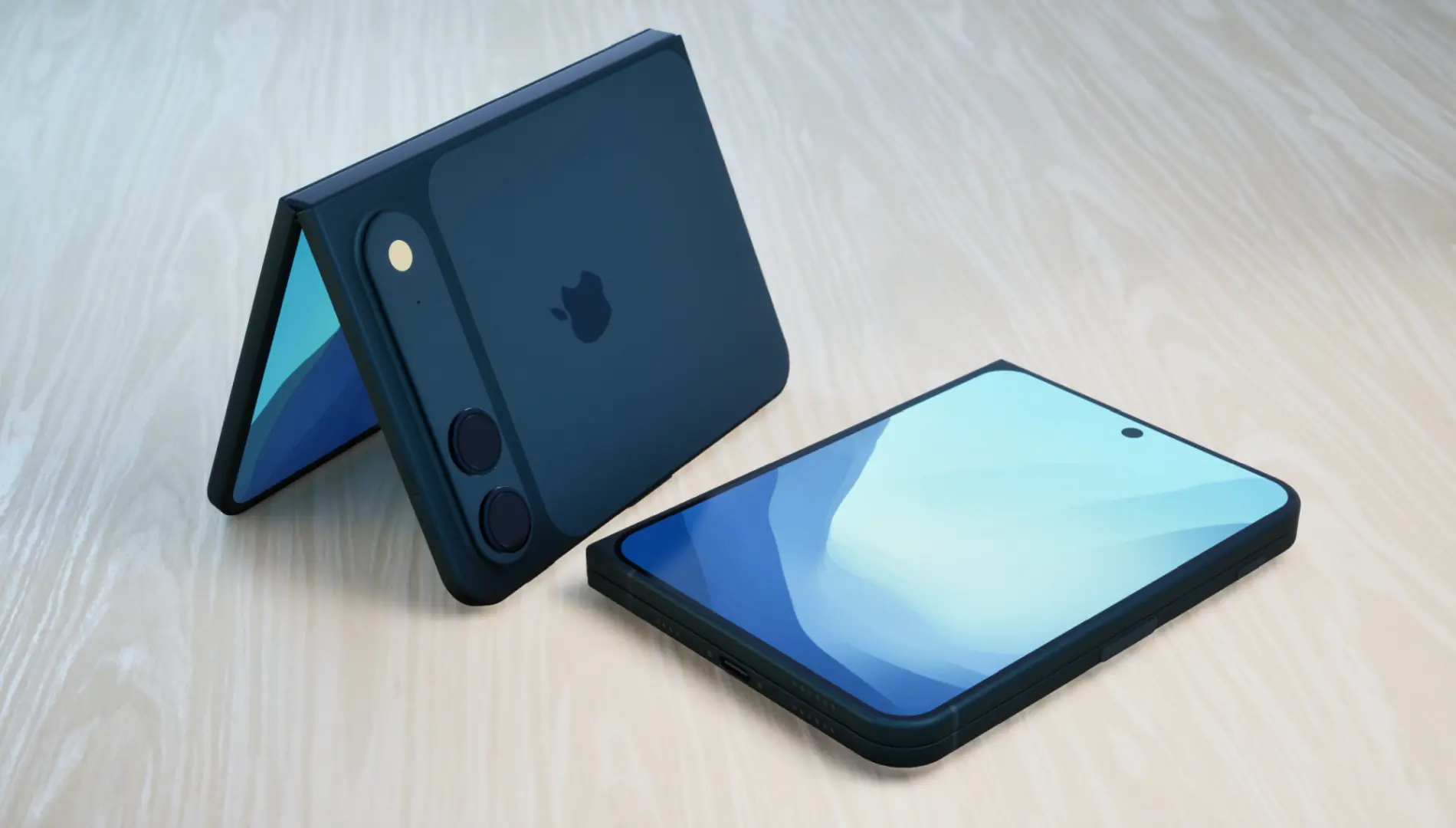
| Book-style (not clamshell) design | ✅ Confirmed | Multiple supply chain sources | 2025–2026 |
| 7.76-inch inner display | ✅ Confirmed | Multiple leakers (MacRumors sourced) | 2026 |
| 5.49-inch outer display | ✅ Confirmed | Multiple leakers | 2026 |
| 4:3 aspect ratio (inner screen) | ✅ Confirmed | Gurman, MacRumors | 2026 |
| Touch ID (no Face ID) | ✅ Confirmed | Kuo + Gurman, independently | 2026 |
| No telephoto camera | ✅ Confirmed | Kuo + Gurman, independently | 2026 |
| A20 Pro chip (2nm, TSMC) | ✅ Confirmed | Multiple analyst reports | 2026 |
| 5,000–5,500mAh battery | ⚠️ Multiple leakers | Weibo leaker Fixed Focus Digital | Feb 2026 |
| 5,800mAh battery (larger claim) | ❓ Single source | Jon Prosser (Front Page Tech) | 2026 |
| Starting price above $2,000 | ⚠️ Analyst consensus | Arthur Liao, Tim Long, Ming-Chi Kuo | 2026 |
| Base price $1,999 | ⚠️ Single analyst | Arthur Liao | 2026 |
| Runs iOS 27 (not iPadOS) | ✅ Confirmed | Gurman, March 2026 | March 2026 |
| Near-crease-free display | ⚠️ Multiple sources | Gurman + supply chain | 2026 |
| Samsung Display as panel supplier | ✅ Confirmed | Supply chain, DigiTimes | 2025–2026 |
| Titanium + aluminum frame | ⚠️ Multiple leakers | MacRumors sourced | 2026 |
| 4.8mm thickness when unfolded | ⚠️ Single leaker | Setsuna Digital | 2025 |
| 256GB minimum storage | ⚠️ Multiple analyst estimates | PhoneArena, MacRumors sourced | 2026 |
| Apple C2 modem (not Qualcomm) | ✅ Confirmed | Multiple supply chain | 2026 |
| Wi-Fi 7 support | ⚠️ Single report | UK outlet | 2026 |
| White as confirmed color option | ⚠️ Single source | Supply chain leak | 2026 |
| Initial production: 7–8 million units | ⚠️ Nikkei | Nikkei Asia | 2026 |
| Apple ordered 20M display panels | ⚠️ Supply chain | DigiTimes | 2026 |
| Kuo estimate: 3–5M units in 2026 | ⚠️ Ming-Chi Kuo | Research note | 2025 |
The four conflicting launch timeline stories — reconciled
This is the section no other tracker has done properly. In the week of April 6–16, 2026, four credible sources reported four different things about when the iPhone Fold ships. Here’s what each one actually said and how to read them together:
Nikkei Asia — “Delays could push to 2027”
Nikkei’s sources inside Apple’s supply chain said: “It’s true that more issues than expected have emerged during the early test production phase, and additional time will be needed to resolve them and make necessary adjustments. The current situation could put the mass production timeline at risk.”
What this means: Nikkei’s reporting reflects real engineering validation (EVT/DVT) difficulties. These are the stages where Apple stress-tests the hinge under tens of thousands of fold cycles and verifies display uniformity. The issues are real — the question is whether they’re resolvable within the existing schedule.
Nikkei’s track record on Apple production timing: Generally accurate on manufacturing conditions, occasionally pessimistic on timelines. The same reporting pattern appeared before the iPhone X launch (2017), which also faced production challenges but shipped on time, albeit in limited supply.
Mark Gurman (Bloomberg) — “On track for fall 2026”
Gurman’s direct rebuttal to Nikkei: the iPhone Fold is “on track” for its expected fall 2026 debut. He separately noted: “There is no doubt that it is going to come a little bit later than the Pro phones.” He attributed this to the inherent complexity of foldable phone production and Apple’s history with major new form factors like iPhone X.
What this means: Gurman has the best overall track record for Apple product timeline reporting. His “on track” assessment carries more weight than most single-source supply chain reports. But his later qualifier — “a little bit later than the Pro phones” — is important. This is not a claim that the iPhone Fold ships day-and-date with iPhone 18 Pro in September. It’s a claim that it ships in fall 2026.
Translation: September announcement is likely. September in-your-hands availability is not guaranteed.
Barclays (Tim Long) — “December shipments”
Barclays analyst Tim Long projected, in a research note, that the iPhone Fold will not reach consumers’ hands until December 2026 — two to three months after the iPhone 18 Pro launch event.
What this means: This is Wall Street analyst research, not supply chain intelligence. Long’s December estimate reflects financial modeling based on Apple’s historical behavior with complex new products (iPhone X shipped in November, AirPods launched weeks after iPhone 7). It’s a reasonable conservative estimate, not a report of specific production difficulties.
DigiTimes — “Production delayed to August, but launch still achievable”
DigiTimes, which has strong Taiwan supply chain sourcing, published a reconciliation: the EVT testing delays are real (confirming Nikkei), mass production has slipped from June to early August (new specific data point), but Apple has not communicated formal launch delays to suppliers (aligning with Gurman’s “on track”).
What this means: This is the most useful single report for understanding the actual situation. The August mass production date gives Apple approximately 4–6 weeks of manufacturing ramp before a September event announcement — tight but achievable if yield rates hit 90%. If manufacturing yields are lower than expected in August, the December shipping scenario becomes more probable.
The synthesis — what to expect
| Scenario | Probability | What happens |
|---|---|---|
| September announcement, limited December availability | Most likely | iPhone 18 Pro announced September, iPhone Fold announced same event but ships December (like iPhone X) |
| September announcement, September availability (limited supply) | Possible | Foxconn hits yield targets in August, Apple ships day-and-date with 18 Pro, extremely low initial supply |
| Delay to 2027 | Lower probability | Engineering issues prove unresolvable in 2026 manufacturing window; Apple waits for a clean launch |
For planning purposes: assume December 2026 for in-your-hands availability in the US. Assume very limited initial supply regardless of when Apple begins taking orders.
Why Apple waited 8 years — the crease problem
Apple’s competitors have shipped book-style foldables since Samsung’s Galaxy Fold in 2019. Apple had concept prototypes as early as 2018. The reason for the eight-year gap is not strategic hesitation — it’s one specific engineering problem that Apple refused to ship around.
The crease problem: When a foldable OLED panel bends, the organic material at the fold point experiences concentrated mechanical stress. Over tens of thousands of fold cycles, this stress permanently deforms the display, creating a visible raised line (the “crease”) that catches light and is visible from most angles. Samsung, Google, Oppo, and Motorola all ship products with visible creases. The Galaxy Z Fold 7’s crease is approximately 0.7mm in depth — improved significantly from generation 1, but still visible under normal lighting.
Apple’s stated position, per multiple supply chain sources: they pursued eliminating the crease “regardless of cost.” The company developed what’s described as “a new material property” in the display stack — a laser-drilled metal support plate beneath the OLED panel that distributes fold stress laterally across the display surface rather than concentrating it at the bend point. Samsung Display, which makes the panels for the iPhone Fold, demonstrated a crease-reduced version of this technology at CES 2026.
Why this matters: If the crease-free (or near-crease-free) claim holds up under independent reviewer testing, the iPhone Fold solves the most persistent criticism of every foldable phone ever made. That’s not incremental — it’s the first category differentiation that would make someone say “this is better than the Samsung, not just different.”
The honest caveat: “near-crease-free” is unverifiable from supply chain leaks. Real crease performance will only be known once independent reviewers get the device. Gurman’s assessment is characteristically conservative — he described it as “nearly invisible” rather than absent.
The three trade-offs Apple made to build this
Building the iPhone Fold required compromises that Apple hasn’t made in a flagship iPhone in years. These are confirmed, not rumored.
Trade-off 1: Touch ID instead of Face ID
Confirmed by: Ming-Chi Kuo and Mark Gurman, independently.
The TrueDepth camera array that powers Face ID — dot projector, flood illuminator, infrared camera — requires a physical depth that doesn’t fit the iPhone Fold’s chassis when closed. Apple has used Touch ID in the power button since the iPad Air and iPad mini — this is a known, functional implementation. But for current iPhone Pro users, it’s a meaningful regression:
- Face ID works without touching the device (sitting on a desk, in a pocket, during video calls)
- Face ID works in low light and with face masks (since iOS 15.4)
- Face ID works in any orientation (landscape, portrait, face-down)
- Touch ID fails with wet fingers, gloves, and some accessibility situations
For users who have used Face ID since iPhone X (2017), this will feel like a step back. Apple almost certainly views this as acceptable because the iPhone Fold is a new product category, not a replacement for iPhone Pro. But it’s worth knowing before you pre-order.
Trade-off 2: No telephoto camera
Confirmed by: Ming-Chi Kuo and Mark Gurman, independently.
The iPhone Fold’s dual rear camera system has a 48MP main wide lens and a 12MP ultrawide. There is no telephoto. 2x “optical-level zoom” is achieved via in-sensor crop — the same technique used on lower-tier iPhone models, not the periscope telephoto found on iPhone 17 Pro Max.
Why this matters: For iPhone Pro users, the telephoto camera is one of the three most-used features. Portrait photography, sports/event photography, and reach zoom all depend on optical telephoto. Losing it for a $2,000+ device is the second most significant spec compromise after Face ID.
The manufacturing reason: a periscope telephoto element requires chassis depth that conflicts with the fold mechanism and the crease-reduction engineering. Apple apparently made the call that display quality takes priority over camera completeness for the first generation.
Trade-off 3: iOS 27 foldable interface is version 1.0
Confirmed by: Gurman, March 2026.
The iPhone Fold runs iOS 27, not iPadOS. That means: no Stage Manager, no windowed apps in the iPadOS sense, no full desktop-class multitasking. What it has: iPad-like app layouts with sidebars when open, split-screen for two apps side by side, and smooth transitions between outer and inner display states.
The honest assessment: iOS 27’s foldable interface is a first-generation software product built for a first-generation hardware category. The Galaxy Z Fold 7 benefits from seven generations of One UI Flex refinement — software that has evolved through thousands of real-world user reports and hundreds of developer optimizations. iOS 27 on the iPhone Fold will be polished by Apple’s standards and will improve faster than Samsung’s iterations did. But it starts behind Samsung on foldable-specific software maturity.
Third-party app adaptation at launch is the biggest unknown. Some apps will feel narrow on the 5.49-inch outer screen. Some will feel unfinished on the 7.76-inch inner canvas. Apple has strong developer leverage, but the ecosystem catch-up takes time.
Confirmed spec sheet (as of April 16, 2026)
| Spec | Confirmed / Estimated | Source |
|---|---|---|
| Inner display | 7.76 inches, OLED, 2713×1920, 120Hz ProMotion | ✅ Multiple sources |
| Outer display | 5.49 inches, OLED, 2088×1422, 4:3 aspect | ✅ Multiple sources |
| Chip | Apple A20 Pro, 2nm (TSMC) | ✅ Analyst consensus |
| RAM | 12GB | ⚠️ Single source (GSMArena estimate) |
| Storage | 256GB / 512GB / 1TB | ⚠️ Analyst estimates |
| Rear cameras | 48MP wide + 12MP ultrawide (no telephoto) | ✅ Kuo + Gurman |
| Front cameras | Two — one for outer display, one for inner | ✅ Gurman |
| Biometrics | Touch ID in power button (no Face ID) | ✅ Kuo + Gurman |
| Battery | 5,000–5,500mAh | ⚠️ Multiple leakers |
| Thickness (unfolded) | 4.8mm | ⚠️ Setsuna Digital |
| Thickness (folded) | 9.0–9.5mm | ⚠️ Kuo estimate |
| Frame | Titanium + aluminum | ⚠️ Multiple leakers |
| Hinge | Titanium alloy, possibly Liquidmetal | ⚠️ Macworld + analysts |
| Modem | Apple C2 (5G including mmWave in US) | ✅ Confirmed |
| OS | iOS 27 (not iPadOS) | ✅ Gurman, March 2026 |
| Colors | White confirmed; others unknown | ⚠️ Single supply chain leak |
| Starting price | $1,999–$2,399 (no official price) | ⚠️ Multiple analysts |
| Panel supplier | Samsung Display | ✅ DigiTimes + multiple |
| Assembly | Foxconn (Zhengzhou) + Tata Electronics (India) | ✅ Supply chain |
iPhone Fold vs. Galaxy Z Fold 7 — buy now or wait?
The Galaxy Z Fold 7 has been available since July 2025 at $1,899. It’s a real, purchasable product with confirmed specs. The iPhone Fold does not exist yet. Here’s the honest comparison based on what’s currently known:
| Galaxy Z Fold 7 | iPhone Fold | |
|---|---|---|
| Available | ✅ Now | ❌ Fall 2026 (est.) |
| Price | $1,899 confirmed | $1,999–$2,399 estimated |
| Inner display | 8.0 inches | 7.76 inches |
| Outer display | 6.5 inches | 5.49 inches |
| Rear cameras | 200MP main + telephoto + ultrawide | 48MP main + ultrawide (no telephoto) |
| Chip | Snapdragon 8 Elite (3nm) | A20 Pro (2nm) — will win benchmarks |
| Battery | 4,400mAh | ~5,000–5,500mAh (rumored) |
| Crease | Visible, ~0.7mm depth | Claimed “near-invisible” (unverified) |
| Biometrics | Under-display fingerprint | Touch ID in power button |
| Thickness (unfolded) | 4.2mm (thinnest foldable available) | 4.8mm (rumored) |
| Software maturity | One UI Flex 7 (7 generations) | iOS 27 (version 1.0) |
| Ecosystem | Android | iOS / Apple |
| DeX / desktop mode | ✅ Yes | ❌ No (iOS 27 only) |
Buy the Galaxy Z Fold 7 now if:
- You use Android and need a foldable today
- Camera versatility (telephoto) matters more than anything
- You want a larger inner display (8.0 vs. 7.76 inches)
- You don’t want to be a first-generation beta tester for Apple’s foldable software
Wait for the iPhone Fold if:
- You’re deep in the Apple ecosystem (Mac, iPad, Apple Watch, AirPods)
- The crease on existing foldables has been the specific reason you haven’t bought one
- Battery life is a priority and the 5,000+mAh rumored spec holds up
- You’re comfortable with first-generation Apple hardware and its known trade-offs
The honest answer for most people: The iPhone Fold’s most significant potential advantage — a near-crease-free display — cannot be verified until independent reviewers test the actual device. If Apple delivers on that claim, it changes the calculus. If the crease is still visible in practice, the case for paying $100–$500 more than the Z Fold 7 for less camera hardware and less mature foldable software is harder to make.
Apple’s second-generation foldable is widely expected in 2027, timed around the iPhone’s 20th anniversary. That device will have resolved first-generation compromises, a more mature software ecosystem, and developers who have had a full year to optimize for the form factor. For most people, waiting for generation 2 is the rational choice.
The market context — why Apple is doing this now
Global foldable smartphone shipments reached 27.6 million units in 2025, growing 25% year-over-year. The market is projected to reach 38.68 billion dollars in 2026. Samsung has held approximately 75–80% of the foldable market since 2019. Every quarter that passes without an Apple foldable is a quarter Samsung’s operating system advantage in the category grows.
Apple’s iPhone generates approximately 52% of total company revenue — $210 billion of $405 billion in fiscal 2025. The upgrade cycle for iPhones has lengthened. A new form factor that compels existing iPhone users to upgrade at $2,000+ price points is a meaningful revenue catalyst in a way that annual iterative upgrades are not.
Analyst Ming-Chi Kuo projects 3–5 million iPhone Fold units in 2026, growing to 20+ million (including a second generation) in 2027. By comparison, Samsung shipped approximately 7 million Z Fold and Z Flip units combined in 2025. If Apple’s first-year projections hold, the iPhone Fold immediately becomes the best-selling foldable phone ever — in its debut year.
Frequently asked questions
When does the iPhone Fold come out?
Apple has not officially announced the iPhone Fold. The most credible reporting (Bloomberg’s Mark Gurman) points to a fall 2026 announcement alongside the iPhone 18 Pro models, with availability likely coming one to three months after the announcement event. Barclays analyst Tim Long projects December 2026 as the more realistic consumer availability date. Nikkei Asia reported in April 2026 that engineering delays could push the launch to 2027, but Bloomberg disputed this. Mass production is currently targeted for early August 2026, pushed from the original June target.
How much will the iPhone Fold cost?
Apple has not announced pricing. Analyst estimates converge on a starting price above $2,000. Analyst Arthur Liao’s estimate puts the base 256GB model at $1,999. The 512GB model is estimated at $2,199–$2,499, and a potential 1TB configuration could reach $2,399–$2,900. These would make the iPhone Fold Apple’s most expensive iPhone ever. All pricing estimates are based on supply chain cost analysis and Apple’s historical margin modeling — none are official.
Will the iPhone Fold have Face ID?
No. Both Mark Gurman (Bloomberg) and Ming-Chi Kuo have independently confirmed that the iPhone Fold will not have Face ID. The TrueDepth camera array required for Face ID does not fit the device’s chassis. The iPhone Fold will use Touch ID integrated into the power button, the same implementation found on the iPad Air and iPad mini.
What chip will the iPhone Fold have?
The iPhone Fold is expected to feature the Apple A20 Pro chip, built on TSMC’s 2nm process. This is the same generation chip expected in the iPhone 18 Pro and Pro Max. The A20 Pro will deliver the fastest mobile processor performance available at launch and will outperform the Snapdragon 8 Elite in the Galaxy Z Fold 7 in raw benchmark testing.
Does the iPhone Fold have a telephoto camera?
No. Ming-Chi Kuo and Mark Gurman have both independently confirmed the iPhone Fold will have a dual rear camera system — a 48MP main wide lens and a 12MP ultrawide — without a telephoto lens. 2× optical-quality zoom is achieved through in-sensor cropping, not a dedicated telephoto element. This is a meaningful trade-off compared to iPhone Pro models and the Galaxy Z Fold 7’s triple-camera system.
How big is the iPhone Fold screen?
The iPhone Fold has two displays. The inner (unfolded) display measures 7.76 inches with a 2713×1920 resolution and a 4:3 aspect ratio, comparable in size to an iPad mini (8.3 inches). The outer (folded) display measures 5.49 inches with a 2088×1422 resolution, also in 4:3 format. Both are expected to be OLED panels with 120Hz ProMotion, supplied by Samsung Display.