

Best Prebuilt Gaming PCs 2026
Quick verdict
| Pick | Best for | GPU | Price |
|---|---|---|---|
| iBUYPOWER Scale SCA5N5501 | Entry-level 1080p, first gaming PC | RTX 5050 | ~$999 |
| CyberpowerPC Gamer Xtreme GXiVR8060A40 | 1080p/1440p, best value with DLSS 4 | RTX 5060 | ~$1,230 |
| Alienware Aurora ACT1250 | 1440p, brand warranty, clean design | RTX 5060 Ti | ~$1,499 |
| iBUYPOWER ELITE RTX 4070 Super | 1440p ultra, best proven value | RTX 4070 Super | ~$1,599 |
| Lenovo Legion Tower 5i Gen 9 | High-end 1440p/4K, AI-powered | RTX 5070 Ti | ~$2,365 |
| Alienware Aurora R16 (RTX 4090) | 4K maximum, no compromises | RTX 4090 | ~$2,499+ |
Prices from Amazon.com and manufacturer pages as of April 2026. Prebuilt pricing fluctuates significantly — check current listings before buying.
The GPU tier that defined a “good” gaming PC in 2019 doesn’t apply the same way in 2026. DLSS 4 Multi Frame Generation — exclusive to NVIDIA RTX 50-series GPUs — multiplies the rendered frame rate by up to 4x using AI. A $999 prebuilt with an RTX 5060 and DLSS 4 enabled can push frame rates in supported titles that a $1,500 RTX 4070 machine can’t match without the AI assist.
This changes the buying calculation at every price tier. And it’s why every guide that still recommends RTX 4000-series hardware as the automatic 2026 choice is missing the most important development in consumer GPU performance since DLSS 2.0.
Below: six prebuilt picks for 2026 across every meaningful price range, the RTX 4000 vs. RTX 5000 decision explained honestly, and the three questions that tell you which tier you actually need.
Table of Contents
The question you need to answer before looking at any specs
What resolution are you targeting?
This single decision determines your GPU tier more precisely than any other factor. The right answer in 2026:
- 1080p, competitive games (CS2, Valorant, Apex, Fortnite): Any RTX 5050 or RTX 4060 handles this at 144+ fps. You don’t need to spend more than $999–$1,100 for a machine that does this job well.
- 1440p, AAA games (Cyberpunk 2077, Black Myth: Wukong, Alan Wake 2): RTX 5060 Ti or RTX 4070 Super is the correct tier. Below that and you’re hitting consistent frame dips at max settings. Above that is headroom, not necessity.
- 4K, maximum settings: RTX 4080 Super or RTX 4090 — and the cost jumps sharply. Only justify this if you have a 4K monitor to match.
The 2019 version of this guide talked about 1080p as the standard and 4K as the aspirational target. In 2026, 1440p is where most serious PC gamers land — it’s the sweet spot between image quality and hardware cost.
RTX 4000 vs. RTX 5000: the honest buying decision
NVIDIA’s RTX 5000 series launched in January 2026. By April 2026, the RTX 5050, 5060, 5060 Ti, 5070, 5070 Ti, 5080, and 5090 are all available in prebuilt form — though supply remains constrained on some models.
The case for RTX 5000:
DLSS 4 Multi Frame Generation is the main reason. Available exclusively on RTX 50-series GPUs, it generates up to three additional frames for every natively rendered frame using AI prediction. In supported games — and the list is growing monthly — an RTX 5060 can approach RTX 4070 frame rates with DLSS 4 Ultra Performance mode enabled. Per Tom’s Guide’s RTX 5060 Ti benchmark coverage, the RTX 5060 Ti outperforms the RTX 4070 Super in multiple titles with DLSS 4 enabled.
The second RTX 5000 advantage: PCIe 5.0 compatibility and Blackwell architecture improvements that will matter more as games evolve over the 4–5 year life of the hardware.
The case for RTX 4000:
RTX 4000-series cards now sell at significant discounts as inventory clears. An RTX 4070 Super in a prebuilt at $1,499–$1,599 represents strong value for DLSS 3 Frame Generation (2x multiplier, not 4x), solid 1440p performance, and proven reliability over two years of wide deployment.
If you’re buying a prebuilt you plan to keep for 3+ years and primarily play titles with strong DLSS 4 support: RTX 5000. If you’re buying a machine for a specific current game catalog and want the best dollar-per-frame today: RTX 4000 at clearance prices is competitive.
Prebuilt vs. custom-built in 2026 — the updated answer
The 2019 article on this page made the case for prebuilts largely because the GPU shortage had made custom builds impossible to price competitively. That shortage ended in 2023. The GPU market has normalized.
So is DIY the better option again? Honest answer: it depends on one thing.
DIY wins if: You’re comfortable selecting, ordering, and assembling components — and you value the ability to pick every specific part (exact RAM kit, specific cooling, exact PSU headroom). A custom build at $1,200 can outperform a prebuilt at the same price because prebuilt margins go somewhere.
Prebuilt wins if: You want Windows 11 pre-installed, a single warranty covering the entire system, no compatibility research, and immediate setup. The performance gap between prebuilt and custom-built PCs has narrowed significantly as GPU prices normalized and component compatibility is handled for you. Quality prebuilts from brands like Skytech, CyberPowerPC, iBUYPOWER, and Alienware come with OS pre-installed, warranty coverage, and professional assembly.
The practical answer for most buyers: if you’re spending $800–$1,500, a prebuilt from iBUYPOWER, CyberpowerPC, or Alienware is competitive enough that the convenience justifies the marginal cost premium. Above $2,000, DIY starts winning clearly on components-per-dollar unless the brand warranty and support is specifically valuable to you.
The six best prebuilt gaming PCs in 2026
1. iBUYPOWER Scale SCA5N5501 — Best entry-level pick
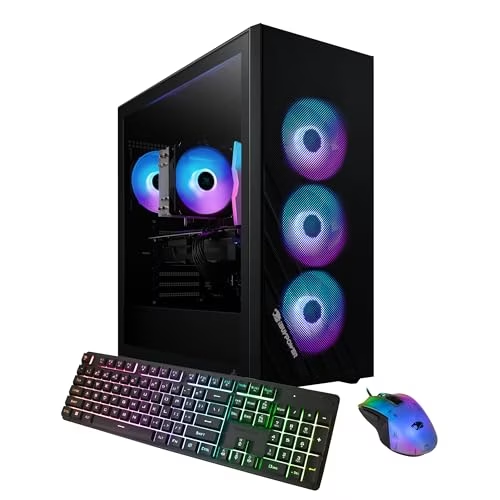
At approximately $999, the iBUYPOWER Scale pairs an AMD Ryzen 5 8400F processor with an RTX 5050 8GB GPU, 16GB DDR5 RAM, and a 1TB NVMe SSD. It ships with Windows 11 Home, a Gamer keyboard and mouse, and iBUYPOWER’s standard warranty.
The RTX 5050 is the entry point for DLSS 4 Multi Frame Generation. In competitive titles — CS2, Valorant, Fortnite, Apex Legends — it delivers 144+ fps at 1080p comfortably. In AAA games at 1080p medium-to-high settings, it handles current titles without throttling. It’s not a 1440p machine and shouldn’t be positioned as one.
The Ryzen 5 8400F is a 6-core processor that handles gaming loads cleanly without bottlenecking the GPU in any current title. iBUYPOWER’s build quality has improved measurably since 2022 — their cable management and thermal setup in the $999 tier no longer looks like a hasty factory job.
What the marketing doesn’t mention: 16GB of DDR5 RAM is functional for current games but some 2025–2026 AAA titles are pushing toward 24GB recommendations. The upgrade path is straightforward (DDR5 DIMMs are relatively inexpensive) but factor it in. The included keyboard and mouse are functional, not impressive.
Who should skip it: Anyone targeting 1440p gaming — the RTX 5050 hits its ceiling there. Anyone who already has peripherals and doesn’t need the keyboard/mouse bundle; sometimes the version without peripherals is better priced.
2. CyberpowerPC Gamer Xtreme GXiVR8060A40 — Best value with DLSS 4
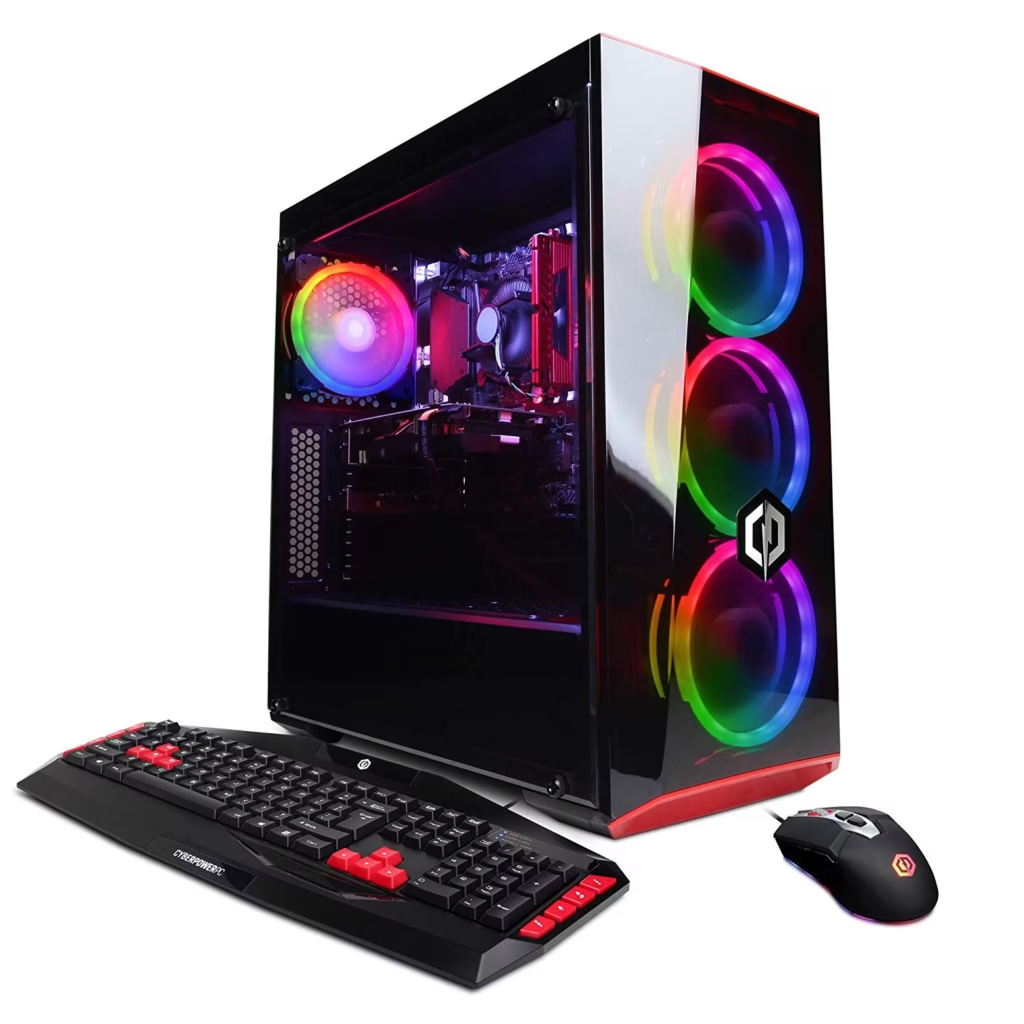
The CyberPowerPC Gamer Xtreme delivers an RTX 5060 8GB GPU with DDR5 RAM and WiFi 6 connectivity at under $1,230, representing genuine best-in-class value at this price tier. Paired with an Intel Core i5-13400F, 16GB DDR5, 1TB PCIe 4.0 SSD, and WiFi 6, this is the first tier where DLSS 4 starts to meaningfully change the gaming experience.
The RTX 5060 delivers approximately 20% more rasterization performance than the RTX 4060, plus the 4x frame multiplication available through DLSS 4 Multi Frame Generation in supported titles. In Cyberpunk 2077 at 1440p with DLSS 4 Quality mode, the RTX 5060 reaches frame rates the RTX 4060 Ti can’t sustain.
The Ryzen 5 + RTX 4060/5060 combo delivers consistent 1080p 120+ FPS in competitive titles and stable 1440p 60 FPS in demanding AAA games. That 1440p 60 FPS figure becomes 1440p 100–120 FPS in DLSS 4-supported titles, which is the real story at this price.
What the marketing doesn’t mention: The i5-13400F is a 13th-gen processor — not the newest Intel generation, but not a bottleneck for the RTX 5060. Budget-tier prebuilts sometimes install slower DDR5 kits than the RAM’s rated speed; verify the DDR5 frequency in the listing description, as slower kits (4400MHz vs 5600MHz) affect performance in AMD-platform machines more than Intel.
Who should skip it: Pure competitive 1080p players who’d be better served saving money with the iBUYPOWER Scale. Anyone targeting consistent 4K — step up significantly.
3. Alienware Aurora ACT1250 — Best for brand trust and clean design
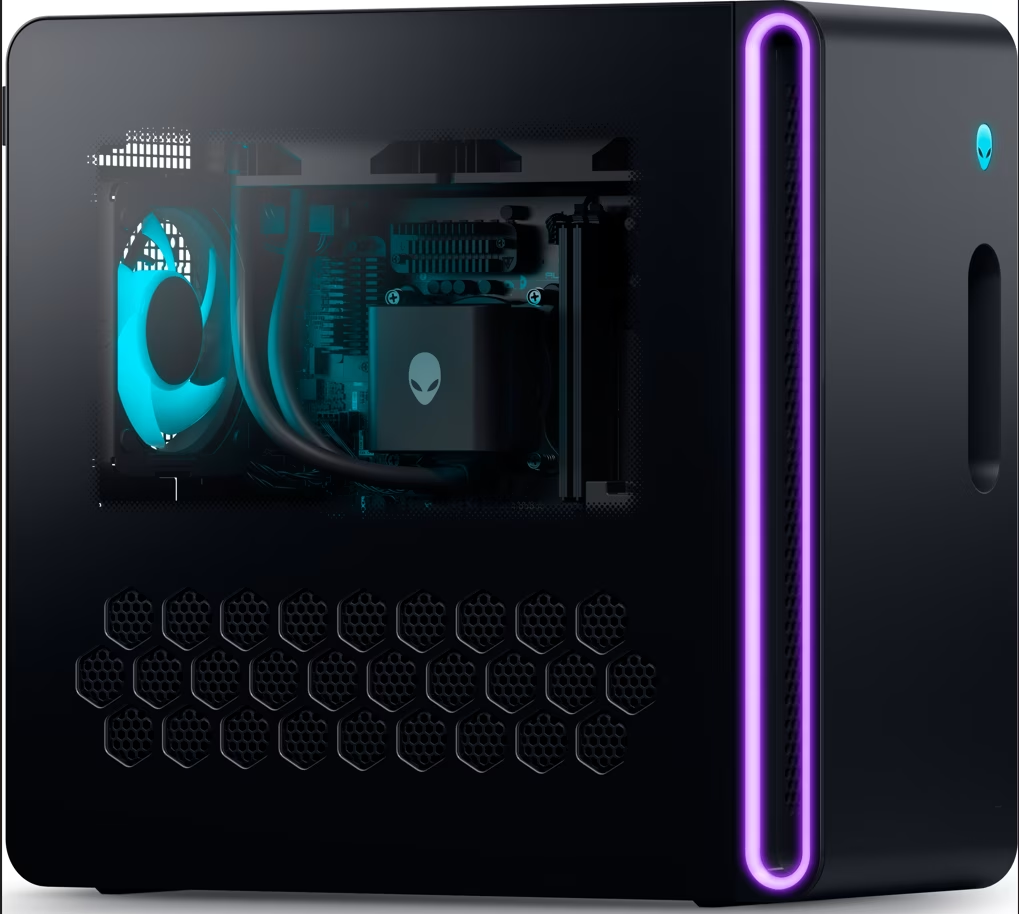
The Alienware Aurora ACT1250 pairs an Intel Core Ultra 7 265F processor with an NVIDIA GeForce RTX 5060 Ti, 16GB DDR5 RAM, 1TB SSD, and a 500W Platinum Rated PSU at $1,499.
The RTX 5060 Ti is the first RTX 5000 card that competes directly with the RTX 4070 Super in rasterization performance — and surpasses it in DLSS 4-supported titles. The Core Ultra 7 265F is Intel’s current-generation processor with efficiency core architecture that handles background tasks without stealing gaming headroom from the performance cores.
The Alienware premium is real: you pay more per-component than with iBUYPOWER or CyberpowerPC. What you get in return is Dell’s warranty infrastructure (onsite service available on premium configurations), the Legend 3 chassis with deliberate airflow engineering, and a support infrastructure that smaller prebuilt brands can’t match.
Frequent DIY upgraders may find the Aurora’s case layout less flexible than a standard tower. Alienware’s proprietary motherboard form factors have historically limited upgrade paths — verify that the power supply wattage accommodates the next GPU tier before assuming a future upgrade is straightforward.
What the marketing doesn’t mention: The 500W PSU is adequate for the RTX 5060 Ti but leaves minimal headroom for a future RTX 5070 or 5080 upgrade without a PSU swap. If long-term upgradability matters to you, factor that cost in upfront.
Who should skip it: Value-focused buyers who don’t need the Alienware brand support — the iBUYPOWER ELITE at the same price tier delivers better component value. Anyone who needs more than 16GB RAM for content creation alongside gaming.
4. iBUYPOWER ELITE RTX 4070 Super — Best proven 1440p value
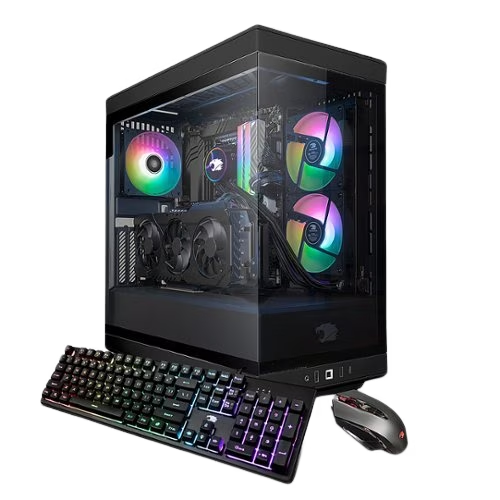
The iBUYPOWER ELITE with RTX 4070 Super and Ryzen 5 9600X is fairly priced at $1,599, delivering excellent 1440p performance — tested at 88 FPS average across a 15-game benchmark suite at 1440p ultra settings.
The RTX 4070 Super is the last RTX 4000-series recommendation worth making in 2026 — it hits 1440p ultra settings comfortably in current titles with DLSS 3 Frame Generation, and the combination of Ryzen 5 9600X (Zen 5 architecture) and DDR5-5600 RAM is the cleanest mid-range platform available. This configuration has two years of public benchmark data behind it, which means fewer surprises than newer RTX 5000-series hardware still accumulating real-world data.
The practical argument for choosing this over an RTX 5060 Ti at a similar price: rasterization performance at 1440p ultra is higher in demanding titles, and DLSS 3 Frame Generation is mature and stable. The argument against: DLSS 4 Multi Frame Generation is not available, and RTX 4070 Super prebuilts will be harder to find as inventory clears.
What the marketing doesn’t mention: This configuration frequently goes on sale for $1,449–$1,549 — check the price history before paying $1,599.
Who should skip it: Anyone who wants DLSS 4 specifically — the RTX 4070 Super is locked to DLSS 3. Buyers at this price point who can wait 2–4 weeks for RTX 5070 prebuilt availability, which would provide a cleaner long-term investment.
5. Lenovo Legion Tower 5i Gen 9 — Best high-end AI-powered build
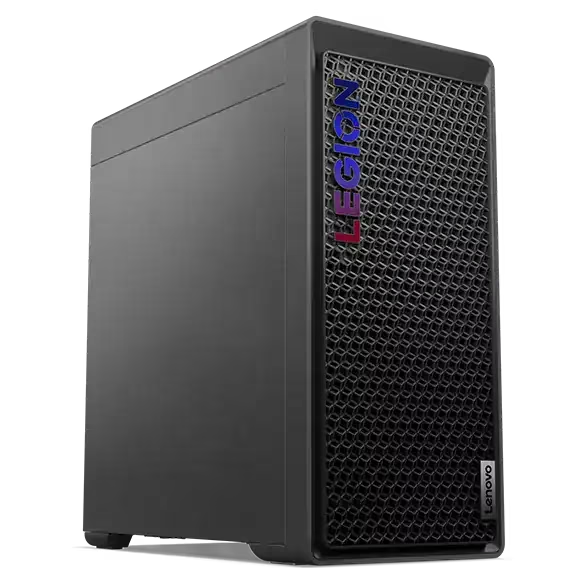
The Lenovo Legion Tower 5i features an Intel Core Ultra 7 265F processor, RTX 5070 Ti GPU, 32GB RAM, and 1TB PCIe NVMe storage — an AI-powered gaming PC positioned for demanding 1440p and 4K gaming.
The RTX 5070 Ti is where 4K gaming at high frame rates becomes genuinely viable with AI assistance. Native 4K at 60+ fps in demanding titles; 4K with DLSS 4 Quality mode pushing 100+ fps in supported games. The Core Ultra 7 265F’s hybrid architecture handles the CPU-side AI workloads that Blackwell offloads more efficiently than older Intel or AMD generations.
Lenovo’s Legion Tower build quality has been consistently strong across multiple generations — better thermal management than comparably-priced CyberpowerPC or iBUYPOWER cases, with a PSU and cooling that don’t need replacement if you decide to step up to an RTX 5080 in two years.
What the marketing doesn’t mention: At $2,365, this machine takes 4+ years to financially justify over a well-configured $1,499 build unless you’re running a 4K monitor today. If you don’t have a 4K display, the RTX 5070 Ti’s ceiling is wasted on a 1440p panel.
Who should skip it: Anyone without a 4K display. Anyone whose primary game catalog is competitive titles where 4K is irrelevant. Value buyers — the RTX 4070 Super configuration at $400 less handles 1440p nearly as well for the existing game catalog.
6. Alienware Aurora R16 (RTX 4090) — Best 4K, no compromises
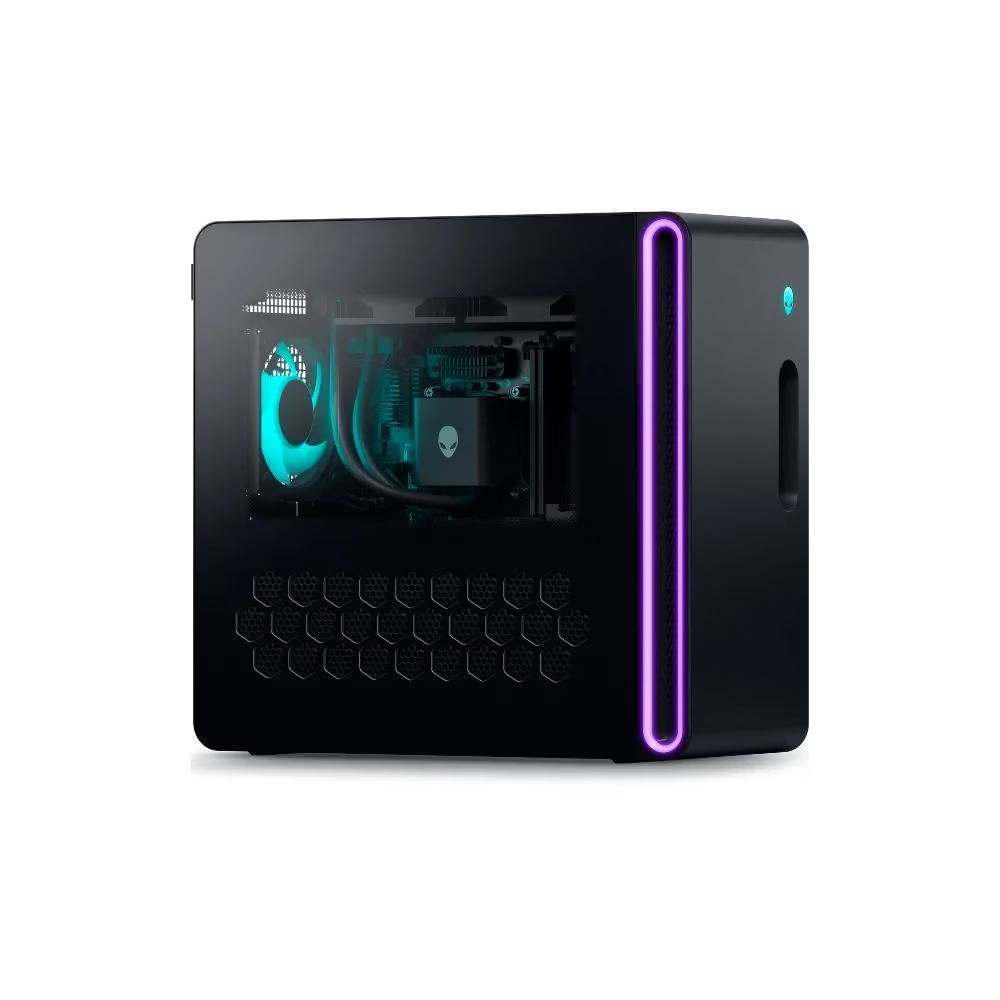
The RTX 4090 remains the fastest consumer GPU available for rasterization workloads in April 2026. Alienware’s Aurora R16 at this tier pairs it with an Intel Core i9-14900F, 32GB DDR5, 1TB SSD, and a 360mm AIO liquid cooler. At approximately $2,499–$2,999 depending on configuration, it’s the ceiling of the prebuilt market without entering workstation territory.
A step up in GPU tier with a 360mm AIO, this configuration provides more GPU headroom for demanding AAA settings and heavier ray tracing. The RTX 4090 handles 4K at maximum settings natively — without DLSS — in every current title. Ray tracing at 4K is where it specifically separates from every other consumer GPU.
The RTX 5090 exists and benchmarks higher, but prebuilt availability at this writing is constrained and pricing is significantly higher. The RTX 4090 at current cleared-inventory pricing represents a genuine value calculation within the enthusiast tier.
What the marketing doesn’t mention: The RTX 4090 is a 450W TDP card. Alienware’s proprietary PSU and power delivery are engineered for it, but future upgrades are constrained by the case’s thermal and power infrastructure. This is a machine you buy to use for 4–5 years, not to incrementally upgrade.
Who should skip it: Everyone who isn’t specifically targeting 4K gaming at maximum settings today. The RTX 5070 Ti at $800 less handles 4K with DLSS assistance and will outperform the RTX 4090 in DLSS 4-supported titles over time as the game library grows.
Gaming PCs vs. consoles in 2026 — the updated comparison
The PS5 and Xbox Series X launched in November 2020. In April 2026, both are mid-cycle with PS5 Pro (November 2024) as the current premium console at approximately $699.
The PS5 Pro targets 4K at 60 fps with PlayStation Spectral Super Resolution (PSSR) AI upscaling — Sony’s equivalent of DLSS. A mid-range gaming PC at $1,200–$1,500 can match or exceed PS5 Pro performance at 1440p/4K with DLSS 4, while doing everything else a PC does.
The console advantage that remains true in 2026: exclusive games (Spider-Man 2, God of War series, Gran Turismo 7 are still PS5-only). If those titles are why you game, a PS5 makes sense regardless of PC performance arguments. For multiplatform gaming, a $1,200 PC is a stronger investment over 5 years given upgradability, modding, free online multiplayer, and lower game prices on Steam.
Frequently asked questions
Are prebuilt gaming PCs worth it in 2026?
Yes, for most buyers. The performance gap between prebuilt and custom-built PCs has narrowed as the GPU shortage ended and prebuilt manufacturers improved their component selection and build quality. For buyers who don’t want to research individual components, handle compatibility, and assemble hardware, a prebuilt from iBUYPOWER, CyberpowerPC, or Lenovo Legion offers strong value — particularly in the $999–$1,599 range.
Should I buy RTX 4000 or RTX 5000 in a prebuilt in 2026?
RTX 5000 for most new purchases. DLSS 4 Multi Frame Generation is a meaningful advantage exclusive to RTX 50-series GPUs, and the RTX 5060 Ti outperforms the RTX 4070 Super in DLSS 4-supported titles. RTX 4000 is still a reasonable buy if you find a significant clearance discount — the RTX 4070 Super at $1,499 is a better deal than the RTX 5060 Ti at $1,499 if the price difference is substantial.
What GPU tier do I need for 1440p gaming?
RTX 5060 Ti or RTX 4070 Super for 1440p at high-to-ultra settings in demanding AAA titles. The RTX 5060 reaches 1440p 60+ fps in many titles with DLSS 4 enabled, which is acceptable — but the RTX 5060 Ti adds meaningful headroom for consistently smooth performance without DLSS reliance.
How much RAM do I need in a prebuilt gaming PC in 2026?
16GB DDR5 is the minimum — most prebuilts in the $999–$1,499 range ship with this. 32GB DDR5 is recommended for anyone doing video editing, streaming, or running heavy background applications alongside gaming. Several 2025–2026 AAA titles have begun recommending 24–32GB. If a prebuilt offers 16GB at a good price, buying a second 16GB DIMM afterward is usually a $50–$80 upgrade.
What resolution should I target in 2026?
1440p is the mainstream target for serious gaming in 2026. 1080p remains correct for pure competitive gaming at high refresh rates (360Hz+). 4K is justified only with an RTX 5070 Ti, RTX 4080 Super, or RTX 4090 — below those tiers, 4K requires DLSS at aggressive modes that reduce image quality below native 1440p.
Can a prebuilt gaming PC run VR in 2026?
Yes. An RTX 5060 Ti or RTX 4070 Super handles Meta Quest 3 and PlayStation VR2 (PC mode) without issue. For PC VR at maximum settings on titles like Half-Life: Alyx or Behemoth, the RTX 5070 or higher is the more comfortable choice. The VR minimum requirements of 2019 (GTX 970) are obsolete — current standalone headsets are more demanding.