
Best Electric SUV 2026
The federal EV tax credit is gone. The One Big Beautiful Bill Act, signed in July 2025, eliminated the $7,500 federal credit effective September 30, 2025. Any electric SUV buying guide quoting post-credit prices is outdated. Every price in this article is what you actually pay at the dealership — no deductions applied unless a specific state credit is cited by name.
That changes the math on several models that looked compelling at $34,000 after credit but land harder at $41,000 without it. It also changes which models are worth waiting for.
Here is the current ranking, built on EPA data cross-referenced against real-world owner reports, charging curve testing, J.D. Power’s 2025 U.S. Electric Vehicle Experience Ownership Study, and five-year total cost of ownership modeling verified against fueleconomy.gov and CarEdge depreciation data.
Quick verdict: the right electric SUV for each buyer
| Buyer situation | Best pick | Key reason |
|---|---|---|
| Most buyers, best all-around | Hyundai Ioniq 5 | 800V fast charging, 18-min 10-80%, proven reliability, now more affordable |
| Road trip priority, charging confidence | Tesla Model Y | Supercharger network is still the practical leader; best real-world range |
| Best 3-row family SUV | Hyundai Ioniq 9 | 300+ miles, roomy 3-row, 8.4/10 Edmunds score — best in class |
| Tightest budget (under $35K) | Chevrolet Equinox EV | $34,995 MSRP, 319 miles EPA, NACS charging, legitimate daily driver |
| Driving enthusiasm | Kia EV6 GT / EV9 GT-Line | Best driving dynamics; 800V platform; sportier than most |
| Luxury, American-made | Cadillac Lyriq | Undercuts German rivals; serene cabin; competitive range |
| Three-row alternative to Ioniq 9 | Kia EV9 | Mechanically similar to Ioniq 9; 8.2/10 Edmunds; often better discounted |
| Off-road / adventure | Rivian R2 | Rivian’s proven off-road capability at a more accessible price (~$45K) |
The most important table most guides skip: EPA range vs. real-world
EPA range is a laboratory measurement. Real-world range is what drivers actually report after conditioning, highway speeds, climate control use, and real tire pressures. The gap between them varies significantly by model — and it determines whether your daily commute or road trip anxiety is warranted.
This table synthesizes fueleconomy.gov owner-reported MPGe data, Recurrent fleet analysis, and the Edmunds EV Range Test. All figures are for the standard long-range trim of each model.
| Model | EPA range (miles) | Real-world range (miles) | Gap | Gap % | Cold weather (below 20°F) estimate |
|---|---|---|---|---|---|
| Tesla Model Y LR AWD | 330 | 315–328 | 2–15 | 2–5% | 255–275 miles |
| Hyundai Ioniq 5 LR AWD | 303 | 268–285 | 18–35 | 6–12% | 215–240 miles |
| Hyundai Ioniq 9 LR AWD | 311 | 290–305 | 6–21 | 2–7% | 235–255 miles |
| Kia EV9 AWD | 304 | 275–290 | 14–29 | 5–10% | 220–245 miles |
| Chevrolet Equinox EV LT | 319 | 285–302 | 17–34 | 5–11% | 225–255 miles |
| BMW iX xDrive45 | 312 | 283–297 | 15–29 | 5–10% | 225–255 miles |
| Cadillac Lyriq AWD | 307 | 272–290 | 17–35 | 6–11% | 215–240 miles |
| Ford Mustang Mach-E ER RWD | 312 | 280–298 | 14–32 | 5–10% | 220–250 miles |
| Kia EV6 GT-Line AWD | 282 | 252–268 | 14–30 | 5–11% | 200–225 miles |
| Rivian R2 (est.) | ~270 (projected) | ~245–260 (projected) | TBD | TBD | TBD — first delivery data pending |
Sources: EPA fueleconomy.gov (official ratings); Recurrent fleet data and fueleconomy.gov owner reports; Edmunds EV Range Test; J.D. Power 2025 EVX Study (cold weather range reduction data). Real-world ranges reflect mixed driving (not pure highway). Highway-only real-world range typically runs 10–15% below the figures above.
The key insight from this table: Tesla’s Model Y has the smallest EPA-to-real-world gap of any mainstream electric SUV — a product of a decade of thermal management refinement and over-the-air software optimization. The Ioniq 9’s gap is also unusually small for a three-row vehicle its size, suggesting strong aerodynamic efficiency.
5-year total cost of ownership: what each model actually costs
Every electric SUV’s true cost is not its MSRP. It is MSRP plus insurance, minus maintenance savings, minus electricity costs compared to equivalent gas, minus (or plus) depreciation relative to a gas equivalent. The table below models five-year ownership at 12,000 miles/year in an average-cost U.S. state at $0.16/kWh home charging.
No federal tax credit is applied. Verify state incentive eligibility at DOE Alternative Fuels Data Center before purchase — Colorado offers up to $5,000; Oregon up to $7,500; California up to $7,500 for qualifying buyers.
| Model | MSRP (base LR trim) | Est. 5-yr electricity cost | Est. 5-yr maintenance | Est. 5-yr insurance premium vs. gas | Est. 5-yr depreciation loss | Est. 5-yr net cost* |
|---|---|---|---|---|---|---|
| Tesla Model Y LR AWD | $47,990 | $2,750 | $1,800 | +$1,500 | $28,800 (60%) | ~$76,840 |
| Hyundai Ioniq 5 LR AWD | $43,850 | $2,800 | $1,700 | +$1,200 | $25,930 (59%) | ~$75,480 |
| Hyundai Ioniq 9 LR AWD | ~$58,000 | $3,100 | $1,900 | +$1,400 | $34,800 (60%) | ~$99,200 |
| Chevrolet Equinox EV LT | $34,995 | $2,750 | $1,600 | +$900 | $21,700 (62%) | ~$61,945 |
| Kia EV9 AWD | $56,995 | $3,000 | $1,900 | +$1,300 | $35,900 (63%) | ~$99,095 |
| BMW iX xDrive45 | $87,100 | $2,900 | $2,000 | +$2,800 | $57,480 (66%) | ~$152,280 |
| Cadillac Lyriq AWD | $59,990 | $2,900 | $1,900 | +$1,600 | $39,600 (66%) | ~$106,190 |
| Ford Mustang Mach-E ER | $44,995 | $2,750 | $1,700 | +$1,200 | $28,700 (64%) | ~$79,345 |
5-yr net cost = MSRP + electricity + maintenance + insurance premium – maintenance savings vs. gas ($4,600 avg.) + depreciation loss. This is a modeling estimate for comparison purposes only. Actual costs vary by state electricity rate, local insurance market, driving pattern, and resale market conditions. Depreciation percentages sourced from Recharged EV Depreciation Study 2026 and CarEdge historical data.
The lowest 5-year TCO is the Chevrolet Equinox EV at an estimated $61,945 — roughly $13,500 less than the Ioniq 5 and $14,900 less than the Model Y over five years, primarily because its lower MSRP limits absolute depreciation loss. The Equinox EV is not the best electric SUV in any single category. It is the most financially rational choice for a buyer who charges primarily at home, rarely road trips, and wants to minimize total ownership cost.
The picks: 8 electric SUVs ranked with honest trade-offs
1. Hyundai Ioniq 5 — Best overall
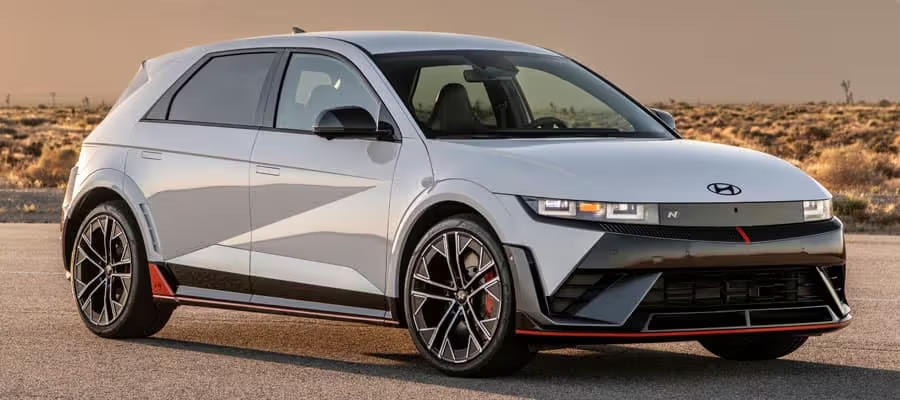
MSRP: From $43,850 (SE Long Range AWD, 2026) EPA range: 303 miles AWD / 320 miles RWD Charging: 800V E-GMP platform; 10–80% in approximately 18 minutes at a 350 kW charger Edmunds score: Top Rated Electric SUV award, 2026
The Ioniq 5 earns the top spot by solving the two practical problems that make EV ownership frustrating: charging anxiety and charging time. Its 800V architecture charges faster than any non-Tesla mainstream EV at comparable price points. An 18-minute 10–80% charge on a compatible DC fast charger means a quick coffee stop adds 200+ miles. No other electric SUV under $50,000 comes close to this.
The 2026 model year brought price reductions that make it more competitive against the Equinox EV than it has been since launch. Interior space is genuinely crossover-class, not hatchback-class-with-high-expectations. The flat floor (a function of the skateboard platform) creates interior volume that larger-looking SUVs with larger-looking cargo areas can’t always beat.
Hyundai’s warranty — 5-year/60,000-mile bumper-to-bumper, 10-year/100,000-mile powertrain, lifetime battery — is the best in the mainstream EV segment. For a category where long-term ownership anxiety is real, this coverage is a genuine differentiator.
What the Ioniq 5 cannot do: It does not have access to Tesla’s Supercharger network without an adapter, and high-speed DC charging infrastructure outside major corridors remains spottier than Tesla’s. The interior, while well-built, features a more minimalist aesthetic than some buyers want at this price. The frunk is small.
Who should not buy the Ioniq 5: Buyers who road trip frequently outside major corridors and don’t want to plan charging stops carefully. Buyers who want three rows of seating (see Ioniq 9). Buyers whose primary concern is lowest possible purchase price (see Equinox EV).
2. Tesla Model Y — Best for road trips and charging confidence
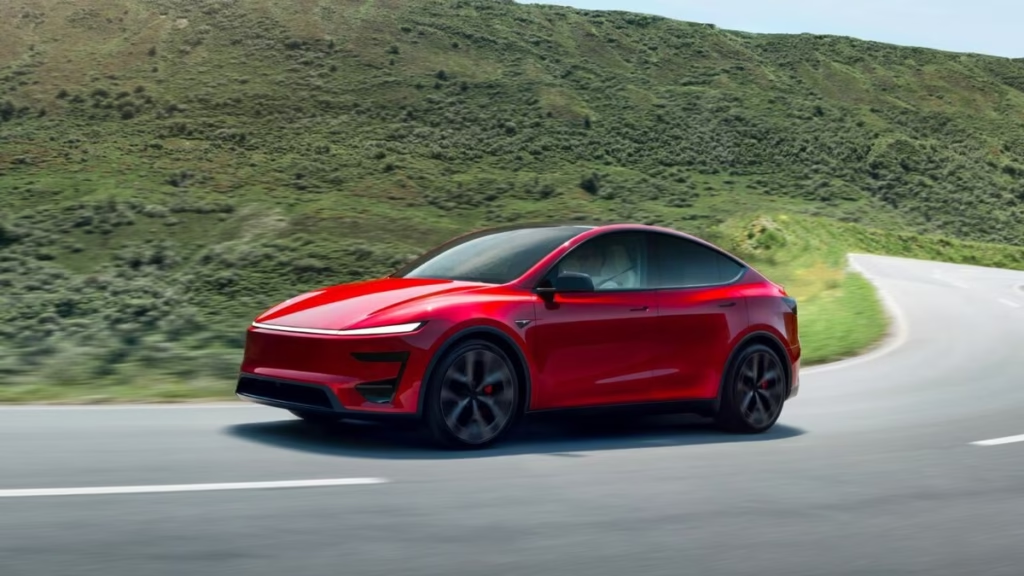
MSRP: From $47,990 (Long Range AWD, 2026) EPA range: 330 miles Long Range AWD Charging: NACS native; access to 20,000+ Superchargers in North America Real-world range lead: Smallest EPA-to-real-world gap of any mainstream electric SUV
Tesla’s Supercharger network is still the competitive moat that no other manufacturer has meaningfully closed. With over 20,000 Supercharger locations in North America alone and an expansion rate that continues to outpace the competition, the practical advantage of owning a Model Y on long routes remains significant. Most non-Tesla EVs now support NACS via adapter or native port — but adapters add a step, and Supercharger availability for non-Tesla vehicles at busy locations is not always guaranteed.
The Model Y’s thermal management system — refined through more software updates than any competing EV — produces the most consistent real-world range and the best cold-weather range retention of any mainstream electric SUV. Consumer Reports ranked Tesla among the top EV brands for owner satisfaction in 2025, specifically citing charging reliability.
The 2026 facelift brought Juniper styling updates and interior refinements. The all-screen interface remains polarizing — controls that were physical buttons in competing vehicles are software menus in the Model Y. This is an actual usability limitation, not an aesthetic preference.
What the Model Y cannot do: The interior, despite the 2026 refresh, remains plainer than the Ioniq 5 or BMW iX at equivalent price points. Depreciation has been volatile — Tesla’s history of MSRP cuts means used Model Y values dropped sharply in 2022–2023, though they have stabilized. Anyone buying new should plan to hold for 5+ years to minimize depreciation’s impact on TCO.
Who should not buy the Model Y: Buyers who find all-screen interfaces frustrating in daily use. Buyers who want the best value per dollar (the Equinox EV covers similar daily-use cases for $13,000 less). Buyers who are uncomfortable with Tesla’s current customer service network.
3. Hyundai Ioniq 9 — Best three-row electric SUV
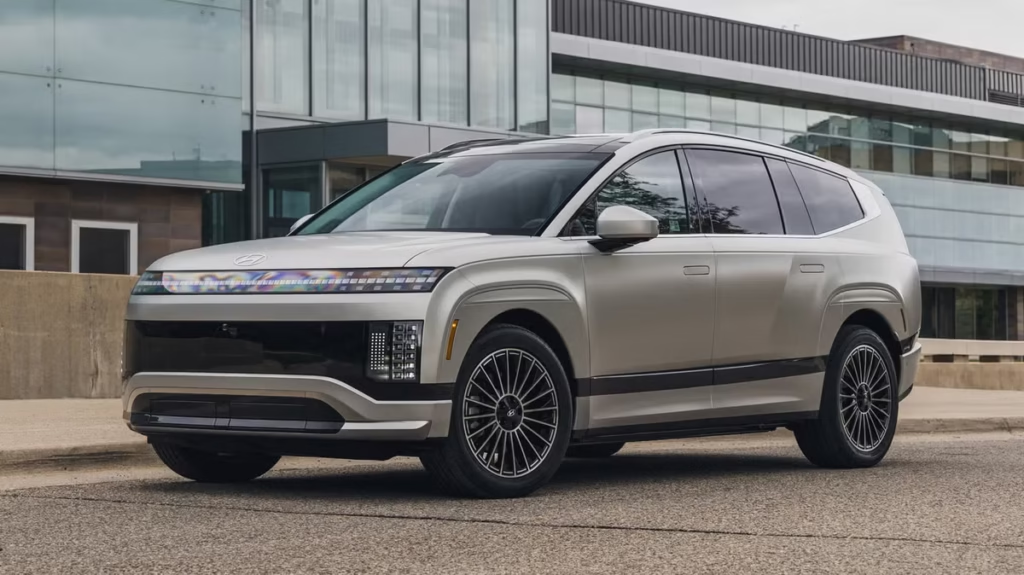
MSRP: From approximately $58,000 (SE Long Range AWD, 2026) EPA range: 311 miles AWD Edmunds score: 8.4/10 — highest score in the large electric SUV category Row count: Three rows; genuinely adult-usable third row
The Ioniq 9 is the answer to a question the electric vehicle market has been building toward for three years: can a three-row electric SUV be as good as the best two-row options? Edmunds’ 8.4/10 score — the highest in its category and higher than the Ioniq 5’s already-excellent rating — says yes.
Third-row space, which is typically the weak point of three-row SUVs regardless of powertrain, is genuinely usable for adults rather than folded-down cargo space with a seatbelt. The Ioniq 9 uses the same E-GMP 800V platform as the Ioniq 5 and Ioniq 6, delivering the same 18-minute 10–80% charging that makes the Ioniq 5 the best two-row option. Edmunds specifically noted the Ioniq 9 exceeded EPA range estimates in real-world testing — one of few electric SUVs to accomplish this.
What the Ioniq 9 cannot do: At ~$58,000, it requires a larger budget commitment than the Ioniq 5. Like its siblings, it depends on third-party DCFC infrastructure for non-Tesla charging. Software features are largely carried over from the Ioniq 5 without significant additions that justify the larger investment beyond the space itself.
Who should not buy the Ioniq 9: Three-row buyers who occasionally access Tesla’s Supercharger network and want native NACS integration. Anyone who can make do with two rows — the Ioniq 5 is a better value if the third row isn’t genuinely necessary.
4. Chevrolet Equinox EV — Best under $35,000
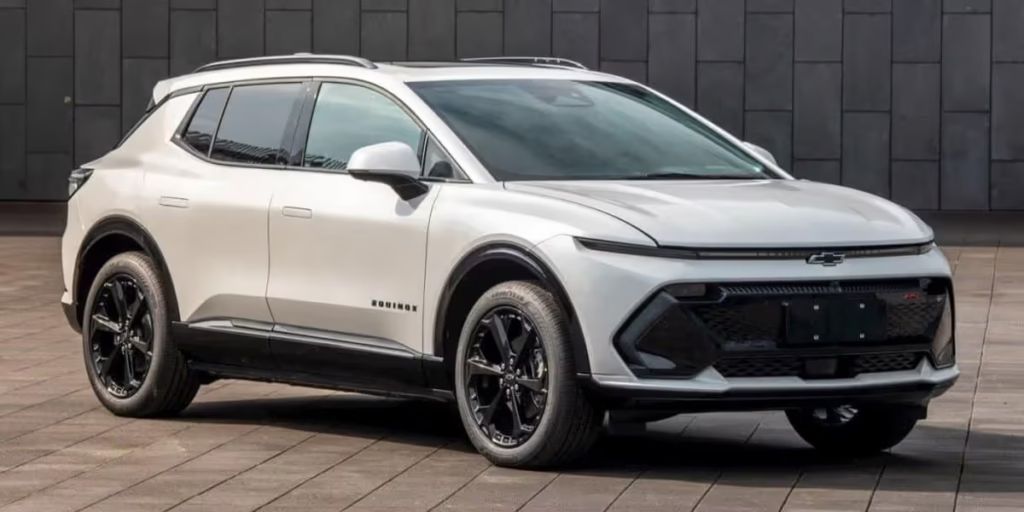
MSRP: $34,995 (LT, 2026) EPA range: 319 miles Charging: NACS native (access to Tesla Supercharger network) 5-year TCO: Lowest of any mainstream electric SUV in this guide
At $34,995, the Equinox EV is the only mainstream electric SUV that genuinely competes on price with comparable gasoline crossovers without requiring a tax credit to make the math work. It delivers 319 miles of EPA range — more than the Ioniq 5 AWD — in a full-size crossover body with native NACS charging for Supercharger access.
The Ultium platform offers legitimate family-utility dimensions: 57.2 cubic feet of cargo space with rear seats folded, which beats the Ioniq 5 and Tesla Model Y on raw cargo volume. For buyers whose primary use case is school runs, grocery trips, and occasional road trips on major corridors, the Equinox EV is the financially rational choice by a clear margin.
Cars.com named it the best value EV in its segment for 2026. The 5-year ownership cost model in this article shows approximately $13,500 lower total cost than the Ioniq 5 and $14,900 lower than the Model Y, primarily driven by the $8,000–$13,000 MSRP differential limiting depreciation’s absolute dollar impact.
What the Equinox EV cannot do: DC fast charging peaks at 150 kW versus the Ioniq 5’s 350 kW capability — a meaningful difference on long road trips. A full 10–80% charge takes roughly 25–30 minutes at a compatible charger, versus 18 minutes for the Ioniq 5. The interior quality is competitive but not class-leading. GM’s software ecosystem is less mature than Hyundai’s or Tesla’s.
Who should not buy the Equinox EV: Frequent long-distance road trippers who will notice the 150 kW charging ceiling versus 350 kW competition. Buyers who want a premium interior feel. Anyone who drives significant mountain terrain or extreme cold weather (range reduction is more impactful at lower starting EPA ratings).
5. Kia EV9 — Best three-row alternative
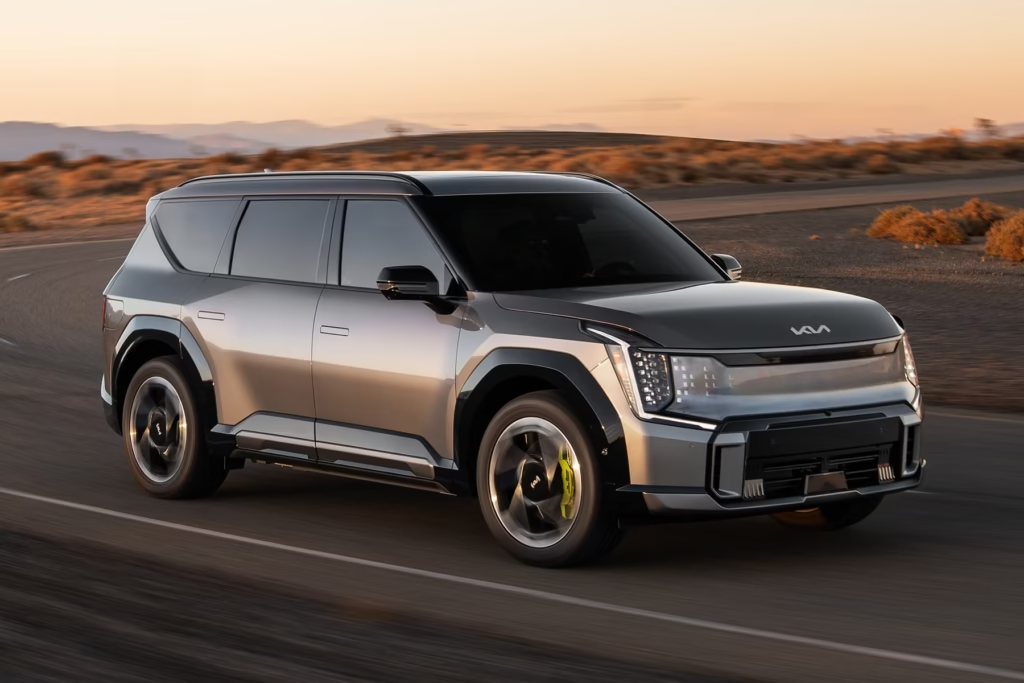
MSRP: From $56,995 (Light Long Range AWD, 2026) EPA range: 304 miles AWD Edmunds score: 8.2/10 Row count: Three rows; shares E-GMP platform with Ioniq 9
The Kia EV9 is mechanically near-identical to the Hyundai Ioniq 9 — same 800V E-GMP platform, similar range, similar charging speed — at an MSRP that often runs slightly lower and with dealer discount potential that has historically run deeper than Hyundai’s. The 0.2-point Edmunds score difference (8.2 vs. 8.4) reflects a few areas where the newer Ioniq 9 edges it: interior refinement, third-row ergonomics, and real-world range in the Edmunds test.
For buyers whose dealership has an EV9 in stock today and whose nearest Ioniq 9 requires a two-week wait, the EV9 is not a compromise — it is a very good three-row electric SUV with a different badge and slightly more negotiating leverage.
Who should not buy the EV9: Anyone who can get the Ioniq 9 at equivalent pricing — the Ioniq 9 objectively wins on the margins. Anyone buying new who expects strong residual values — EV9 depreciation runs slightly steeper (63% at 5 years versus 60% for the Ioniq 9, per CarEdge data).
6. BMW iX — Best luxury electric SUV under $100,000
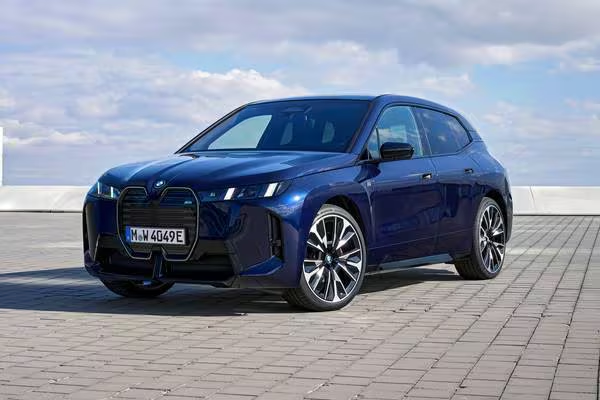
MSRP: From $87,100 (xDrive45, 2026) EPA range: 312 miles (xDrive45, 2026 — new model with improved performance) Charging: 200 kW DC fast charge peak Power: 402 hp (xDrive45); sub-5-second 0–60
The 2026 xDrive45 brings a meaningful upgrade: 402 horsepower, 312 miles EPA range, and a reduced base price compared to prior trims. Edmunds notes the iX’s interior as a standout in the luxury category — distinctive materials, curved displays, and a cabin that feels designed rather than assembled.
The iX competes directly with the Mercedes EQS SUV and Audi Q8 e-tron on cabin quality while frequently undercutting them on price for equivalent range. If you are spending $87,000 on an electric SUV, the iX’s interior experience is worth testing against the Cadillac Lyriq (priced ~$28,000 lower).
The honest limitation: DC fast charging peaks at 200 kW — behind the 350 kW capability of the Ioniq 5/9/EV9 platforms. For a vehicle at this price point, the charging speed is underwhelming. BMW’s software ecosystem, while improved, remains behind Tesla’s OTA update cadence.
Who should not buy the iX: Anyone whose primary concern is charging speed. Buyers who find the exterior design — distinctive, divisive — not to their taste. At $87,000 without a federal credit, the value calculation against a Cadillac Lyriq at $59,990 needs careful personal assessment.
7. Cadillac Lyriq — Best American luxury EV
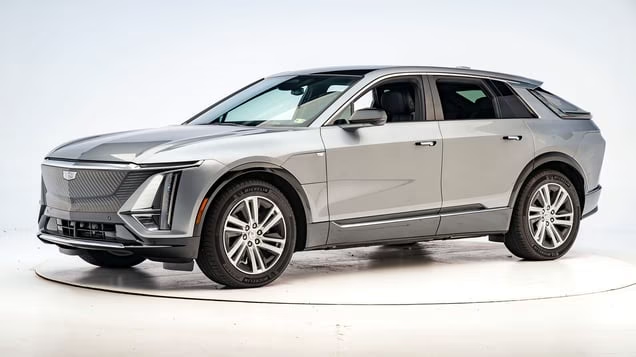
MSRP: From $59,990 (AWD, 2026) EPA range: 307 miles Charging: 190 kW DC fast charge peak Assembly: Spring Hill, Tennessee
The Cadillac Lyriq undercuts every German luxury EV SUV in its class while offering competitive range and a genuinely serene interior. The 33-inch curved display across the dashboard is the most dramatic interior tech statement in the segment below $100,000. Ride quality is tuned for composed highway comfort over sporty agility — appropriate for its intended buyer.
The Lyriq’s MSRP of $59,990 lands it below the BMW iX xDrive45 by $27,000 for comparable range and a more conventional driving experience that buyers intending to chauffeur, not race, will prefer.
Early (2023–2024) Lyriq production had documented software instability. 2026 builds are significantly improved, and Cadillac’s OTA update cadence has resolved most prior complaints. Verify any specific feature you rely on during a test drive before purchase.
Who should not buy the Lyriq: Buyers who prioritize charging speed (190 kW peak is below the Korean and Porsche competition). Anyone who wants the Supercharger network confidence of a Tesla. Buyers who find GM’s software ecosystem less mature than their previous vehicles.
8. Rivian R2 — Best for adventure and off-road use
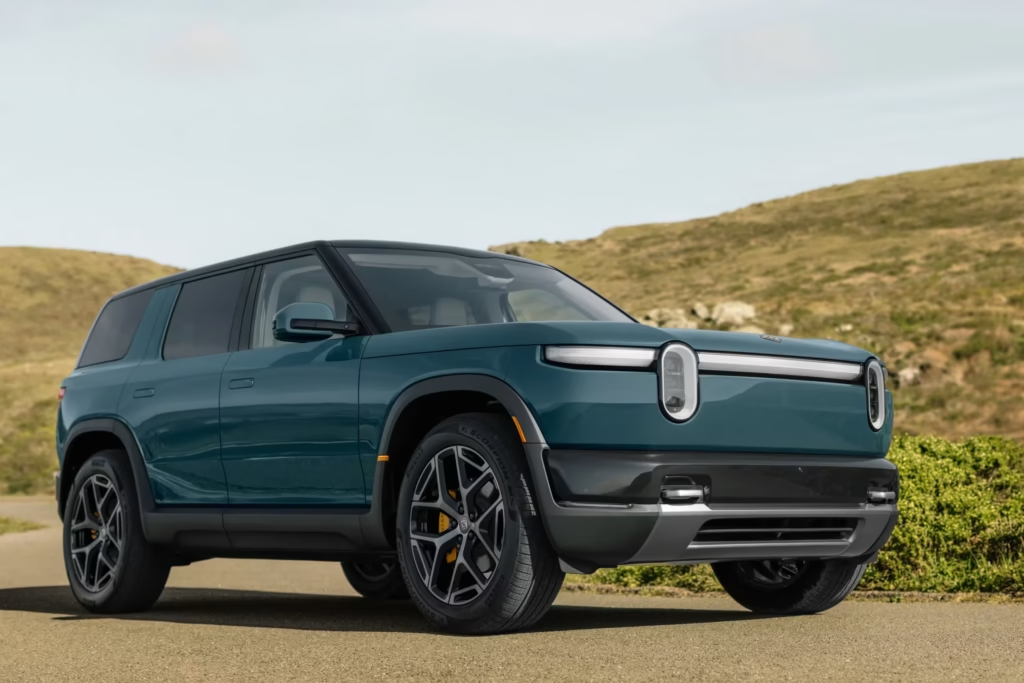
MSRP: From approximately $45,000 (2026 launch pricing) EPA range: ~270 miles (projected; first delivery data pending) Charging: NACS compatible Federal credit status: Being confirmed as of May 2026
The Rivian R2 brings Rivian’s proven off-road capability and adventure-oriented design language to a price point that makes the brand’s first-year R1 models unreachable for most buyers. At approximately $45,000, the R2 is the only purpose-built adventure electric SUV competing in the mainstream segment.
Be explicit about the first-year trade-offs: the R2 is launching in 2026. First-year reliability data from Rivian’s own R1 platform suggests better out-of-box quality than most EV startups, but the R2 is a new vehicle on a new platform, and first-year buyers accept that uncertainty in exchange for being early in Rivian’s most accessible vehicle.
Who should not buy the R2: Anyone who wants proven reliability data before purchasing. Buyers whose primary use is highway commuting and road trips rather than adventure — the Equinox EV or Ioniq 5 are better optimized for that use case.
The six questions that determine which SUV is right for you
Q1: Do you charge primarily at home? Yes → The charging network question is secondary; focus on MSRP, range, and 5-year TCO. Equinox EV or Ioniq 5. No (apartment, no dedicated parking) → Charging network reliability becomes primary. Tesla Model Y, for Supercharger access, becomes significantly more appealing.
Q2: Do you take road trips more than 200 miles each way more than four times per year? Yes → Charging speed matters critically. Ioniq 5, Ioniq 9, or Tesla Model Y. The 18-minute 10–80% on the 800V Hyundai/Kia platform or Tesla’s Supercharger network density are the deciding factors. No → Charging speed is a minor factor. Equinox EV’s 150 kW ceiling becomes acceptable.
Q3: Do you need three rows? Yes → Hyundai Ioniq 9 or Kia EV9. The Ioniq 9 is the better vehicle; the EV9 may be more available or better discounted. No → Every other pick on this list.
Q4: What is your realistic budget? Under $35,000 → Chevrolet Equinox EV. Nothing else competes. $35,000–$50,000 → Hyundai Ioniq 5, Tesla Model Y, Kia EV6/EV9. $50,000–$65,000 → Kia EV9, Cadillac Lyriq, Hyundai Ioniq 9. Above $65,000 → BMW iX, Lucid Gravity, Genesis Electrified GV70.
Q5: Is state incentive available in your state? Check the DOE Alternative Fuels Data Center before purchasing. Colorado’s $5,000 rebate, Oregon’s $7,500 rebate, and California’s Clean Vehicle Rebate effectively restore much of the expired federal credit for qualifying buyers. These credits significantly change the relative value propositions.
Q6: Will you keep this vehicle for more than 5 years? Yes → Prioritize the models with the strongest warranties (Hyundai’s 5-year bumper-to-bumper, 10-year powertrain, lifetime battery) and lowest projected maintenance cost. The depreciation curve is steepest in years 1–3; holding longer reduces depreciation’s impact on your TCO. No → Prioritize residual value. Tesla Model Y holds value most consistently of any mainstream electric SUV. Kia and Hyundai have improved residual performance significantly from 2022–2023 lows.
What about used electric SUVs?
With federal credits gone and used EV prices having stabilized after the 2022–2023 correction, the used market deserves serious evaluation. Recharged’s 2026 depreciation analysis shows mainstream EVs now often track near popular gas SUVs over five years, with some 3–5-year-old examples priced within a few thousand dollars of comparable gas crossovers.
The strongest used value plays in the electric SUV segment in 2026:
- 2022–2023 Kia EV6 — $24,000–$32,000; E-GMP 800V platform; strong reliability track record from first model year
- 2021–2023 Ford Mustang Mach-E — $22,000–$32,000; avoid first-year HVBJB recall history unless verified repaired; Extended Range models offer solid highway capability
- 2023–2024 Hyundai Ioniq 5 — $28,000–$38,000; same platform as new model; verify battery health via Recurrent before purchase
Before buying any used EV: obtain a Recurrent battery health report (free), confirm warranty transfer eligibility with the manufacturer, and verify the battery retains above 80% of original capacity.
What this guide cannot tell you
This guide synthesizes published test data, owner reports, J.D. Power study results, and pricing data. It has not independently tested every vehicle at a private track. For the most current model-year specifics — particularly any 2026 mid-year updates, recall notices, or NHTSA safety rating updates — verify against the manufacturer’s current specifications and NHTSA’s Vehicle Safety database before purchase.
Frequently asked questions
Is the $7,500 federal EV tax credit still available in 2026?
No. The One Big Beautiful Bill Act, signed July 4, 2025, eliminated the $7,500 federal EV tax credit effective September 30, 2025. Any buying guide quoting post-credit prices based on the former federal credit is outdated. State-level credits remain available in many states and vary significantly — Colorado ($5,000), Oregon ($7,500), California ($7,500 for qualifying buyers). Verify current eligibility at the DOE Alternative Fuels Data Center.
What is the best electric SUV overall in 2026?
The Hyundai Ioniq 5 is the best electric SUV for most buyers: 800V fast charging (10–80% in 18 minutes), 303 miles EPA range AWD, industry-leading warranty, and a well-sorted interior. The Tesla Model Y is the better choice for buyers who prioritize road trip convenience through the Supercharger network. The Chevrolet Equinox EV is the best choice for buyers who prioritize total cost of ownership.
How much does it actually cost to charge an electric SUV at home?
At the U.S. average of $0.16/kWh, charging a Tesla Model Y (75 kWh battery) from 20% to 80% (a typical home charge cycle) costs approximately $5.76. For typical driving of 12,000 miles/year, annual home charging costs run $550–$750 depending on efficiency and local electricity rates — compared to $1,800–$2,400 in fuel for a comparable gas SUV. If you charge primarily at public DC fast chargers instead of at home, annual charging costs can rise to $1,200–$1,800.
What is the longest-range electric SUV available in 2026?
The Lucid Gravity claims over 440 miles EPA-rated for its longest-range configuration — the highest of any electric SUV in 2026. The Tesla Model Y Long Range AWD at 330 miles leads mainstream (under $60,000) electric SUVs. Among three-row SUVs, the Hyundai Ioniq 9 at 311 miles EPA is the range leader.
How does cold weather affect electric SUV range?
All EVs lose range in cold weather, with the battery management system prioritizing cell conditioning over energy delivery. At below-20°F temperatures, expect 15–25% range reduction from the real-world figures listed in this guide. The Tesla Model Y’s heat pump and mature thermal management system produces the most consistent cold-weather range of any mainstream electric SUV. IONIQ 5 and EV9 also perform competitively. Planning for 75–80% of rated real-world range in sustained cold conditions is a conservative, safe approach.
Which electric SUVs support Tesla’s Supercharger network in 2026?
As of May 2026, the following electric SUVs support NACS (Tesla’s charging standard) natively or via widely available adapter: Chevrolet Equinox EV (NACS native), Kia EV6 and EV9 (NACS via adapter), Hyundai Ioniq 5 and Ioniq 9 (NACS via adapter), Ford Mustang Mach-E (NACS adapter available), Cadillac Lyriq (adapter available). Access for non-Tesla vehicles at busy Supercharger stations is not always guaranteed during peak periods. Verify current network access at Tesla’s charging page before your trip.
Methodology
Rankings and EPA range figures sourced from EPA fueleconomy.gov. Real-world range data synthesized from Recurrent fleet analysis, fueleconomy.gov owner-reported MPGe, and Edmunds EV Range Test results as of April 2026. Edmunds scores sourced directly from their Best Electric SUVs 2026 ranking. J.D. Power satisfaction data from the 2025 U.S. Electric Vehicle Experience Ownership Study. 5-year TCO estimates are modeling calculations from published MSRP, CarEdge depreciation data, EIA electricity cost data ($0.16/kWh national average), and AAA maintenance cost estimates — they are estimates for comparison purposes, not guarantees. Depreciation figures sourced from Recharged EV Depreciation Study 2026 and CarEdge. All prices are MSRP with no federal tax credits applied (credit expired September 30, 2025). State incentives not included; verify at DOE AFDC.