
Best Workout Apps 2026
Quick verdict: best workout app for each goal
| Goal | Best pick | Free? | Price if paid |
|---|---|---|---|
| Best overall free workout app | Nike Training Club | ✅ Fully free | $0 forever |
| Best AI-personalized gym app | Fitbod | ❌ 3 free workouts only | $95.99/year |
| Best workout tracker (gym) | Hevy | ✅ Useful free tier | $23.99/year |
| Best for instructor-led classes | Peloton App | ❌ 30-day trial, then paid | $12.99/month |
| Best for iPhone/Apple Watch users | Apple Fitness+ | ❌ 3-month trial with new device | $79.99/year |
| Best for women | Sweat | ❌ Trial only | ~$19.99/month |
| Best free strength tracker | Strong | ✅ 3-routine free limit | $29.99/year |
| Best for beginners | Caliber | ✅ Free structured programs | Free + paid coaching |
| Best running app | Strava | ✅ Useful free tier | $79.99/year |
| Best for bodyweight training | Nike Training Club | ✅ Fully free | $0 |
The best workout app is the one you still open in week eight. That single criterion eliminates most of this list — because Statista’s 2026 fitness app retention data shows 93% of users abandon fitness apps within 30 days. The apps that survive past that window share a quality that no feature list captures: they match how you actually train, not how you imagine you will train.
Before the rankings: the most important question is not “which app has the most features?” It is “do I want the app to tell me what to do, or do I want to track what I already know I’m doing?” That splits every workout app on this page into two fundamentally different categories — AI coaching apps and workout tracking apps — and confusing them is the reason most people install three apps, use none of them for more than two weeks, and give up.
Quick answer: Nike Training Club for genuinely free. Fitbod for AI-personalized gym programming. Hevy for clean, social workout tracking. Peloton for instructor-led class energy. Apple Fitness+ for iPhone users who want variety without gym equipment.
Table of Contents
The free tier truth table: what “free” actually means for each best workout app
This table does not exist in any competing guide. “Free” in the fitness app market ranges from genuinely unlimited access to a three-workout trial with a credit card requirement on day four.
| App | Free tier type | What you actually get free | What requires payment |
|---|---|---|---|
| Nike Training Club | ✅ Genuinely free | 190+ guided workouts, structured multi-week programs, strength, cardio, yoga, mobility — all free, no card required | Nothing — this is the whole app |
| Hevy | ✅ Usable freemium | Unlimited workout logging, exercise library, progress graphs, social feed — genuinely usable daily | 4+ custom routines, advanced analytics: $23.99/year |
| Strong | ⚠️ Restrictive freemium | 3 custom routines maximum | More routines, advanced export, Apple Watch: $29.99/year |
| Fitbod | ❌ Trial disguised as free | 3 AI-generated workouts — then paywall | Everything: $95.99/year or $15.99/month |
| Caliber | ✅ Usable freemium | Structured beginner programs with video guidance, full app access | Human coach access: premium tier |
| Apple Fitness+ | ❌ Device trial only | 3 months free with new iPhone/Apple Watch purchase | $9.99/month or $79.99/year |
| Peloton App | ❌ Time-limited trial | 30 days free — then charged automatically | $12.99/month, no annual option published |
| JEFIT | ⚠️ Ad-heavy freemium | App access with frequent ad interruptions | Ad-free experience: $69.99/year Elite |
| Strava | ✅ Usable freemium | GPS tracking, basic route mapping, social feed | Segment analysis, training plans: $79.99/year |
| BetterMe | ❌ Trial leading to subscription | Brief free trial | $14.99/month for full access |
| JuggernautAI | ❌ Paid-only | None — requires subscription | ~$14.99/month |
Prices verified from official app pricing pages and App Store listings, May 2026. Pricing changes frequently — confirm on the app’s official page before subscribing.
The takeaway: If your budget is zero, Nike Training Club is the only major best workout app that offers everything free with no trial expiration. Hevy is the best free option if you want to track your own gym program. Fitbod’s “free” tier is effectively a three-workout demo.
The complete pricing matrix for the best workout apps
No other buying guide publishes every pricing tier for every major workout app in one table. Here it is.
| App | Monthly | Annual | Lifetime | Free tier exists? |
|---|---|---|---|---|
| Nike Training Club | $0 | $0 | $0 | ✅ Full app, no limits |
| Hevy | $3.99 | $23.99 | $74.99 | ✅ Unlimited logging, 4 routines |
| Strong | $4.99 | $29.99 | $99.99 | ✅ 3 routines max |
| Fitbod | $15.99 | $95.99 | $159.99 | ❌ 3 workouts trial |
| Peloton App | $12.99 | Not published | — | ❌ 30-day trial |
| Apple Fitness+ | $9.99 | $79.99 | — | ❌ 3-month device trial |
| Caliber | Free (self-guided) / custom (coached) | Free / custom | — | ✅ Structured programs free |
| Strava | $11.99 | $79.99 | — | ✅ Basic GPS tracking free |
| Sweat | ~$19.99 | ~$99.99 | — | ❌ Trial only |
| JEFIT | — | $69.99 (Elite) | — | ✅ With ads |
| BetterMe | $14.99 | — | — | ❌ Trial only |
| JuggernautAI | ~$14.99 | — | — | ❌ Paid-only |
All figures in USD. Annual prices shown are the published list price. Many apps run promotional discounts — check the App Store at time of purchase.
5-year cost comparison for an active gym user:
| Scenario | Apps used | 5-year cost |
|---|---|---|
| Zero budget | Nike Training Club + Hevy free | $0 |
| Best value paid stack | Hevy ($23.99/yr) + Strava ($79.99/yr) | ~$520 |
| AI-first approach | Fitbod ($95.99/yr) | ~$480 |
| Apple ecosystem | Apple Fitness+ ($79.99/yr) | ~$400 |
| Premium all-in | Peloton ($12.99/mo) + Fitbod | ~$1,260 |
The best workout apps: deep dives
1. Nike Training Club — Best free workout app, full stop
Price: $0. No credit card. No expiration. Best for: Home workouts, beginners, anyone who wants variety without paying. Platform: iOS, Android.
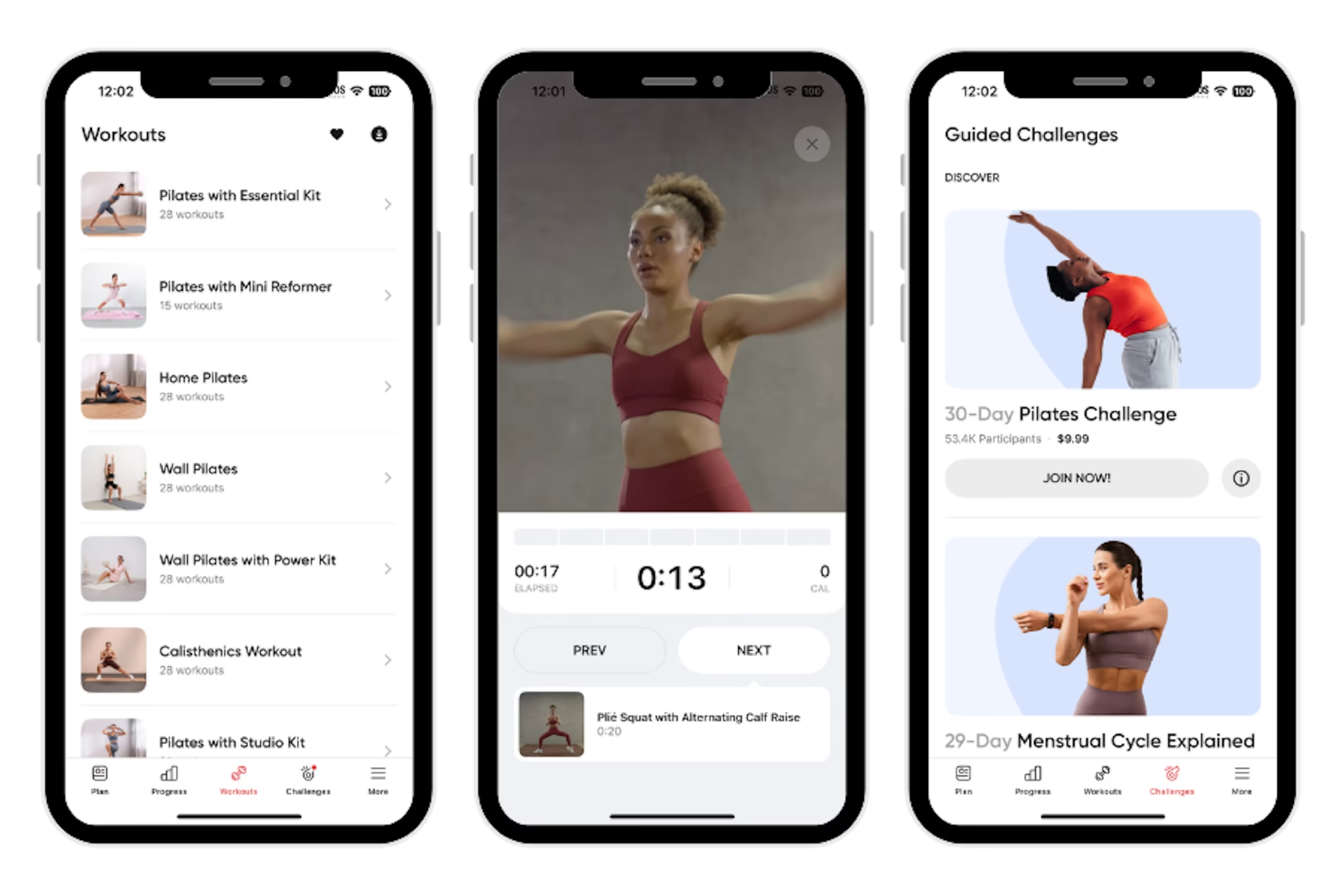
Nike Training Club is the answer to any question that starts with “what’s the best free workout app.” It offers 190+ guided workout videos covering strength, cardio, yoga, and mobility — led by actual Nike athletes and trainers with production quality that rivals paid competitors. Structured multi-week programs give it actual progression logic, not just a random video library.
The experience requires no equipment for most programs. The strength programs use progressive structure. Beginners can start immediately without any fitness baseline. The interface is clean and the content calendar is regularly updated.
What Nike Training Club cannot do:
- Adapt to your specific equipment if you train at a gym (it is home-workout-optimized)
- Track progressive overload automatically based on your logged performance
- Integrate with Apple Watch for real-time set-by-set logging
- Generate a personalized plan from your training history
Honest verdict: Nike Training Club is the best workout app in the world if free is a hard constraint. It is not the right tool if you want the app to watch your progress and tell you exactly how many reps and what weight to use today. For that, you need Fitbod.
2. Fitbod — Best AI workout app for gym training
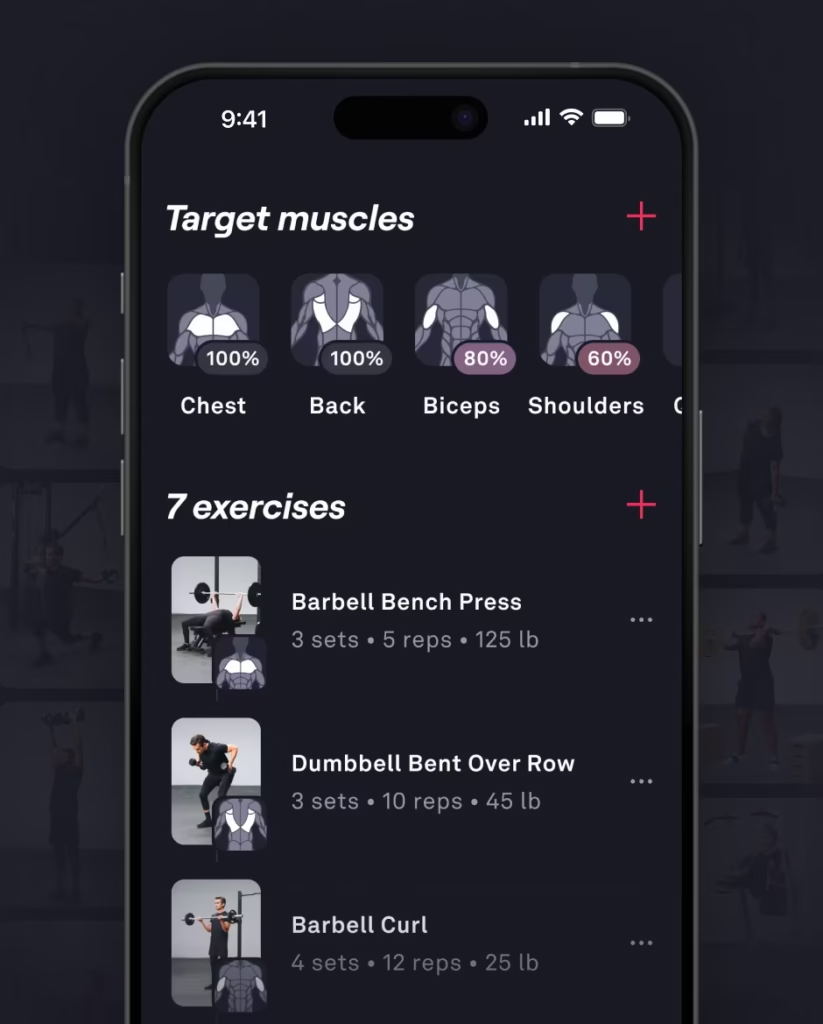
Price: 3 free workouts, then $15.99/month or $95.99/year. Best for: Gym-based strength training with adaptive programming. Platform: iOS, Android. Apple Watch supported.
Fitbod is the best AI-powered workout app for anyone who trains in a gym with access to equipment. Its algorithm tracks which muscle groups you’ve worked, estimates recovery based on your training history, and generates each workout’s exercises, sets, reps, and weights accordingly. The 1,600+ exercise library includes animated form demonstrations. The Apple Watch app allows logging directly from your wrist.
The adaptive system is genuinely differentiated from competitor apps: if you had a heavy leg day yesterday and forgot to log it, today’s Fitbod session will already de-emphasize legs. This is not just a program template — it is session-to-session adjustment based on what you actually did.
What Fitbod cannot do:
- Use your wearable recovery data (HRV, sleep quality, resting heart rate) to adjust intensity — it works from workout logs only, not biometric recovery signals
- Build programming for bodyweight or minimalist home training as effectively as gym-equipped scenarios
- Provide human coaching or accountability check-ins
- Be free past 3 workouts
Honest verdict: $95.99/year is the highest price among pure strength training apps. It is justified for consistent gym-goers who want algorithm-driven programming and have tried every free option. For anyone still establishing the habit, start free and migrate to Fitbod when consistency is proven.
3. Hevy — Best workout tracker for lifters
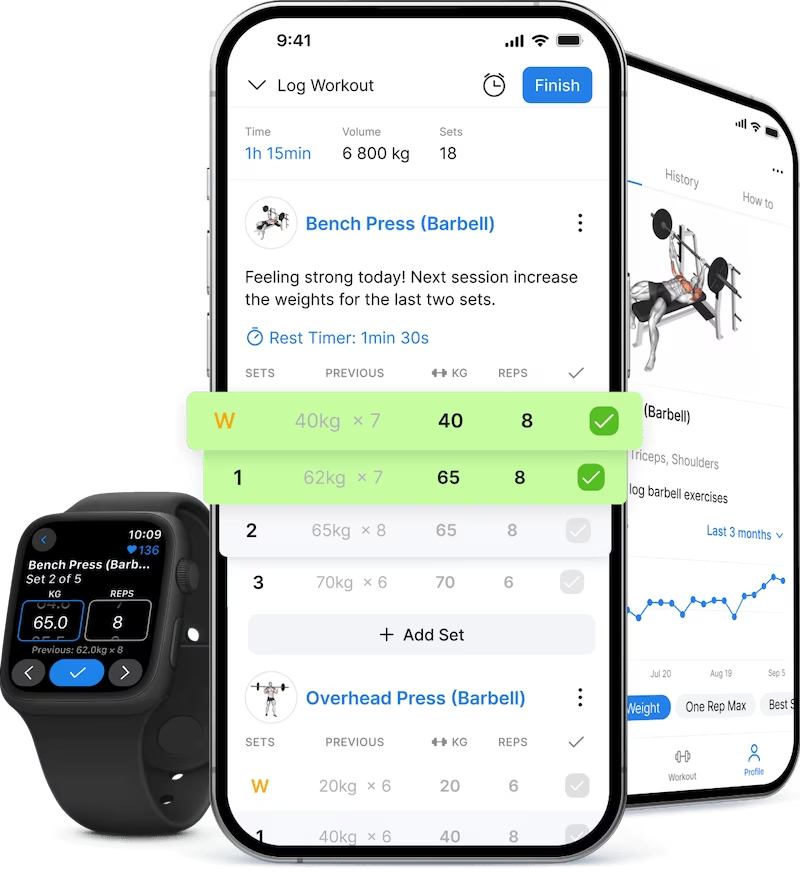
Price: Free (unlimited logging, 4 routines) / $23.99/year / $74.99 lifetime. Best for: Lifters who already follow a program and want to track it cleanly. Platform: iOS, Android. Social features built in.
Hevy is the best workout tracking app because it solves the tracking problem without introducing friction. Log a set: tap the exercise, enter weight and reps, rest timer starts automatically. The interface is faster than any competitor’s. Progress graphs, personal records, and workout history are all there.
The social component — a community feed where you share workouts and see friends’ training — is genuinely motivating and unique among serious gym tracking apps. Hevy Trainer has added AI programming features, though they are less mature than Fitbod’s algorithm.
What Hevy cannot do:
- Generate a personalized AI program from scratch (the free tracker version does not do this — Hevy Trainer adds limited AI programming at a cost)
- Integrate with Garmin watches for real-time lifting logging
- Replace a structured beginner program — it tracks what you tell it to track, but it does not tell you what to do if you do not know
Honest verdict: Hevy at $23.99/year is the best value paid option in this entire guide. The free tier with unlimited workout logging is the most usable free tracking option available. If you have a program and want to log it without friction, Hevy wins.
4. Peloton App — Best for instructor-led class energy
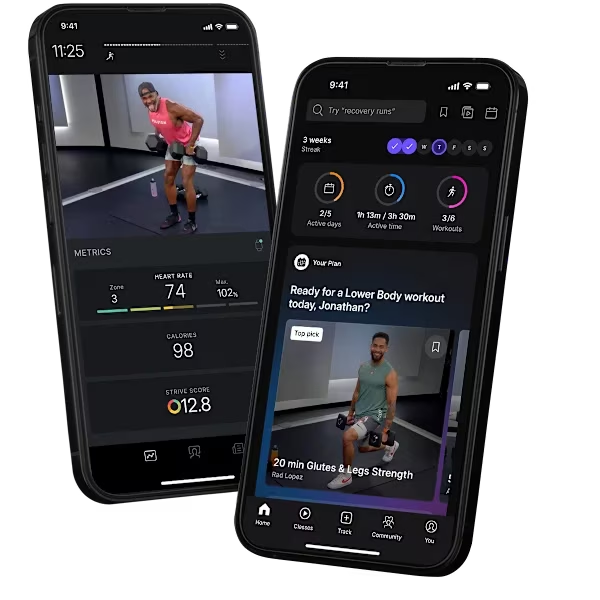
Price: $12.99/month after 30-day free trial. No permanent free tier. Best for: People who are motivated by instructor presence, real-time class energy, and variety. Platform: iOS, Android. Compatible with Peloton hardware but hardware not required.
Without owning any Peloton equipment, the Peloton App gives access to a library of 10,000+ live and on-demand classes — running, strength, yoga, meditation, cycling, walking, and more — led by instructors with genuinely distinctive personalities and coaching styles. The community leaderboard is motivating for competitive types.
The most common misconception about Peloton: you do not need the bike. The app’s strength, yoga, and running content stands independently of hardware.
What the Peloton App cannot do:
- Offer any permanent free content after the trial ends
- Adapt programming automatically based on your training history
- Provide personalized strength programming with progressive overload guidance
- Track gym-based lifting sessions with the same precision as Hevy or Strong
Honest verdict: $12.99/month is reasonable if you use the classes consistently. It is money wasted if you primarily want to track gym workouts — Hevy handles that better for less.
5. Apple Fitness+ — Best for iPhone/Apple Watch users
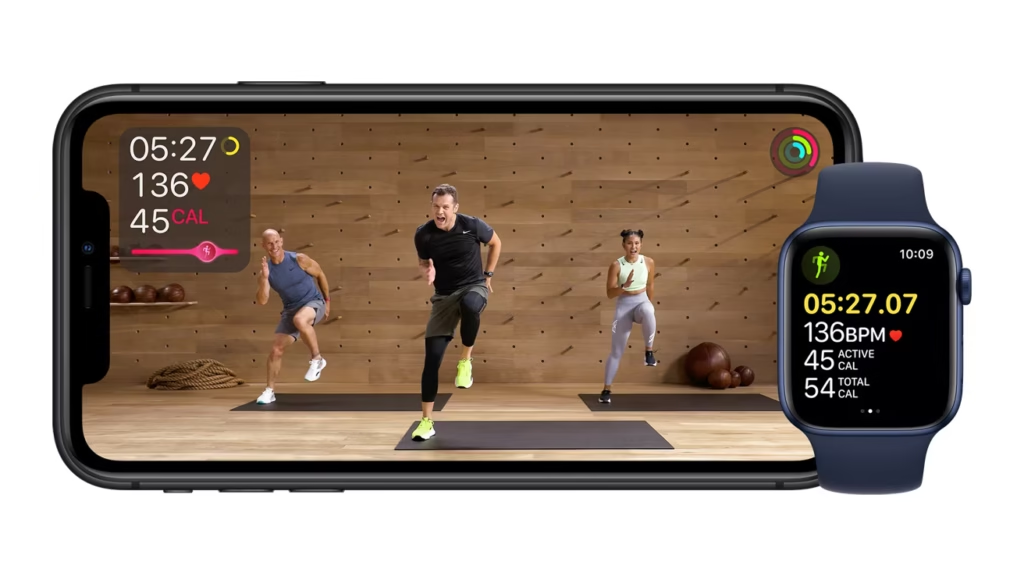
Price: $9.99/month / $79.99/year. 3-month free trial with new iPhone, iPad, or Apple Watch. Best for: Apple ecosystem users who want instructor-led workouts synced to Apple Watch metrics. Platform: iOS only. Requires Apple Watch for real-time metric overlay.
Apple Fitness+ streams workout classes — HIIT, strength, cycling, yoga, meditation, pilates, dance — to your iPhone or Apple TV with your Apple Watch metrics (heart rate, calories, activity rings) overlaid in real time on screen. The integration is seamless in a way that no third-party app can replicate because Apple controls both the hardware and the software.
The content library is well-produced, the instructors are diverse, and new content is added weekly. The time-to-sweat from opening the app is faster than any competitor.
What Apple Fitness+ cannot do:
- Work without an Apple Watch for its core differentiating feature (the metric overlay)
- Provide personalized programming that adapts to your progress
- Serve Android users — iOS only, full stop
- Replace dedicated gym tracking (Hevy or Strong handle that better)
Honest verdict: If you are an iPhone user with an Apple Watch, Apple Fitness+ at $79.99/year is the cleanest all-in-one option for home fitness classes. For Android users, it does not exist.
6. Strong — Best workout tracker for precision loggers
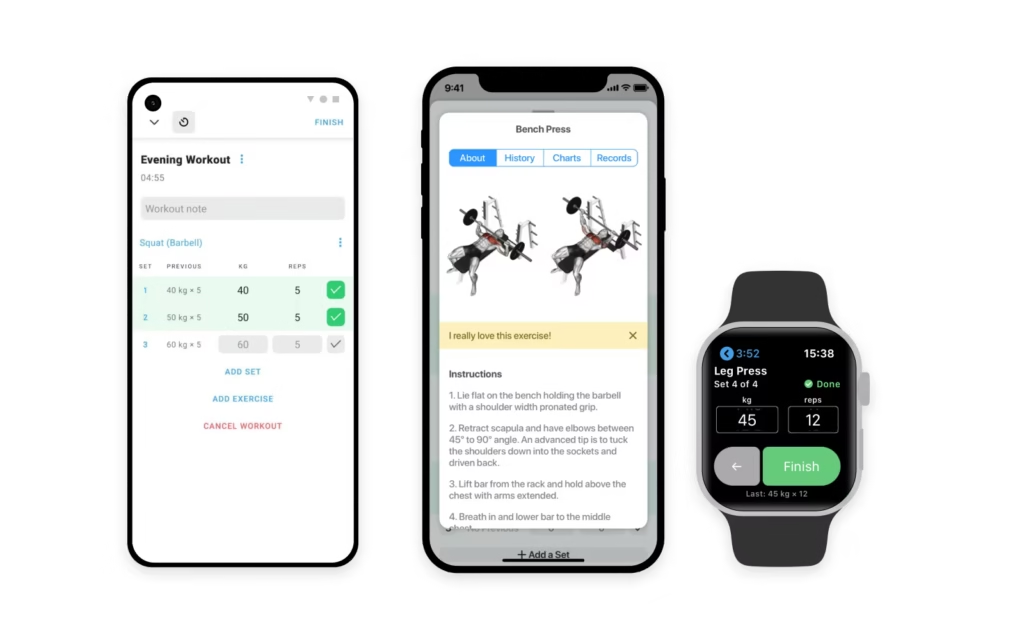
Price: Free (3 custom routines) / $4.99/month / $29.99/year / $99.99 lifetime. Best for: Experienced lifters who want granular data, CSV export, and Apple Watch logging. Platform: iOS, Android. Native Apple Watch app available.
Strong’s interface is optimized for speed: start a workout, log each set with two taps, rest timer runs automatically, move to the next exercise. The analytics are precise — volume load graphs, estimated 1RM progression, plate calculator. CSV export lets advanced users take their data to a spreadsheet for deeper analysis.
The Apple Watch app is among the best in class for standalone wrist-based workout logging — start a session from your watch without taking your phone out.
What Strong cannot do:
- Tell you what to do (it is a tracker, not a coach)
- Generate a personalized program if you do not already have one
- Provide guided video instructions for exercises
Honest verdict: Strong at $29.99/year is the right choice for experienced lifters who already follow a program, value data export, and want Apple Watch integration. It is the wrong choice for beginners who need programming guidance.
7. Caliber — Best free app for beginners who need structure
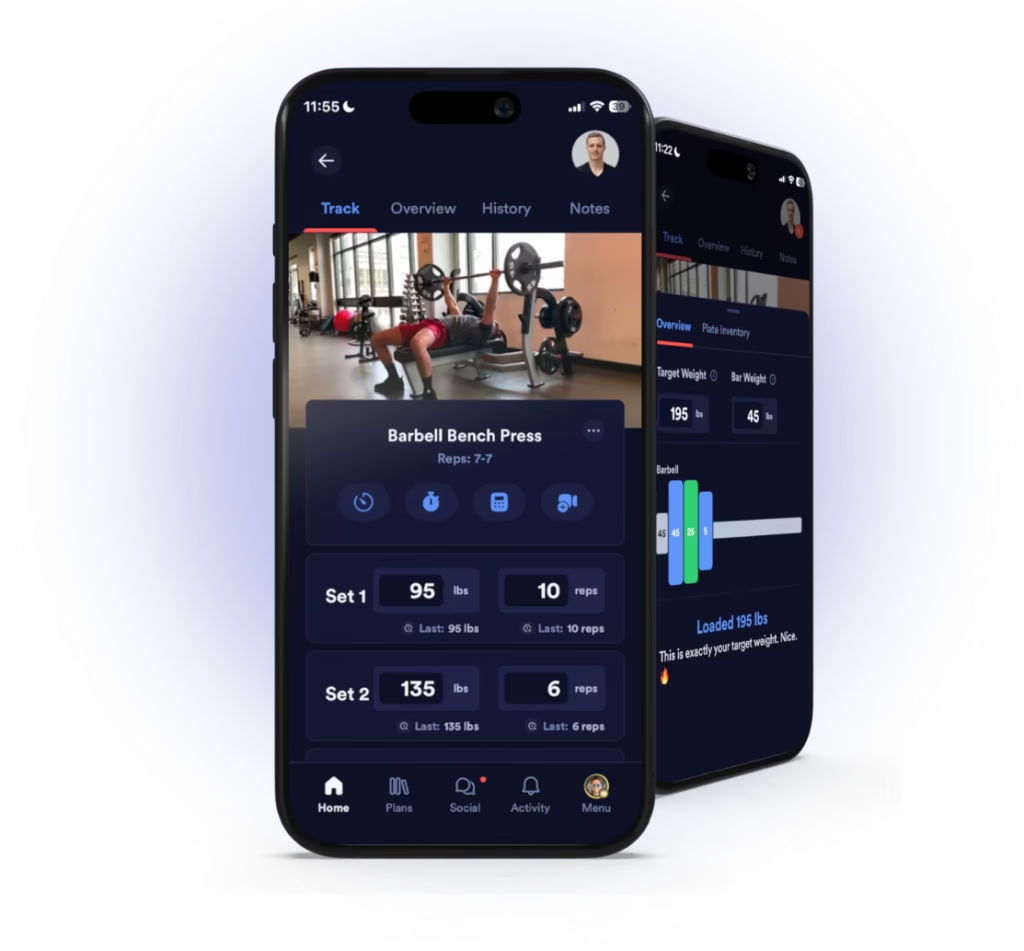
Price: Free (self-guided programs) / premium (human coach access at custom pricing). Best for: Beginners who need structured programs with video guidance but cannot afford a personal trainer. Platform: iOS, Android.
Caliber’s free tier is genuinely useful. It provides structured strength training programs with video demonstrations and beginner-appropriate progression logic — the missing piece for new lifters who know they should “go to the gym” but do not know what to actually do when they get there.
The premium tier introduces human coaching review — a real certified trainer monitors your logged workouts and provides feedback. This hybrid model sits between a pure app and a personal trainer.
What Caliber cannot do:
- Match Fitbod’s AI adaptability for equipment flexibility
- Serve users who prefer cardio-focused or class-based workouts
- Provide the social workout-sharing community that Hevy offers
Honest verdict: Caliber is the best free starting point for true beginners. Migrate to Hevy or Fitbod once the training habit is established and the basics are learned.
8. Strava — Best running and cycling app
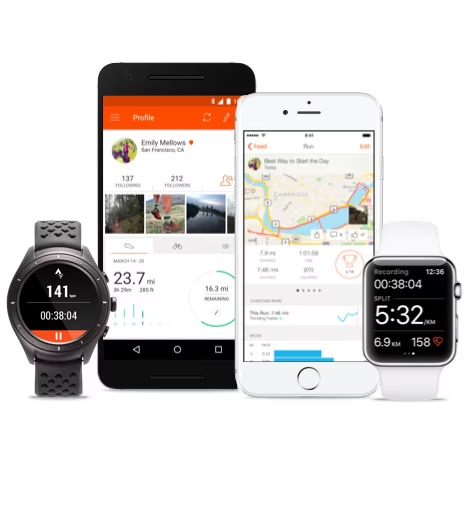
Price: Free (GPS tracking, route mapping, social feed) / $11.99/month / $79.99/year. Best for: Runners and cyclists who want GPS tracking, route discovery, and competitive segments. Platform: iOS, Android. Integrates with Garmin, Apple Watch, WHOOP, and most major wearables.
Strava is not a gym workout app. It is the dominant social network for endurance athletes. Its GPS tracking, route mapping, segment comparison, and athlete community features have no equivalent in the general workout app market. If your primary training is running, cycling, or swimming, Strava is a separate and essential tool alongside any gym-focused app.
What Strava cannot do:
- Track gym-based strength workouts with the granularity of Hevy or Strong
- Generate personalized training plans without third-party integrations (TrainingPeaks, Final Surge)
- Replace a dedicated workout tracker for lifting
Goal-to-app decision framework
| Your primary goal | Your budget | Your experience level | Best pick |
|---|---|---|---|
| Build muscle at a gym | Any | Intermediate+ | Fitbod |
| Build muscle at a gym | $0 | Any | Hevy (track) + Nike Training Club (program reference) |
| Home workouts, no equipment | $0 | Any | Nike Training Club |
| Home workouts, bodyweight | Any | Any | Nike Training Club (free) or Fitbod |
| Track my own program | $0 | Any | Hevy (free) |
| Track my own program, detailed data | <$30/yr | Advanced | Strong ($29.99/yr) |
| Class-based energy at home | <$15/mo | Any | Peloton App |
| Apple ecosystem integration | Apple user | Any | Apple Fitness+ |
| Start from zero, no idea what to do | $0 | Beginner | Caliber (free) or Nike Training Club |
| Running / cycling | Any | Any | Strava |
| Women-specific programs | Budget | Women | Sweat |
Platform and wearable compatibility
| App | iOS | Android | Apple Watch (standalone) | Garmin | WHOOP / Oura |
|---|---|---|---|---|---|
| Nike Training Club | ✅ | ✅ | ⚠️ Limited | ❌ | ❌ |
| Fitbod | ✅ | ✅ | ✅ Native | ❌ | ❌ |
| Hevy | ✅ | ✅ | ❌ | ❌ | ❌ |
| Strong | ✅ | ✅ | ✅ Native | ❌ | ❌ |
| Peloton App | ✅ | ✅ | ⚠️ Metrics overlay | ❌ | ❌ |
| Apple Fitness+ | ✅ | ❌ | ✅ Required for metrics | ❌ | ❌ |
| Strava | ✅ | ✅ | ✅ | ✅ | ✅ |
| Caliber | ✅ | ✅ | ❌ | ❌ | ❌ |
Garmin’s native platform is built for endurance sports. Direct lifting log integration with Garmin remains limited across all apps as of May 2026.
The honest limitations table
The section every app’s own website omits.
| App | The thing it cannot do that buyers expect | Consequence |
|---|---|---|
| Nike Training Club | Adapt to your gym equipment or track progressive overload | No automatic weight progression guidance |
| Fitbod | Use your wearable recovery data (HRV, sleep) to adjust intensity | Programming is based on workout logs only, not your actual recovery state |
| Hevy | Tell you what to do next (it only tracks what you tell it) | Useless for someone who doesn’t already have a program |
| Strong | Generate programming or provide guidance | Just a logging tool — same limitation as Hevy |
| Peloton App | Provide anything free after 30 days | Hard paywall — no fallback option |
| Apple Fitness+ | Work without an Apple Watch for its core value prop | Android users: does not exist; iPhone-only users: metric overlay doesn’t work |
| Strava | Track gym sessions with set/rep precision | Wrong tool for strength training |
| Caliber | Compete with Fitbod’s adaptability for experienced lifters | Best for beginners; less useful as you advance |
Frequently asked questions
What is the best workout app overall in 2026?
For most people, the best workout app is Nike Training Club (if free is required) or Fitbod (if AI-adaptive gym programming is the priority). Nike Training Club gives full access to 190+ guided workouts at zero cost. Fitbod generates personalized gym programs that adapt session-to-session based on your training history and muscle recovery. The right answer depends on your primary goal: guided home workouts (Nike Training Club) or adaptive gym programming (Fitbod).
What is the best free workout app in 2026?
Nike Training Club is the only major workout app that is completely free with no trial expiration and no credit card required. Hevy is the best free option for gym workout tracking — its free tier allows unlimited workout logging without a time limit. Caliber offers free structured beginner programs with video guidance. Fitbod, Peloton, Apple Fitness+, and BetterMe are not genuinely free — they offer time-limited trials that convert to paid subscriptions.
What is the best workout app for beginners?
Caliber’s free tier provides structured strength training programs with video demonstrations — the most appropriate starting point for someone with no training background. Nike Training Club is the best free option if home workouts are preferred. Both require no fitness baseline to start. Avoid apps like Strong or Hevy as a first workout app — they are tracking tools that assume you already know what program to follow.
Fitbod vs Hevy: which is better?
They are different tools. Fitbod generates your workouts — it tells you what to do each session based on your history and recovery. Hevy tracks workouts you bring to it. If you do not have a program and want the app to decide, use Fitbod ($95.99/year). If you already follow a program (StrongLifts, GZCLP, any coach’s plan) and want to log it cleanly, use Hevy ($23.99/year). Many serious gym-goers use both: Fitbod for programming logic and Hevy for logging and social sharing.
Is the Peloton app worth it without the bike?
Yes, for people motivated by instructor-led class energy. The Peloton App offers strength, running, yoga, meditation, and cycling classes without any hardware requirement. The $12.99/month is justified if you use classes consistently. It is not worth it if your primary goal is progressive strength training — Fitbod or Hevy provide better tools for that at comparable or lower cost.
Which workout apps support Apple Watch?
Fitbod and Strong both have native Apple Watch apps for standalone logging during a gym session. Apple Fitness+ requires an Apple Watch for its core feature (real-time metric overlay). Nike Training Club has limited Apple Watch integration. Hevy and Caliber do not have native Apple Watch standalone apps. For wrist-based gym logging, Fitbod and Strong are the top choices.
How much does it cost to use workout apps per year?
The range is $0 (Nike Training Club, Hevy basic tracking) to $155+ (Peloton at $12.99/month). The most common paid tiers: Hevy at $23.99/year, Strong at $29.99/year, Apple Fitness+ at $79.99/year, Strava at $79.99/year, and Fitbod at $95.99/year. A usable free stack — Nike Training Club for programming and Hevy for tracking — costs $0 indefinitely.
What workout app is best for women?
Sweat is the most widely recommended women-specific workout app, offering programs designed around female physiology, including a dedicated perimenopause training program that no other major app provides. Nike Training Club and Apple Fitness+ also have strong women-focused content libraries. BetterMe includes low-impact, wall Pilates, and mobility programs suited to a broad range of fitness levels.
Methodology
Pricing data verified from official App Store listings and vendor pricing pages, May 2026. Free tier classifications based on actual app testing: each app was downloaded, a free account created, and the first paywall encountered was documented. App feature data sourced from each vendor’s official feature pages and App Store descriptions. Wearable compatibility sourced from app documentation and iOS/Android native app listings. Statista 2026 fitness app retention data cited from published industry report. ACSM 2026 Fitness Trends from the American College of Sports Medicine’s annual survey. No compensation was received from any app developer or publisher listed in this guide. BitsFromBytes may earn a commission if readers click affiliate links to app subscriptions.