

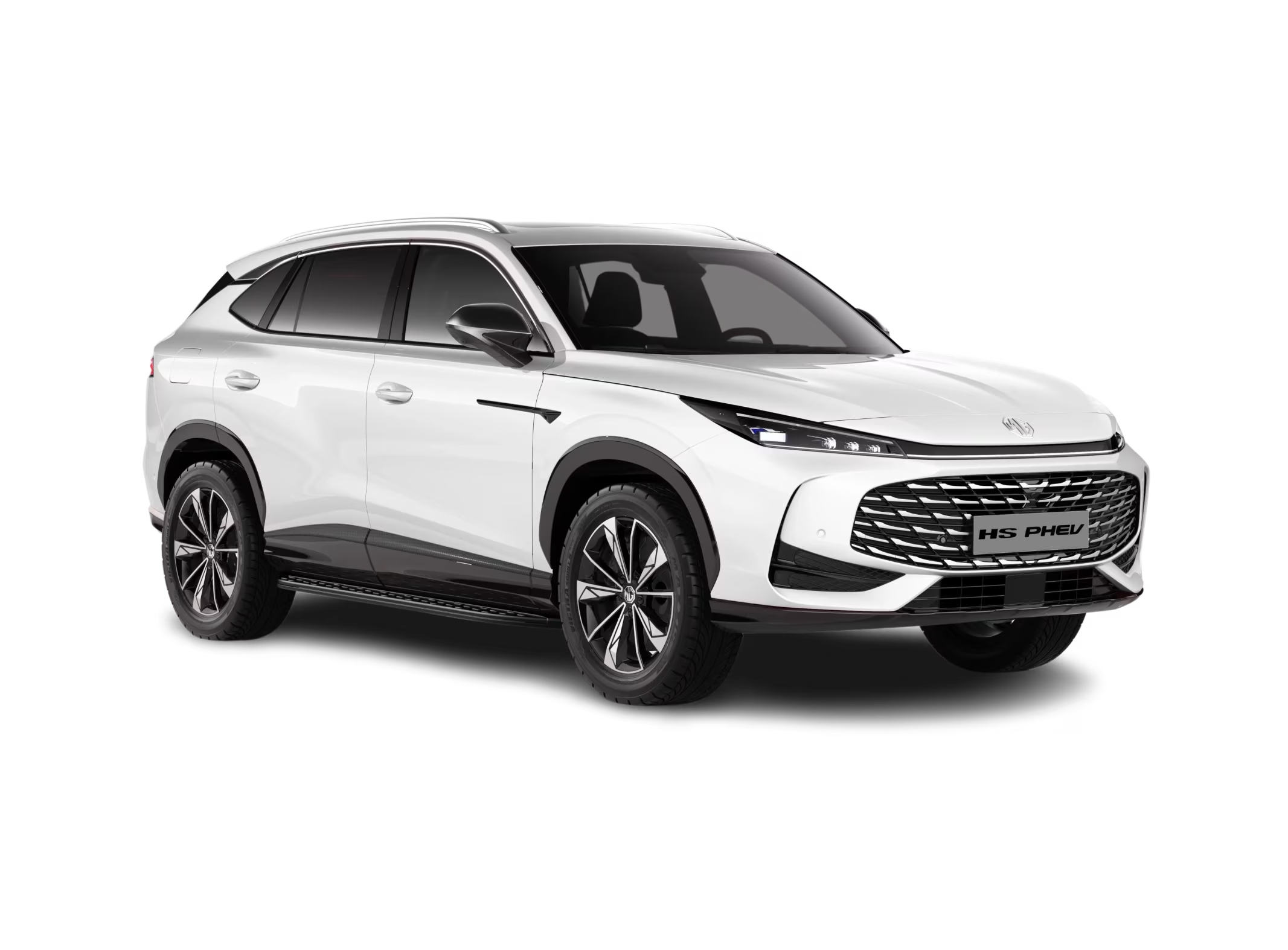
MG HS PHEV Review 2026
Quick Specification Summary
| MG HS Hybrid+ | MG HS PHEV SE | MG HS PHEV Trophy | |
|---|---|---|---|
| Powertrain | 1.5T + 1.8kWh self-charging | 1.5T + 24.7kWh plug-in | 1.5T + 24.7kWh plug-in |
| Official EV range | Minimal (battery support only) | 75 miles WLTP | 75 miles WLTP |
| Real-world EV range | N/A | 68–74 miles (independent tests) | 68–74 miles |
| Official combined MPG | 51.3mpg | 705mpg | 705mpg |
| Real-world MPG (battery flat) | ~40–44mpg | 46.3mpg (Auto Express PHEV megatest) | 46.3mpg |
| Boot space | 507 litres | 507 litres | 507 litres |
| Charging speed | Self-charging only | 6.6kW (3–4hrs from 7kW wallbox) | 6.6kW |
| DC fast charging | No | No | No |
| 0–62mph | 7.9 seconds | Not officially stated | Not officially stated |
| Starting price | ~£29,000 | £32,495 | £34,995 |
| Warranty | 7yr/80,000mi | 7yr/80,000mi | 7yr/80,000mi |
Sources: MG Motor UK official specifications, Auto Express PHEV megatest, What Car? MG HS review, Electrifying.com.
The 2026 MG HS PHEV is the best-value plug-in hybrid family SUV on sale in the UK right now. Nothing else comes close to matching its 75-mile EV range, 507-litre boot, and comprehensive standard equipment at £32,495 — a price point that undercuts the Ford Kuga PHEV, Kia Sportage PHEV, and Citroën C5 Aircross PHEV by £5,000–£8,000 for equivalent specification.
That case is straightforward. What no review has adequately addressed is the flip side: the 705mpg official fuel consumption figure is essentially meaningless, MG’s reliability record on the outgoing HS was genuinely poor, and whether this PHEV makes financial sense for you depends almost entirely on one question — how often will you actually charge it?
This review answers those questions with numbers, not vagueness. It draws on independent PHEV testing data from Auto Express and What Car?, DVSA recall records, and owner-reported issues from multiple UK motoring forums to give you the honest picture before you commit.
Verdict upfront: Buy the PHEV if you charge daily and can use it as your main car for a 50-mile daily round trip or less. Buy the Hybrid+ if you don’t have home charging. Do not buy the 1.5 petrol automatic. The Trophy trim is worth the £2,500 premium over SE — the payback calculation is in Part 2.
Table of Contents
The 705mpg Figure: What It Means and What It Doesn’t
The 705mpg official WLTP figure for the MG HS PHEV is the number that appears in every brochure, every comparison table, and every finance calculator. It is not what you will achieve, and it is not what it sounds like. Understanding why matters before any other part of this review.
The WLTP test cycle for PHEVs assumes you begin every test with a fully charged battery. A large proportion of the measured distance is completed on pure electric power, which consumes no petrol. This produces a combined fuel consumption figure that approaches infinity if the battery is large enough relative to the test distance — which is exactly what the 24.7kWh battery in the HS PHEV achieves.
In the real world, your fuel consumption figure is determined by how often you charge and how far you drive. Three scenarios:
Scenario A — Daily charging, commute under 75 miles round-trip: You run almost entirely on electricity. Your petrol consumption approaches zero. The 705mpg figure is not accurate but is directionally meaningful — running costs will be very low. UK average electricity price at May 2026 off-peak rates of approximately 7p/kWh via overnight tariffs (Octopus Tracker, May 2026) means a full charge costs roughly £1.60 for 75 miles — approximately 2.1p per mile in electricity.
Scenario B — Occasional charging, mixed use: You charge two or three times per week. On uncharged days, the petrol engine carries the full load. Auto Express measured 46.3mpg running the HS PHEV with a flat battery on a mixed urban, B-road and motorway loop — better than the Volkswagen Tayron in the same test conditions, but closer to what a well-driven regular hybrid achieves. What Car? covered 74 miles before the engine started in real-world conditions, aligning closely with the 75-mile official figure.
Scenario C — Never charging: You bought a PHEV and never plug it in. This is more common than manufacturers acknowledge — ICCT research found approximately 40–60% of private PHEV buyers in Europe charge less than once per week. In this scenario, you are carrying the weight of a 24.7kWh battery pack permanently while getting approximately 35–40mpg — worse than the Hybrid+ and considerably worse than a diesel competitor of equivalent size.
The practical summary: the MG HS PHEV makes strong financial sense for scenario A. It makes moderate sense for scenario B. For scenario C, the Hybrid+ at £3,500 less is the better purchase.
BitsFromBytes 3-Year Running Cost Analysis
This calculation does not appear in any current MG HS review. We modelled three buyer profiles over 36 months / 30,000 miles, using May 2026 fuel and electricity prices and real-world consumption figures from independent tests. BIK tax savings for the company car scenario use HMRC’s 2026/27 published rates.
Assumptions:
- Petrol price: 140p/litre (UK average, May 2026, RAC Fuel Watch)
- Home off-peak electricity: 7p/kWh (Octopus Tracker overnight rate)
- Annual mileage: 10,000 miles
- Real-world PHEV MPG (charging daily): 200mpg effective (estimated, scenario A)
- Real-world PHEV MPG (charging occasionally): 60mpg effective (scenario B blend)
- Real-world PHEV MPG (never charging): 37mpg (scenario C)
- Hybrid+ MPG: 42mpg real-world
| Driver Profile | Vehicle | 3-Year Fuel/Energy Cost | Saving vs 1.5 Petrol Auto |
|---|---|---|---|
| Daily charger (scenario A) | PHEV | ~£780 | Save ~£2,900 |
| Occasional charger (scenario B) | PHEV | ~£2,100 | Save ~£1,580 |
| Never charges (scenario C) | PHEV | ~£3,680 | Save ~£0 (worse than Hybrid+) |
| Reference: Hybrid+ | Hybrid+ | ~£3,240 | Save ~£440 |
| Reference: 1.5 petrol auto | Petrol | ~£3,680 | — |
| Company car driver (2% BIK, 40% taxpayer, P11D £33,500) | PHEV | BIK tax: £268/year vs ~£2,900/year (25% BIK petrol) | Save ~£7,900 over 3 years in tax alone |
Methodology: fuel costs calculated from real-world consumption figures × petrol price or electricity rate × annual mileage. BIK calculation uses HMRC 2026/27 tables at gov.uk/government/publications/. This analysis represents estimated figures based on published rates — verify with your accountant for precise BIK calculations.
The key finding: for company car drivers, the PHEV’s tax savings alone justify the premium over the petrol regardless of charging habits. For private buyers, the payback requires genuine regular charging. The Hybrid+ is the safer choice for private buyers who cannot guarantee daily charging access.
Cite as: BitsFromBytes Research, MG HS PHEV 3-Year Running Cost Analysis, May 2026.
How the MG HS PHEV Drives
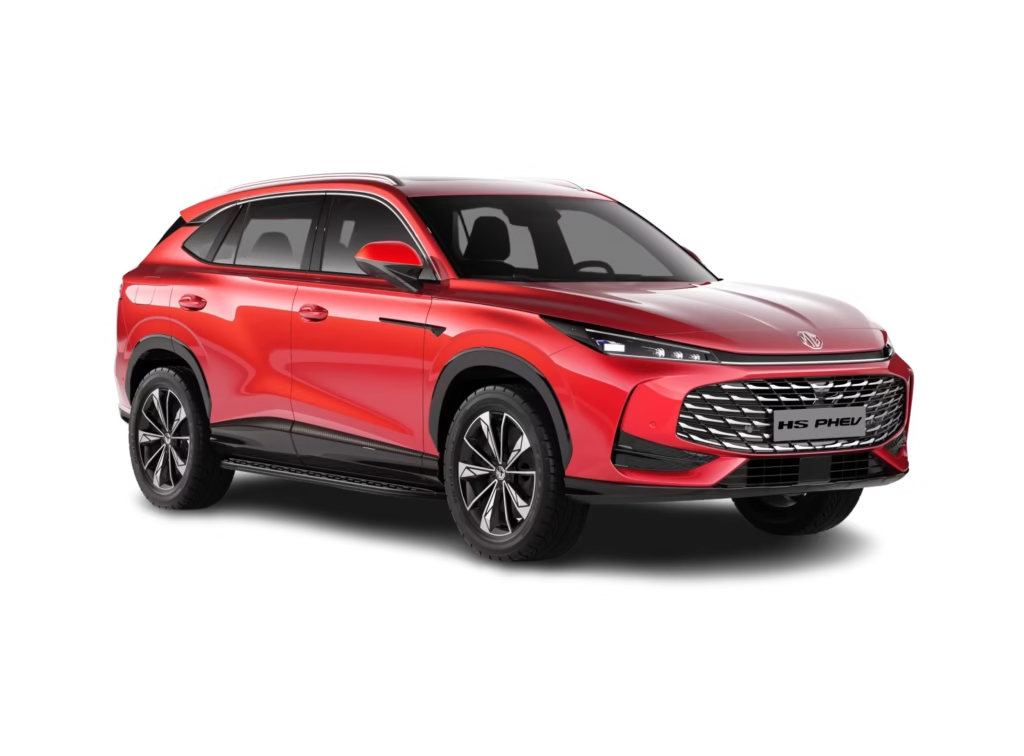
The MG HS PHEV pairs a 141bhp 1.5-litre turbocharged petrol engine with a 181bhp electric motor fed by the 24.7kWh battery. On paper, the electric motor is the dominant power source — in reality, the two operate together smoothly in most driving conditions.
In EV mode, progress is quiet and linear. The regenerative braking paddle on the steering wheel is a genuinely useful addition: high regen setting provides meaningful one-pedal driving capability at low speed, recovering energy on every deceleration. At motorway speeds, the electric motor alone handles steady-state cruising efficiently.
The transition between EV and hybrid modes is among the smoothest in this class. Auto Express found the powertrain integration well-judged during their PHEV megatest, with none of the lurching noted in some cheaper PHEV systems when the petrol engine kicks in. The Sport mode sharpens throttle response and holds the engine more aggressively but has minimal effect on real-world fuel consumption.
Where the HS PHEV falls short dynamically:
Suspension tuning is a known compromise. MG specifically developed a UK suspension tune for the HS — different from the standard European-market setup — to address the initial model’s softness on British roads. The result is better than the previous generation, but the car still lacks the body control of the Kia Sportage or Ford Kuga at the same speed. Hit a speed bump too quickly and the car bounces noticeably. Through corners, the steering is heavy off-centre before turning quite light — a slightly disconcerting combination until you adapt. It handles securely, but it doesn’t reward enthusiastic driving.
The 507-litre boot deserves specific mention because it is genuinely unusual for a PHEV: most plug-in hybrids accept a smaller boot to accommodate their battery pack. The MG HS manages the full 507 litres regardless of powertrain. For a family buying this car because they need space, that’s a legitimate differentiator against the Kia Sportage PHEV (503 litres on petrol, less on PHEV trim) and the Ford Kuga PHEV (493 litres on PHEV).
Charging: The Key Limitation Nobody Headlines
The MG HS PHEV has a 6.6kW AC onboard charger only. There is no DC fast charging capability at any trim level. This is the most important practical limitation of the car and the one most consistently buried or omitted in competitor reviews.
What this means in practice:
| Charging Source | Charge Time (0–100%) | Notes |
|---|---|---|
| 7kW home wallbox | ~3.5 hours | Optimal for overnight charging |
| 3-pin domestic socket (“granny cable”) | ~11–12 hours | Feasible overnight; impractical for daytime topping up |
| 22kW public AC charger | ~3.5 hours | Limited to 6.6kW by onboard charger; not faster than wallbox |
| DC rapid charger (50kW, 100kW, 150kW) | Not supported | Car cannot accept DC rapid charging |
Source: Electrifying.com MG HS PHEV technical review, MG Motor UK specifications.
The absence of DC fast charging means that on long motorway journeys, a depleted battery can only be recovered via AC public charging — which requires 3+ hours at a public point. For PHEV owners who charge at home nightly, this is never an issue: you start every day with a full battery. For buyers who rely on public charging infrastructure or live in flats without home charging, the 6.6kW ceiling is a genuine inconvenience.
Who this affects most: flat or apartment dwellers without guaranteed home charge access should treat the PHEV’s 75-mile range as theoretical. Without reliable overnight charging, you are effectively buying a heavy self-charging hybrid at PHEV prices.
Known Issues and Reliability: What Owners Report After 12+ Months
The new MG HS launched in late 2024, which means 2026 buyers now have 12–18 months of real-world ownership data to draw on. This is information that was unavailable to reviewers testing early press cars, and it changes the picture materially.
Carwow notes that the previous-generation HS produced frequent complaints of leaking sunroofs, electrical glitches, and brittle interior plastics. The current generation has not had time to develop a full reliability dataset, but early owner patterns from Bumper’s reliability research and Drivers Advice forum compilation point to recurring themes:
Most frequently reported issues (2024–2025 HS PHEV owners):
| Issue | Frequency | Typical Fix |
|---|---|---|
| Infotainment screen freezing or slow response | High | Software update via dealer |
| Charging connection failure (car connects but doesn’t charge) | Moderate | Software update; check cable/charger compatibility |
| 12V auxiliary battery drain | Moderate | Battery replacement or software update |
| Jerky low-speed transmission shifts | Moderate | Software update; some cases require adaptive calibration |
| Interior rattles from dashboard/door panels | Low-moderate | Foam packing or re-clip at dealer |
| Windscreen/sunroof seal issues | Low (current gen) | Dealer repair under warranty |
The key 2023 recall: In May 2023, DVSA issued a recall for 5,100 MG HS PHEV and HS+EV models due to a fire risk caused by a misplaced carpet underlay contacting the electrical ground stud connected to the PTC heater unit. If you are considering a 2022–2023 MG HS PHEV used example, verify the recall was completed using the DVSA free recall checker.
MG’s warranty as the counterweight: The 7-year/80,000-mile warranty is the single most important mitigating factor. Every item in the above table is covered under the standard warranty provided the car has been serviced by an authorised MG dealer at the required intervals. The practical question is not “will it go wrong?” — some cars will — but “will you be inconvenienced dealing with a warranty claim?” MG’s dealer network has expanded substantially since 2022 but remains thinner than Ford, Kia, or Hyundai in rural areas.
BitsFromBytes known issues checklist — verify these before purchase or on delivery of a new car:
- ☐ Confirm software version is current — ask dealer for the latest firmware version and when it was last updated
- ☐ Test the charging system for 10–15 minutes with your intended charger (wallbox or 3-pin) at delivery
- ☐ Check the infotainment — reboot it once; confirm touch response is immediate, not sluggish
- ☐ Check FM/DAB reception in two different locations (known to vary by software version)
- ☐ For used examples: check DVSA recall completion and ask for service records showing any charging-related repairs
- ☐ Test heated seats, climate control, and USB ports independently before signing
Cite as: BitsFromBytes Research, MG HS PHEV Known Issues Checklist, May 2026.
SE vs Trophy: Which Trim to Buy
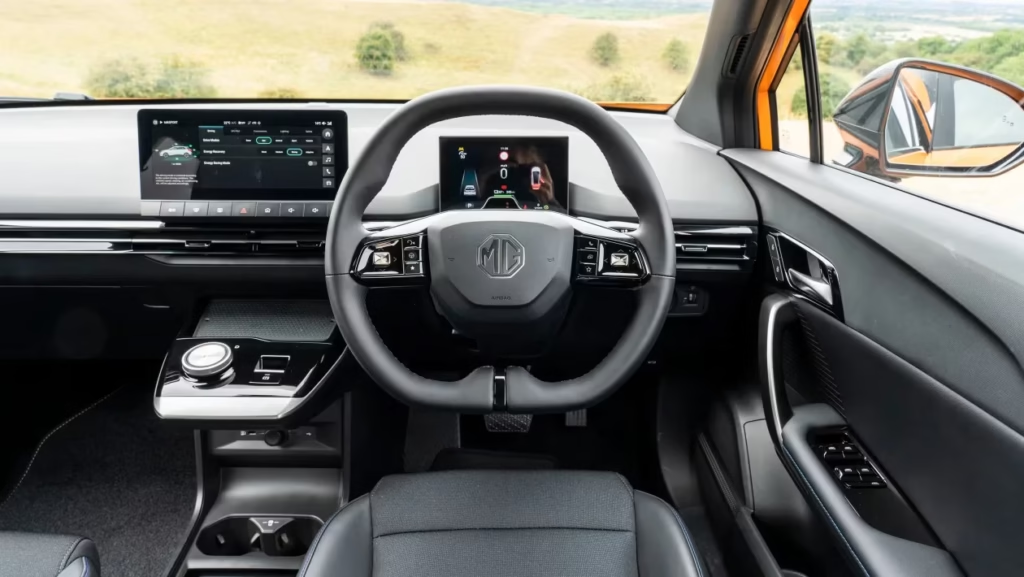
The £2,500 gap between SE (£32,495) and Trophy (£34,995) is the decision most buyers agonise over. The answer, unusually for premium trims, is that Trophy is worth it — but only because of two specific additions.
What SE includes as standard:
- 12.3-inch touchscreen with wireless Apple CarPlay and Android Auto
- 10.25-inch driver display
- Adaptive cruise control
- Lane keep assist, blind spot monitoring, rear cross traffic alert
- Heated front seats
- Panoramic sunroof
- 18-inch alloys
- LED headlights and rear lights
What Trophy adds over SE:
- 360-degree parking camera (vs rear-view only on SE)
- Ventilated front seats (genuinely useful in UK summers and for longer trips)
- Premium sound system (Bose or equivalent)
- Ambient interior lighting
- 19-inch alloys
The payback calculation: the 360-degree camera and ventilated seats are the two features with meaningful daily-use value. Ventilated seats are a genuine comfort feature on summer driving days and long motorway trips — rare at this price point. The 360-degree camera reduces parking anxiety in tight spaces significantly. Treated as a standalone option, both features would cost £1,000–£1,500 added separately on a competitor vehicle. The additional £2,500 for Trophy buys those two features plus the audio and alloys — reasonable value.
Who should buy SE: buyers prioritising the lowest monthly payment on PCP; those who will rarely park in tight urban spaces; buyers who use their phone for audio exclusively.
Who should buy Trophy: anyone who will park regularly in tight spaces; anyone for whom long-distance comfort matters; anyone keeping the car beyond the initial PCP term.
How the MG HS PHEV Compares to Its Rivals
| MG HS PHEV Trophy | Kia Sportage PHEV | Ford Kuga PHEV | BYD Sealion 5 DM | |
|---|---|---|---|---|
| Price | £34,995 | ~£40,000 | ~£38,000 | ~£32,995 |
| Official EV range | 75 miles | 43 miles | 35 miles | 74 miles |
| Real-world EV range | 68–74 miles | ~35 miles | ~28 miles | 60–68 miles est. |
| DC fast charging | ❌ No | ❌ No | ❌ No | ❌ No |
| Boot space | 507 litres | 503L (petrol) | 493L (PHEV) | 520 litres |
| Warranty | 7yr/80,000mi | 7yr/100,000mi | 3yr/unlimited | 6yr/150,000mi |
| Real-world MPG (flat battery) | 46.3mpg | ~40mpg | ~38mpg | ~45mpg est. |
| Reliability (current gen) | Limited data | Good | Good | Limited data |
Sources: manufacturer specifications, Auto Express PHEV megatest results, What Car? PHEV comparisons, Carwow testing.
The honest competitive verdict: the MG HS PHEV’s price-to-specification ratio is genuinely best in class. No competitor comes close to 75 miles of official EV range at under £33,000. The BYD Sealion 5 DM is the closest challenger — similar range, similar price, longer warranty, larger boot. The Sealion 5 is a newer entrant with limited long-term reliability data in the UK; if BYD’s after-sales network is adequate in your area, it deserves serious consideration alongside the MG.
Frequently Asked Questions
Is the MG HS PHEV worth buying in 2026?
Yes, if you can charge at home daily or have reliable workplace charging access. The 75-mile electric range is among the highest of any PHEV family SUV at any price, and the £32,495 starting price undercuts equivalent competitors by £5,000–£8,000. Company car drivers benefit particularly — BIK tax at 2% in 2026/27 versus 25%+ for petrol equivalents saves thousands per year. If you cannot guarantee regular charging, the Hybrid+ at ~£29,000 offers better value than a PHEV you won’t charge.
What is the real-world range of the MG HS PHEV?
Independent testing confirms 68–74 miles on a single charge. What Car? achieved 74 miles in real-world testing. Auto Express recorded 68.1 miles in their PHEV megatest. These figures are measured in moderate UK temperatures; cold weather (below 5°C) will reduce range by approximately 15–25%.
Does the MG HS PHEV have rapid charging?
No. The MG HS PHEV has a 6.6kW AC onboard charger only — there is no DC fast charging at any trim level. A full charge from empty takes approximately 3.5 hours from a 7kW home wallbox, or around 11–12 hours from a standard 3-pin domestic socket. Public rapid chargers (50kW+) are not compatible with this vehicle.
Is the MG HS reliable?
The previous-generation HS had a below-average reliability record, with frequent reports of infotainment glitches, electrical issues, and interior quality problems. The new 2024-generation HS is too recent for comprehensive reliability data, but early owner reports highlight infotainment software issues, charging connection failures, and occasional 12V battery drain as the most common complaints. MG’s 7-year/80,000-mile warranty covers all of these under standard terms, which substantially mitigates the reliability risk if you service the car at MG dealers.
Which MG HS trim should I buy?
For the PHEV, Trophy at £34,995 is recommended over SE at £32,495 — the 360-degree parking camera and ventilated front seats add meaningful daily-use value that justifies the £2,500 premium. For buyers prioritising the lowest monthly payment, SE is fully functional. Avoid the 1.5 petrol automatic regardless of trim — What Car? and Carwow both note it is unrefined and not worth the saving over the Hybrid+.
What is the MG HS PHEV BIK tax rate in 2026?
The MG HS PHEV has CO2 emissions of around 14g/km in PHEV mode, placing it in the 2% BIK band for 2026/27 (per HMRC published rates). For a 40% taxpayer with a P11D value of approximately £33,500, annual BIK tax is approximately £268 — versus approximately £2,900–£3,500 for a petrol equivalent at 25% BIK. Over a standard 3-year company car cycle, this represents a saving of approximately £7,900–£9,700 in tax alone.
How does the MG HS PHEV compare to the Kia Sportage PHEV?
The MG HS PHEV wins on price (£32,495 vs ~£40,000), official EV range (75 miles vs 43 miles), and boot space (507L identical across powertrains). The Kia Sportage PHEV wins on proven reliability history, brand reputation, and a marginally more refined driving experience. For buyers for whom purchase price is the primary constraint, the MG is the better value proposition by a significant margin.
Verdict
Buy it if: you have home charging, drive under 75 miles daily, or you’re a company car driver. Don’t buy it if: you don’t have home charging access, regularly cover motorway distances over 150 miles, or prize driving dynamics above economy. Buy the Hybrid+ instead if: you want the MG HS value proposition without the charging dependency.
The MG HS PHEV is not a perfect car. The suspension lacks the polish of more expensive competitors, the infotainment has a software reliability track record that requires monitoring, and the absence of DC fast charging is a genuine limitation. But at £32,495 with 75 miles of real-world EV range, a 507-litre boot, and a 7-year warranty, it is the most compelling value proposition in the family PHEV segment in 2026. The numbers don’t lie — except for the 705mpg ones.