
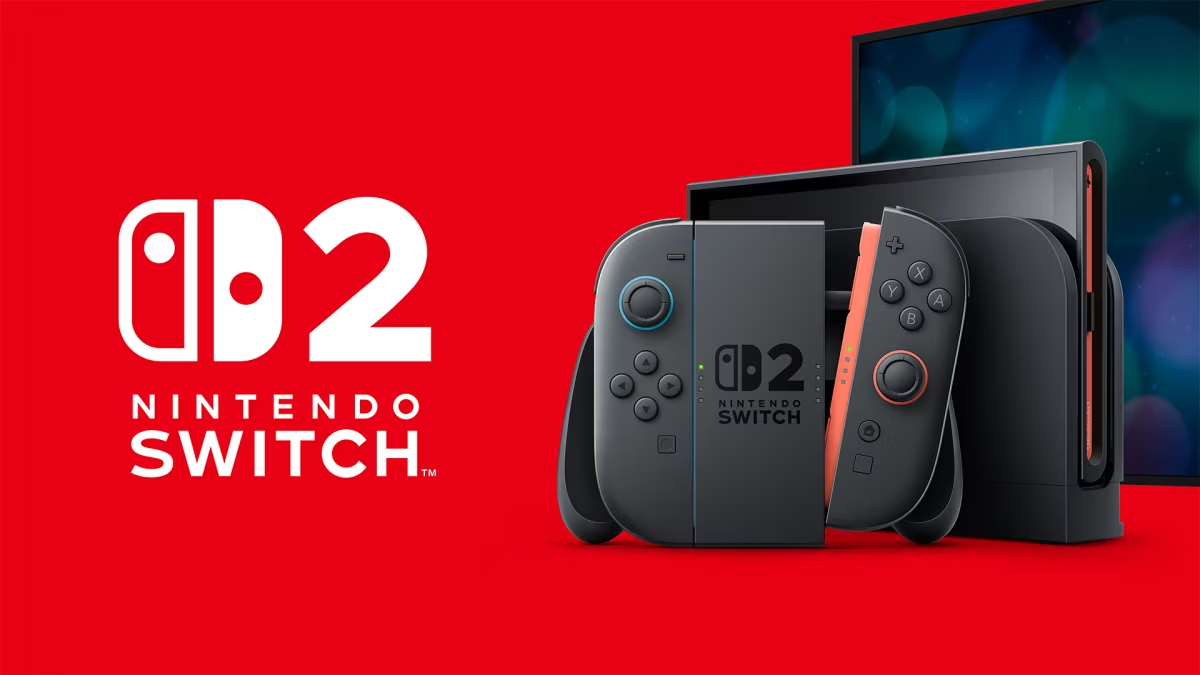
Nintendo Switch 2 Price Increase
Nintendo confirmed a global price increase for the Switch 2 on May 8, 2026, paired with a fiscal forecast that missed analyst expectations by a wide margin. In the US, the console rises from $449.99 to $499.99 on September 1, 2026 — giving buyers a window of roughly 16 weeks to lock in the current price. Japan gets hit first, with a ¥10,000 jump taking effect on May 25.
The cause is not a pricing strategy adjustment. Nintendo’s own filings point to memory chip costs as the primary driver — specifically, DRAM prices that have nearly doubled in recent months as AI data center operators outbid gaming hardware manufacturers for limited supply.
Table of Contents
The Complete Global Price Table
All figures sourced directly from Nintendo’s official May 8 price revision notice and the Nintendo of America announcement.
| Market | Current MSRP | New MSRP | Increase | Effective Date |
|---|---|---|---|---|
| United States | $449.99 | $499.99 | +$50 | September 1, 2026 |
| Canada | CAD $629.99 | CAD $679.99 | +CAD $50 | September 1, 2026 |
| Europe | €469.99 | €499.99 | +€30 | September 1, 2026 |
| Japan | ¥49,980 | ¥59,980 | +¥10,000 | May 25, 2026 |
| Latin America | TBA | TBA | TBA | TBA |
One detail the press release buries in a footnote: the Nintendo Switch 2 Multi-Language System sold through My Nintendo Store will not change price. If you’re in Japan and want the Japanese-language system, the clock is already running. If you’re buying the multi-language version through Nintendo’s own storefront, no rush.
US buyers: understand what $499.99 used to buy. Until September 1, $499.99 covers a Switch 2 bundle that includes a major first-party game — Mario Kart World being the primary example. After the price revision, $499.99 buys the console only. That erosion in bundle value is the real story for anyone planning a purchase this fall.
The Original Switch Family Is Also Going Up in Japan
This is less covered: Nintendo is not only raising Switch 2 prices in Japan. The May 8 press release confirms the entire original Switch lineup is going up on May 25:
| Model | Current Japan Price | New Japan Price | Increase |
|---|---|---|---|
| Switch 2 | ¥49,980 | ¥59,980 | +¥10,000 |
| Switch OLED | ¥37,980 | ¥47,980 | +¥10,000 |
| Switch (Standard) | ¥32,978 | ¥43,980 | +¥11,002 |
| Switch Lite | ¥21,978 | ¥29,980 | +¥8,002 |
Nintendo Switch Online subscriptions in Japan are also rising on July 1, 2026, across individual, family, and Expansion Pack tiers.
Why It’s Happening — AI Data Centers and DRAM
Nintendo’s press release uses the phrase “various changes in market conditions.” The mechanism is more specific: DRAM (dynamic random-access memory), the chip type that powers everything from the Switch 2’s live game processing to AI training clusters, is in a shortage driven by competition Nintendo cannot win.
Scientific American explained the dynamic early: cloud computing companies — Microsoft, Google, Amazon — are buying DRAM at data-center scale to build AI infrastructure. That procurement volume outbids gaming hardware manufacturers for fabrication capacity at the same foundries. Memory chip prices doubled in Q1 2026 alone compared to the prior quarter and are forecast by TrendForce to rise a further 63% this quarter.
Nintendo president Shuntaro Furukawa previously warned that sustained memory price increases could impact profitability. The May 8 earnings report put a number on it: Nintendo now expects the combined impact of rising component costs and tariffs to add approximately ¥100 billion ($637.8 million) to operating expenses in fiscal year 2027 (ending March 31, 2027).
SK Hynix and Micron — two of the three major DRAM manufacturers — have indicated that supply tightness will persist through 2028. IDC projects DRAM supply growth of 16% in 2026, below historical norms. This is a structural reallocation, not a cyclical blip.
The Fiscal Numbers — and Why They Spooked Analysts
The price announcement landed alongside Nintendo’s FY2026 earnings and FY2027 forecast, and the forecast is the part that moved markets.
FY2026 (ended March 31, 2026) — what actually happened:
- Switch 2 units shipped: 19.86 million
- Switch 2 software units: 48.71 million (Mario Kart World: 14.7 million alone)
FY2027 forecast (April 2026–March 2027):
- Switch 2 units: 16.5 million — a 17% decline year-on-year
- Software units: 60 million — a 23% increase
- Revenue: 2.05 trillion yen — 11.4% decline; analyst consensus was 2.46 trillion yen
- Net profit: 310 billion yen — 27% decline; analyst consensus was 418.5 billion yen
Serkan Toto, CEO of games consultancy Kantan Games, put the sales forecast in context for CNBC: “Console sales usually go up in the second year — and not down as Nintendo predicts this time.” The standard console lifecycle sees hardware sales climb in years two and three as the installed base grows and more software releases drive adoption. Nintendo is forecasting the opposite.
Nintendo stock closed up 3.6% on earnings day, partly because the disclosed challenges were already being priced in. The stock remains down approximately 50% from its record high above ¥14,000, hit in August 2025.
Nintendo Is Not Alone
Sony raised PlayStation 5 prices by up to $150 in March 2026, citing the same macroeconomic pressures. Both companies are passing a portion of component cost increases to consumers — the alternative being margin compression that neither publicly traded company can sustain indefinitely.
The $499.99 Switch 2 and the higher-priced PS5 exist in the same consumer spending environment: persistent inflation, geopolitical uncertainty, and tariff measures adding manufacturing costs across the supply chain.
Nintendo’s Response — Software as Value Defense
Furukawa stated directly that Nintendo’s answer to a hardware price increase is a denser software release schedule. Per Nintendo’s own investor communications, the roadmap includes:
- Star Fox (June 2026, Switch 2 exclusive)
- New Splatoon franchise entry (2026)
- Two major Pokémon games (2027)
- Third-party titles expanding the library
Pokémon Pokopia, already a surprise critical and commercial hit in 2026, and The Super Mario Galaxy Movie — which has grossed approximately $900 million globally per Box Office Mojo — demonstrate that the Nintendo brand is not under pressure, only its hardware economics.
The software forecast of 60 million units (up 23% from FY2026) suggests Nintendo is betting that game releases will sustain the installed base’s engagement even as hardware sales decline.
What Buyers Should Do Before September 1
The US window is 16 weeks from today. If you’re buying a Switch 2 in 2026, the calculus is simple: purchasing before September 1 saves $50 on the console and potentially more if you factor in current bundle pricing. There is no suggestion that game prices or Nintendo Switch Online subscription rates in the US will change on the same September 1 date — that pricing adjustment is currently Japan-only.
Japan buyers have less than 15 days from today. The May 25 date is firm per the official press release.
Frequently Asked Questions
When exactly does the Nintendo Switch 2 price increase take effect in the US?
September 1, 2026. Nintendo of America’s official announcement confirms the US price moves from $449.99 to $499.99 on that date. Purchases made before September 1 at the $449.99 MSRP are unaffected.
Why is the Nintendo Switch 2 getting more expensive?
The primary cause is a global DRAM memory chip shortage driven by AI data center expansion. Major cloud computing companies are purchasing DRAM at unprecedented volumes, raising costs for all hardware manufacturers that rely on the same supply. Nintendo quantified the impact in its FY2027 forecast: approximately ¥100 billion in additional operating costs from component prices and tariffs this fiscal year.
Is Nintendo Switch Online getting more expensive?
In Japan, yes — effective July 1, 2026. Individual and family plans, including the Expansion Pack tier, are rising across all subscription lengths. Nintendo confirmed that similar pricing changes are planned for South Korea. No US or European Nintendo Switch Online price changes have been announced.
Will the price increase hurt Switch 2 sales?
Nintendo itself predicts so. The company forecasts 16.5 million Switch 2 units in FY2027, down from 19.86 million in FY2026 — a 17% year-on-year decline. This is atypical for a console in only its second year on the market. Nintendo’s strategy is to offset hardware sales pressure with a denser software release schedule, including Star Fox, new Splatoon, and two major Pokémon titles.
Source verification: All pricing figures in this article are drawn directly from Nintendo’s May 8, 2026 official press release and the Nintendo of America announcement page. Fiscal forecast figures are from Nintendo’s FY2026 earnings disclosure. DRAM shortage projections are sourced from TrendForce via CBC News, IDC, SK Hynix, and Micron public communications. Analyst quotes are attributed to named individuals at named organizations with source links.