
Tim Cook Steps Down as Apple CEO
🔴 BREAKING — April 20, 2026, ~4:43 PM ET
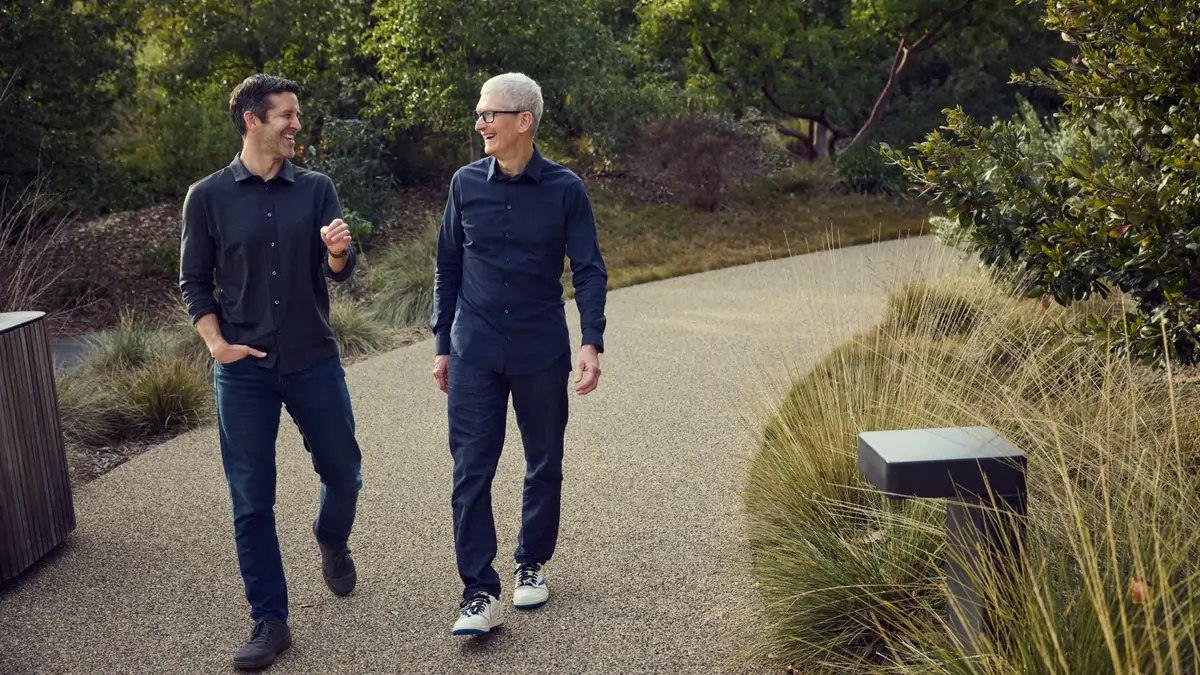
Apple has announced that Tim Cook, who has served as the company’s chief executive officer since 2011, will step down from the role on September 1, 2026. John Ternus, currently Apple’s senior vice president of hardware engineering, will become Apple’s next CEO. Cook will become executive chairman of Apple’s board of directors. The transition was approved unanimously by the Apple board of directors on Friday.
This is the first CEO transition at Apple since Cook succeeded the late Steve Jobs fifteen years ago.
Table of Contents
What Apple confirmed — directly from the press release
Apple’s official announcement, published on Apple Newsroom at approximately 4:43 PM ET on April 20, 2026, confirms:
- Tim Cook will transition from CEO to executive chairman of Apple’s board of directors, effective September 1, 2026
- John Ternus, currently senior vice president of hardware engineering, will become Apple’s next CEO, effective September 1, 2026
- Cook will remain as CEO through the summer to work closely with Ternus on a smooth transition
- Ternus will join Apple’s board of directors effective September 1
- Arthur Levinson, Apple’s non-executive chairman for the past 15 years, will become lead independent director, also effective September 1
- Johny Srouji, most recently SVP of hardware technologies, will become chief hardware officer, taking over and expanding Ternus’s prior role
In Apple’s statement, board chair Art Levinson said: “Tim’s unprecedented and outstanding leadership has transformed Apple into the world’s best company. We believe John is the best possible leader to succeed Tim and as he transitions to CEO we know his love of Apple, his leadership, deep technical knowledge, and relentless focus on creating great products will help lead Apple to an extraordinary future.”
Cook said of Ternus: “John Ternus has the mind of an engineer, the soul of an innovator, and the heart to lead with integrity and with honor. He is without question the right person to lead Apple into the future.”
Who is John Ternus?
Ternus, 50, has spent virtually his entire career at Apple — 25 years out of the 29 years since he graduated. He is the least-known Apple CEO to the general public since the company’s founding, but among the most deeply embedded in its product history.
Background: Born in California, Ternus studied mechanical engineering at the University of Pennsylvania, competed on the varsity swim team, and graduated in 1997. His senior project — a mechanical feeding arm for quadriplegic users controlled by head movements — revealed an engineering orientation toward human-centered design that has characterized his Apple career.
Pre-Apple: After graduating, Ternus spent four years as a mechanical engineer at Virtual Research Systems, a small firm designing virtual reality headsets. He joined Apple’s product design team in 2001 — the same year Apple opened its first retail stores and the year after the first iPod was developed.
Apple career timeline:
- 2001: Joins Apple’s product design team
- 2013: Becomes vice president of hardware engineering
- 2021: Promoted to senior vice president of hardware engineering, becoming the youngest member of Apple’s executive team at the time, when his predecessor Dan Riccio stepped aside to oversee what became the Vision Pro project
- September 1, 2026: Becomes CEO
What he’s built: Ternus has overseen hardware engineering on every major Apple product category — iPhone, iPad, Mac, Apple Watch, AirPods, and Apple Vision Pro. He is credited with introducing iPad and AirPods as new product lines. More recently, his team introduced the MacBook Neo, pushed AirPods into over-the-counter hearing health, and has been leading development of the iPhone Fold — Apple’s first foldable device, expected to launch alongside the iPhone 18 lineup in September 2026, the same month Ternus takes over as CEO.
Bloomberg had previously reported, in a March 22, 2026 profile, that Ternus was leading work on a secret internal robotics project including a device whose screen swivels to face whoever is speaking during a group video call. He has also been a proponent of a nearly 20-inch foldable iPad and is overseeing development of AI-powered wearables — glasses, AirPods, and a pendant — equipped with cameras using computer vision.
His stated AI position: Ternus told Good Morning America that if Apple is truly doing AI right, “nobody will even notice it — AI just becomes computing eventually.” This framing — invisible AI embedded in hardware rather than a chatbot interface — is consistent with Apple’s hardware-first product philosophy and signals how Ternus may differentiate Apple’s AI strategy from the ChatGPT-centric approach of competitors.
The Cook legacy in numbers
When Tim Cook became CEO on August 24, 2011, Apple’s market capitalization was approximately $196 billion. As of April 20, 2026, Apple’s market cap closed at $4 trillion. That is a greater than 20-fold increase over 15 years — one of the most sustained value creation runs in corporate history.
Key financial metrics under Cook:
- Revenue grew from approximately $108 billion (fiscal 2011) to over $416 billion (fiscal 2025) — roughly 4x
- Net income grew from approximately $26 billion to $112 billion over the same period
- Apple became the first publicly traded US company to reach $1 trillion market cap (August 2018), then $2 trillion (August 2020), then $3 trillion (January 2022)
- Services business — nearly nonexistent in 2011 — became Apple’s second-largest revenue segment behind iPhone
- Cook took home $74.6 million in total compensation in fiscal 2025, including a $3 million base salary
Products launched under Cook’s tenure:
- Apple Watch (2014) — the most successful smartwatch in history
- AirPods (2016) — became an entirely new product category within three years
- Apple TV+ (2019) — first Apple original content service
- Apple silicon (M1, 2020) — Apple’s transition from Intel chips to proprietary processors, widely regarded as the most significant Mac upgrade in two decades
- Apple Vision Pro (2024) — mixed reality headset, commercially disappointing but technically significant
- Apple Intelligence (iOS 18, 2024) — Apple’s late but substantive entry into on-device AI
Cook’s personal milestone: In 2014, Cook became the first CEO of a Fortune 500 company to publicly come out as gay, writing in a personal essay that he considered his identity “among the greatest gifts God has given me.”
The AI criticism: Cook’s tenure ends with Apple lagging meaningfully behind Google, Microsoft, and Meta in AI. The delayed Siri overhaul — promised in 2024, still not fully delivered as of April 2026 — became the defining criticism of Cook’s final years. Apple’s decision to license Google Gemini for the new Siri (announced January 2026, part of iOS 27) was widely interpreted as an acknowledgment that Apple could not win the AI model race internally. The company’s AI chief and several other senior executives departed in a concentrated wave in late 2025.
What changes — and what doesn’t — on September 1
What changes immediately: The decision-making authority shifts. Ternus is a hardware engineer who has spent 25 years building Apple’s physical products. Cook is an operations and supply chain executive who became a dealmaker and policymaker. The strategic emphasis will shift from services revenue optimization and supply chain management toward hardware innovation and AI-integrated product development.
The AI mandate: Every analyst note published within hours of the announcement identified AI as Ternus’s defining challenge. Wedbush analyst Dan Ives stated: “Cook leaves a lasting legacy in Cupertino and there will be a lot of pressure on Ternus to produce success out of the gates, especially on the AI front.” Forrester principal analyst Dipanjan Chatterjee noted: “Ternus is a hardware engineer, which signals that Apple will seek differentiation in its physical products even as it looks to reframe the device as a substrate for intelligent experiences.”
The iPhone Fold timing: Ternus becomes CEO on September 1. The iPhone 18 lineup, including the iPhone Fold, is expected to be announced at Apple’s annual September event — most likely within the first two weeks of his tenure. His first major public act as CEO will likely be unveiling the product he has been most responsible for developing. This is a tight but meaningful symmetry.
What doesn’t change: Cook remains executive chairman, which gives him influence over governance, policy engagement, and strategic direction. He will continue engaging with policymakers globally — a role he has played extensively during the Trump administration’s tariff negotiations and Apple’s various regulatory battles in the EU. The operations infrastructure Cook built over 27 years at Apple does not disappear on September 1.
Levinson’s transition: Arthur Levinson, who has been Apple’s non-executive chairman since 2011 (the same year Cook became CEO), steps back to lead independent director. Levinson is the CEO of Calico, the Alphabet-backed longevity research company, and a former CEO of Genentech. His reduced formal role at Apple reflects the board’s confidence in Ternus and the completion of a long-planned succession process.
Market and analyst reaction
Apple shares closed at $4 trillion market cap on Monday. The announcement came after market close at approximately 4:43 PM ET, so the initial market reaction will be visible in after-hours trading and Tuesday’s open.
Analyst Dan Ives (Wedbush, price target $325): Characterized the transition as a planned succession, noted AI as the primary pressure point, described Cook’s legacy as “unprecedented.”
Analyst Dipanjan Chatterjee (Forrester): Framed Ternus’s hardware background as a strategic signal — Apple will differentiate through physical product design and hardware-AI integration rather than competing directly on AI model capability.
Bloomberg Intelligence noted that Ternus’s first major test will be the iPhone Fold launch and the iOS 27 AI features, both landing in his first weeks as CEO.
The succession context — why now
The Cook transition has been building for at least 18 months. Bloomberg profiled Ternus in March 2026 specifically as Cook’s likely successor — noting that Ternus had been taking on more external-facing responsibilities, accompanying executives on international tours, meeting with regulators, and serving as the face of headline product launches including the iPhone 17 and MacBook Neo.
The executive exodus of late 2025 — the COO retired, CFO and general counsel took reduced roles, and the heads of AI, user interfaces, and environmental initiatives all departed within a single week in December — was interpreted by insiders as preparation for a generational leadership transition, not simply AI-related departures.
Cook, 65, has been at Apple since 1998. He has spent 28 years at the company, 15 of them as CEO. The transition to executive chairman — similar to the exits made by Amazon’s Jeff Bezos and Netflix’s Reed Hastings — preserves his institutional knowledge and external relationships while allowing fresh leadership on product and technical strategy.
Tim Cook’s open letter — key passages
Cook published an open letter on Apple’s website alongside the announcement. He described his 15 years receiving morning emails from Apple users as defining his tenure:
He wrote of the “perfect selfie you captured at the summit of a mountain that seemed impossible to climb” and of a mother “saved by her Apple Watch.” He described Ternus as “a brilliant engineer and thinker.”
On leaving: “I will be transitioning into a new role, leaving the CEO job behind in September and becoming Apple’s executive chairman.”
He closed personally: “But simply on behalf of me. Tim. A person who grew up in a rural place in a different time and, for these magical moments, got to be the CEO of the greatest company in the world.”
Frequently asked questions
Why is Tim Cook stepping down as Apple CEO?
Apple announced Tim Cook’s departure as a planned leadership transition, not a dismissal or health issue. Cook, 65, will become executive chairman of Apple’s board. The transition follows a long-term succession planning process approved unanimously by the Apple board of directors. Multiple senior executives had already stepped back or departed in late 2025, and Bloomberg had reported Ternus as the leading successor candidate as early as March 2026.
Who is replacing Tim Cook at Apple?
John Ternus, Apple’s current senior vice president of hardware engineering, will become Apple’s CEO on September 1, 2026. Ternus, 50, has worked at Apple for 25 years and led the hardware engineering teams behind iPhone, iPad, Mac, Apple Watch, AirPods, Apple Vision Pro, and the upcoming iPhone Fold.
When does Tim Cook leave Apple?
Tim Cook leaves the CEO role on September 1, 2026. He will remain at Apple as executive chairman of the board of directors. He continues as CEO through the summer to work on the transition with John Ternus.
What will Tim Cook do after stepping down as CEO?
Cook becomes executive chairman of Apple’s board of directors — a governance role that retains influence over strategic direction and policy engagement. Apple noted Cook will continue engaging with policymakers globally. This is similar to the roles taken by Amazon’s Jeff Bezos and Netflix’s Reed Hastings after their CEO tenures ended.
What is John Ternus’s background?
Ternus graduated from the University of Pennsylvania with a mechanical engineering degree in 1997, competed on the varsity swim team, and spent four years at Virtual Research Systems designing VR headsets before joining Apple in 2001. He became VP of hardware engineering in 2013 and SVP in 2021. He has led hardware engineering on iPhone, iPad, Mac, Apple Watch, AirPods, and Apple Vision Pro.
This article will be updated as new information becomes available. Published April 20, 2026 at approximately 5:30 PM ET. Sources: Apple Newsroom official press release, Bloomberg, CNN Business, NPR, CNBC, TechCrunch.